Clinical Knowledge › Urology › Stones and urinary tract obstruction
Bladder stones
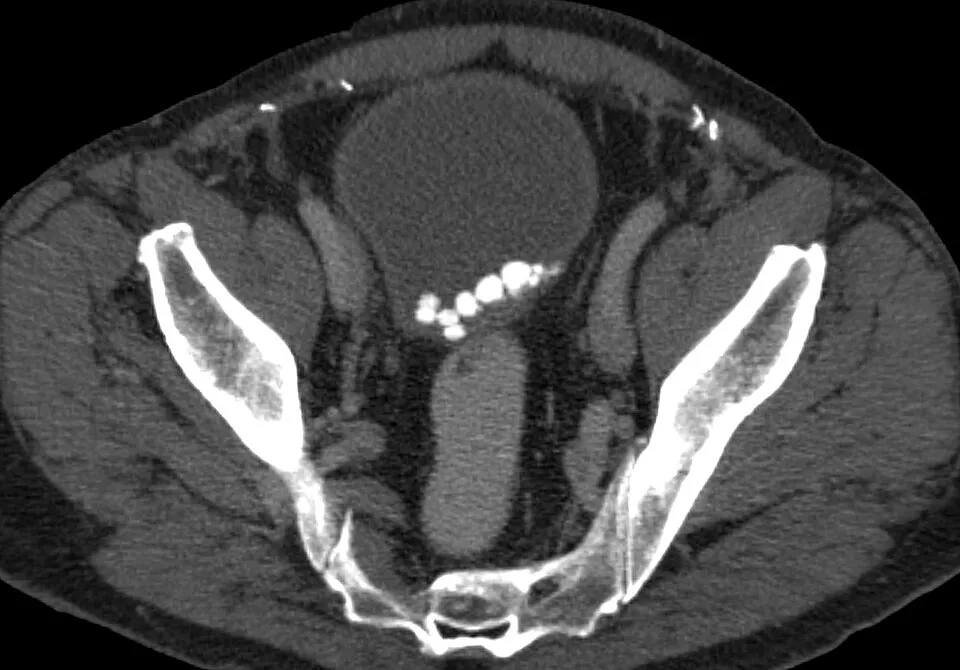
Bladder stones (vesical calculi) make up about 5% of urinary stones. In high-income countries they occur mainly in older men with bladder outlet obstruction from benign prostatic enlargement, and in people with neurogenic bladder, long-term catheters, bladder augmentation, diverticula or foreign bodies such as sutures or mesh. Stasis and metabolic factors such as acid urine favour uric acid stones; urease-producing infection forms struvite. Endemic bladder stones in children still occur in parts of Asia, the Middle East and Africa, linked to low-protein, carbohydrate-rich infant diets. Symptoms include suprapubic pain, terminal haematuria, interrupted stream and pain at the penile tip. Diagnosis is by ultrasound, KUB X-ray (uric acid stones are radiolucent), CT or cystoscopy. Transurethral cystolithotripsy is the treatment of choice in adults and children, with percutaneous or open removal for selected cases, and the underlying cause – usually outlet obstruction – must be treated.
Patient case, mechanism, investigations, management, flashcards and exam-style questions.Open the lesson →
Key facts
- Bladder stones are about 5% of urinary stones; most adults have bladder outlet obstruction, neurogenic bladder, a catheter or a foreign body
- Composition in adults: uric acid (common with outlet obstruction), struvite (urease-producing infection such as Proteus), calcium oxalate or phosphate
- Endemic paediatric bladder stones (ammonium urate, calcium oxalate) persist in low-income settings with low-protein, high-carbohydrate infant diets
- Classic symptoms: suprapubic pain, terminal haematuria, sudden interruption of stream, pain at the tip of the penis, recurrent UTI
- Ultrasound shows a mobile echogenic focus with acoustic shadowing; uric acid stones are radiolucent on KUB but visible on CT
- Transurethral cystolithotripsy is the treatment of choice in adults and children (EAU systematic review 2019)
- Shock wave lithotripsy is less effective; open cystolithotomy suits very large stones or concurrent open prostatectomy or diverticulectomy
- Treat the cause (e.g. TURP or HoLEP for BPO at the same sitting); chronic stone irritation is a risk factor for squamous cell carcinoma of the bladder
Differential diagnosis
| Condition | Clues | Key test |
|---|---|---|
| Bladder cancer | Haematuria in a smoker, irritative symptoms | Cystoscopy; CT urogram; cytology |
| Benign prostatic obstruction without stone | Voiding LUTS, no terminal haematuria or stream interruption | Ultrasound and flow rate |
| Lower ureteric (vesicoureteric junction) stone | Loin-to-groin colic plus urgency and frequency | CT KUB |
| Cystitis | Dysuria, frequency, positive culture, no stone | Urinalysis and culture; ultrasound if recurrent |
| Foreign body in the bladder | History of self-insertion or previous surgery (sutures, mesh) | Ultrasound, CT, cystoscopy |
| Encrusted catheter or stent | Long-term catheter, blocked catheter, debris | Inspection, KUB, cystoscopy |
| Bladder diverticulum | Two-stage voiding, recurrent UTI | Ultrasound, cystogram, cystoscopy |
Exam pearls
Guideline
EAU Guidelines on Urolithiasis – bladder stones section (2025 edition, based on the EAU systematic review 2019); AUA BPH guideline amendment (2023); NICE CG97 male LUTS (2010, updated 2015)
References
- European Association of Urology. EAU Guidelines on Urolithiasis (section on bladder stones). EAU Guidelines Office, Arnhem 2025.
- Donaldson JF, Ruhayel Y, Skolarikos A, et al.. Treatment of bladder stones in adults and children: a systematic review and meta-analysis on behalf of the European Association of Urology Urolithiasis Guideline Panel. Eur Urol 2019.
- Childs MA, Mynderse LA, Rangel LJ, et al.. Pathogenesis of bladder calculi in the presence of urinary stasis. J Urol 2013.
- Philippou P, Moraitis K, Masood J, Junaid I, Buchholz N. The management of bladder lithiasis in the modern era of endourology. Urology 2012.
- Halstead SB. Epidemiology of bladder stone of children: precipitating events. Urolithiasis 2016.
- Sandhu JS, Bixler BR, Dahm P, et al.. Management of Lower Urinary Tract Symptoms Attributed to Benign Prostatic Hyperplasia (BPH): AUA Guideline Amendment 2023. J Urol 2024.
Related topics
By Dr Khalid Seidi (B.Sc., M.D.) · MedEd World Clinical Knowledge library. Original teaching content checked against current guidelines (November 2026); confirm the latest local guidance before clinical use. Not a substitute for clinical judgement.