Clinical Knowledge › Internal medicine › Basics of internal medicine › Clinical problems
Night sweats: approach to the patient
Night sweats are episodes of sweating during sleep. Mild nocturnal sweating is very common and usually harmless, but drenching sweats that soak night clothes or bedding, especially with fever or weight loss, can be the first sign of tuberculosis, HIV, endocarditis, lymphoma or other cancers. The doctor's job is to confirm that the sweats are true (not a warm room or heavy bedding), define their severity and pattern, and look for companion features: fever, weight loss, cough, lymphadenopathy, splenomegaly, pruritus, vasomotor symptoms, palpitations or hypoglycaemic episodes. Medicines (antidepressants, opioids, hormone therapies, insulin), alcohol, menopause, obstructive sleep apnoea and GORD are common benign causes. A focused first-line work-up – FBC with film, ESR/CRP, renal, liver and thyroid function, glucose, HIV test, chest X-ray, and TB testing or blood cultures when indicated – identifies most serious causes. Persistent drenching sweats with B symptoms need imaging and tissue diagnosis, preferably an excision lymph node biopsy, rather than empirical treatment.
Patient case, mechanism, investigations, management, flashcards and exam-style questions.Open the lesson →
Key facts
- Drenching night sweats (requiring a change of clothes or bedding) are a B symptom of lymphoma together with fever above 38 °C and over 10% weight loss in 6 months
- Mild night sweating is reported by a large proportion of primary care patients and is usually benign
- Commonest serious causes: tuberculosis, HIV, infective endocarditis, lymphoma and other malignancies
- Common benign causes: menopause, medicines (SSRIs, SNRIs, opioids, hormone therapies), alcohol, obstructive sleep apnoea, anxiety, GORD
- Nocturnal hypoglycaemia in insulin or sulfonylurea users causes sweats with nightmares and morning headache
- First-line tests: FBC and film, ESR/CRP, U&E, LFT, TSH, glucose, HIV test, chest X-ray, ± LDH, TB tests and blood cultures
- WHO TB symptom screen: current cough, fever, weight loss or night sweats; any positive needs TB testing
- Lymphadenopathy with B symptoms needs excision biopsy, not fine-needle aspiration, for lymphoma diagnosis
Differential diagnosis
| Condition | Clues | Key test |
|---|---|---|
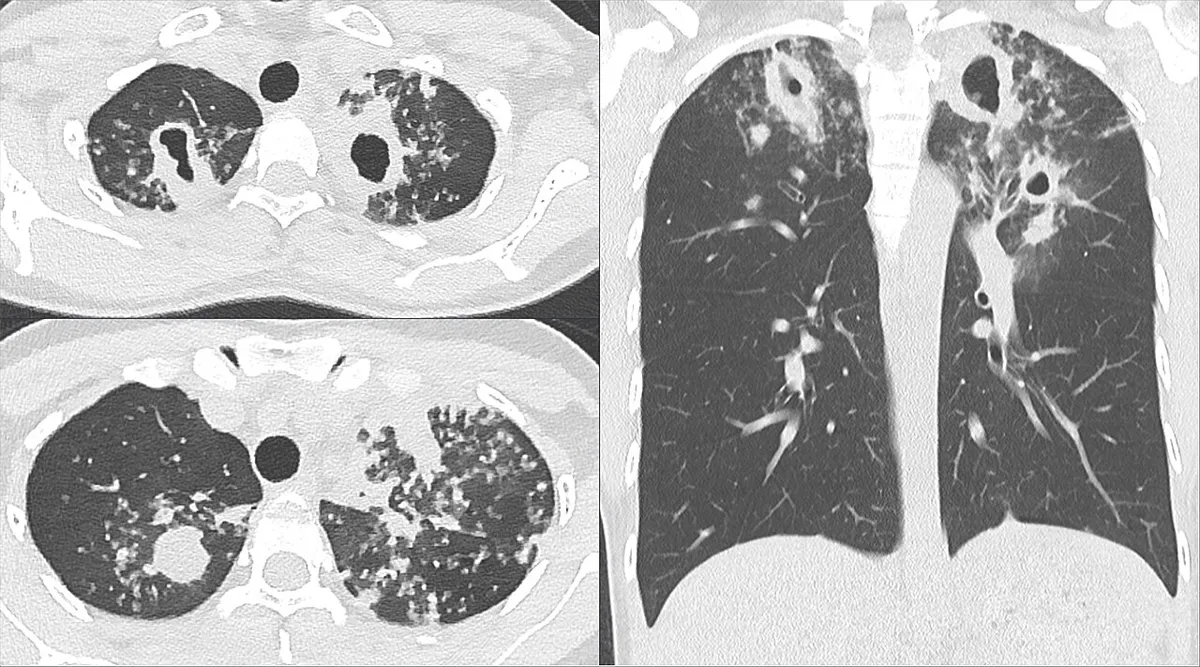
| Pulmonary or extrapulmonary tuberculosis | Cough over 2 weeks, weight loss, fever, endemic exposure, HIV | Chest X-ray, sputum NAAT (Xpert) and culture |
| HIV infection | Risk factors, oral candida, lymphadenopathy, weight loss, recurrent infections | HIV antigen/antibody test |
| Lymphoma (Hodgkin or non-Hodgkin) | Painless rubbery nodes, pruritus, B symptoms, alcohol-induced node pain (Hodgkin) | LDH, CT, excision lymph node biopsy |
| Infective endocarditis | Fever, new murmur, embolic phenomena, injection drug use or prosthetic valve | Three sets of blood cultures, echocardiography |
| Menopausal vasomotor symptoms | Woman over 45, hot flushes, irregular or absent periods | Clinical diagnosis; FSH only if under 45 |
| Drug-induced sweating | Started SSRI, SNRI, opioid, GnRH analogue, tamoxifen or aromatase inhibitor | Medication history; trial dose change |
| Nocturnal hypoglycaemia | Insulin or sulfonylurea, nightmares, morning headache | Capillary glucose at 3 am or CGM |
| Hyperthyroidism | Weight loss with good appetite, tremor, palpitations, heat intolerance | TSH, free T4 |
Exam pearls
Guideline
No dedicated night-sweats guideline: WHO consolidated guidelines on tuberculosis Module 2: screening (2021), NICE NG33 Tuberculosis (2016, updated 2019), Lugano classification for lymphoma (2014), NICE NG23 Menopause (2015, updated 2024) and NICE NG12 Suspected cancer (2015, with later updates)
References
- Mold JW, Holtzclaw BJ, McCarthy L.. Night sweats: a systematic review of the literature. J Am Board Fam Med 2012.
- World Health Organization. WHO consolidated guidelines on tuberculosis. Module 2: screening – systematic screening for tuberculosis disease. WHO, Geneva 2021.
- National Institute for Health and Care Excellence (NICE). Tuberculosis (NG33). NICE guideline 2016.
- Cheson BD, Fisher RI, Barrington SF, et al.. Recommendations for initial evaluation, staging, and response assessment of Hodgkin and non-Hodgkin lymphoma: the Lugano classification. J Clin Oncol 2014.
- National Institute for Health and Care Excellence (NICE). Menopause: identification and management (NG23). NICE guideline 2015.
- National Institute for Health and Care Excellence (NICE). Suspected cancer: recognition and referral (NG12). NICE guideline 2015.
Related topics
By Dr Khalid Seidi (B.Sc., M.D.) · MedEd World Clinical Knowledge library. Original teaching content checked against current guidelines (November 2026); confirm the latest local guidance before clinical use. Not a substitute for clinical judgement.