Clinical Knowledge › Internal medicine › Nephrology › Potassium, magnesium and phosphate disorders
Refeeding syndrome
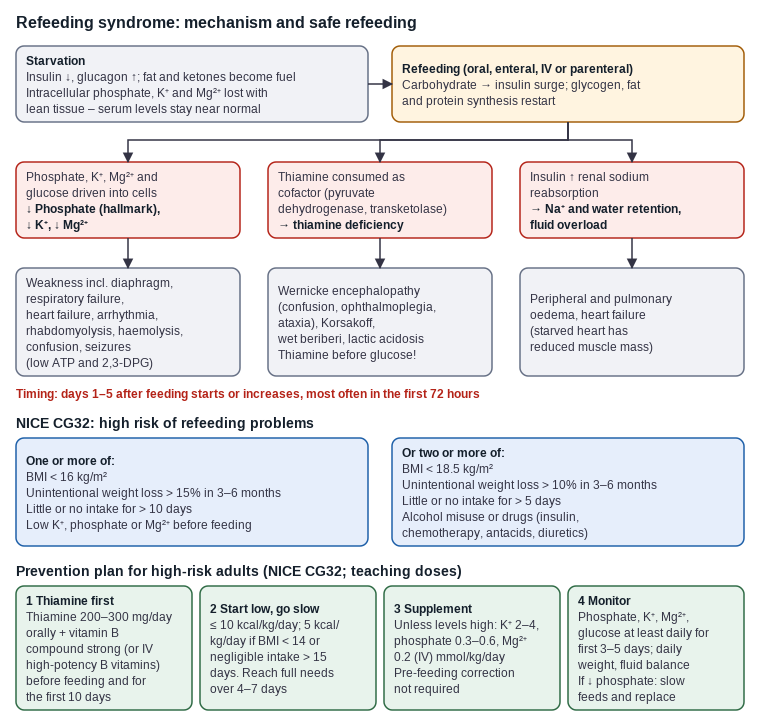
Refeeding syndrome is the potentially fatal shift of fluid and electrolytes that can follow the reintroduction of nutrition (oral, enteral or parenteral) after a period of starvation or severe undernutrition. During starvation the body switches to fat and ketone metabolism and loses intracellular phosphate, potassium and magnesium while serum levels stay near normal. When carbohydrate returns, insulin drives glucose, phosphate, potassium and magnesium into cells, consumes thiamine and causes sodium and water retention. The result is hypophosphataemia (the hallmark), hypokalaemia, hypomagnesaemia, thiamine deficiency and fluid overload, presenting within the first 2–5 days with weakness, respiratory failure, arrhythmia, heart failure, confusion, seizures or Wernicke encephalopathy. People at risk include those with anorexia nervosa, alcohol use disorder, cancer, chronic disease with weight loss, older people living alone and anyone with little intake for more than 5–10 days. Prevention is the key: identify risk using NICE or ASPEN criteria, give thiamine before feeding, start nutrition cautiously and increase it over several days, supplement and monitor phosphate, potassium and magnesium daily, and watch fluid balance.
Patient case, mechanism, investigations, management, flashcards and exam-style questions.Open the lesson →
Key facts
- Refeeding syndrome occurs within about 5 days of restarting nutrition after starvation; hypophosphataemia is the biochemical hallmark
- Insulin released by carbohydrate refeeding drives phosphate, potassium, magnesium and glucose into cells and consumes thiamine
- NICE high risk: one of BMI below 16, unintentional weight loss over 15% in 3–6 months, little or no intake for over 10 days, or low K, phosphate or Mg before feeding
- NICE high risk also: two of BMI below 18.5, weight loss over 10% in 3–6 months, little or no intake for over 5 days, alcohol misuse or drugs such as insulin, chemotherapy, antacids or diuretics
- Give thiamine (for example 200–300 mg daily orally, or IV high-potency B vitamins) before feeding starts and for the first 10 days
- NICE: in high-risk adults start at no more than 10 kcal/kg/day (5 kcal/kg/day if BMI below 14 or negligible intake for over 15 days) and reach full needs over 4–7 days
- Check phosphate, potassium, magnesium, glucose and fluid balance at baseline and at least daily for the first 3–5 days
- Severe hypophosphataemia (below about 0.3 mmol/L) causes respiratory muscle failure, heart failure, rhabdomyolysis, haemolysis, seizures and death
Differential diagnosis
| Condition | Clues | Key test |
|---|---|---|
| Wernicke encephalopathy (without refeeding electrolyte shifts) | Confusion, ophthalmoplegia, ataxia in alcohol use disorder or hyperemesis | Clinical diagnosis; thiamine level; MRI mammillary bodies |
| Sepsis | Fever, hypotension, raised lactate and inflammatory markers in a malnourished patient | Cultures, CRP, lactate |
| Primary heart failure | Known cardiomyopathy or ischaemia; oedema not timed to feeding | BNP, echocardiogram |
| Hypophosphataemia from other causes | Respiratory alkalosis, DKA treatment, hyperparathyroidism, Fanconi syndrome, iron infusion (ferric carboxymaltose) | Fractional excretion of phosphate, PTH, timing with drugs |
| Hypokalaemia from GI or renal loss | Diarrhoea, vomiting or diuretics independent of feeding | Urine K:creatinine, history |
| Hepatic encephalopathy | Confusion with liver disease, asterixis, raised ammonia | Liver tests, ammonia, response to lactulose |
Exam pearls
Guideline
NICE CG32 Nutrition support for adults (2006, updated 2017), ASPEN consensus recommendations for refeeding syndrome (2020) and Royal College of Psychiatrists MEED guidance (2022)
References
- National Institute for Health and Care Excellence (NICE). Nutrition support for adults: oral nutrition support, enteral tube feeding and parenteral nutrition (CG32). 2006.
- da Silva JSV, Seres DS, Sabino K, et al.. ASPEN consensus recommendations for refeeding syndrome. Nutr Clin Pract 2020.
- Royal College of Psychiatrists. Medical emergencies in eating disorders (MEED): guidance on recognition and management (CR233). 2022.
- Doig GS, Simpson F, Heighes PT, et al.. Restricted versus continued standard caloric intake during the management of refeeding syndrome in critically ill adults: a randomised, parallel-group, multicentre, single-blind controlled trial. Lancet Respir Med 2015.
- Friedli N, Stanga Z, Culkin A, et al.. Management and prevention of refeeding syndrome in medical inpatients: an evidence-based and consensus-supported algorithm. Nutrition 2018.
- Mehanna HM, Moledina J, Travis J.. Refeeding syndrome: what it is, and how to prevent and treat it. BMJ 2008.
Related topics
By Dr Khalid Seidi (B.Sc., M.D.) · MedEd World Clinical Knowledge library. Original teaching content checked against current guidelines (November 2026); confirm the latest local guidance before clinical use. Not a substitute for clinical judgement.