Clinical Knowledge › Dermatology › Skin in systemic disease
Acanthosis nigricans
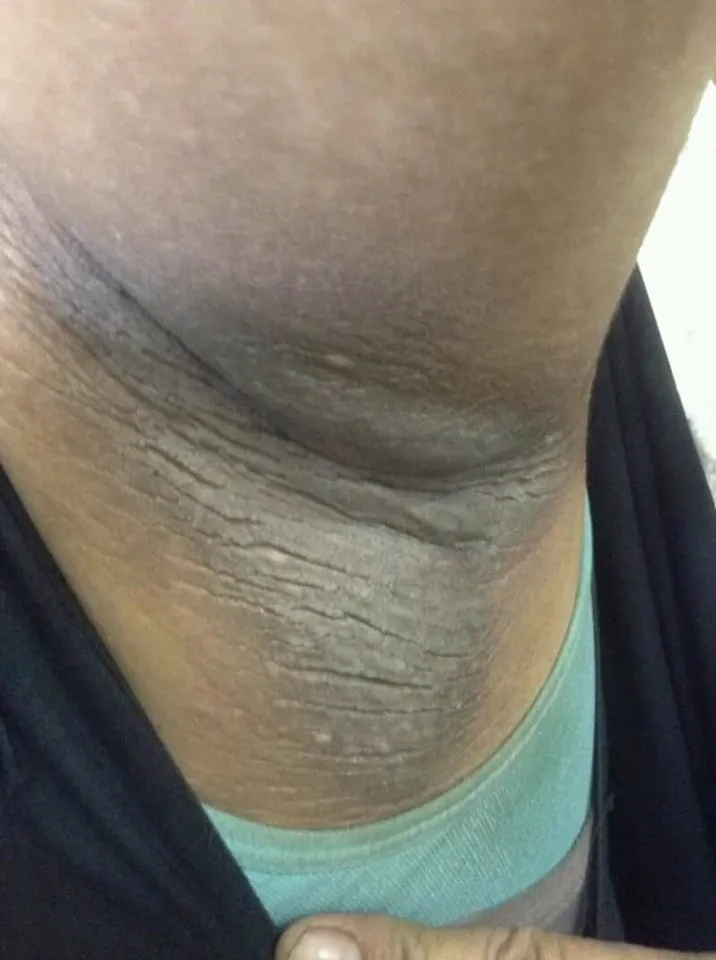
Acanthosis nigricans (AN) is symmetrical, velvety, brown-grey thickening of flexural skin, most often on the back and sides of the neck, axillae and groin, frequently studded with skin tags. It is a sign, not a disease: in the great majority it reflects insulin resistance with obesity, prediabetes, type 2 diabetes or polycystic ovary syndrome, because high insulin levels stimulate IGF-1 receptors on keratinocytes and fibroblasts. Other causes include genetic syndromes (FGFR3), drugs (nicotinic acid, corticosteroids, hormones) and, rarely, internal malignancy, classically gastric adenocarcinoma, where tumour TGF-alpha drives abrupt, extensive, itchy AN with mucosal involvement, tripe palms and the Leser–Trélat sign. Diagnosis is clinical; tests target the cause: HbA1c or fasting glucose, lipids, blood pressure, androgen profile in women and, for suspected malignant AN, endoscopy and CT. Management centres on weight loss and treating insulin resistance (lifestyle, metformin, GLP-1 receptor agonists where indicated), with topical retinoids, keratolytics or calcipotriol for cosmetic improvement.
Patient case, mechanism, investigations, management, flashcards and exam-style questions.Open the lesson →
Key facts
- Velvety hyperpigmented plaques in neck folds, axillae and groin; skin tags common
- Commonest cause: obesity with insulin resistance; screen for prediabetes and type 2 diabetes
- Mechanism: hyperinsulinaemia activates IGF-1 receptors on keratinocytes and fibroblasts
- Histology: papillomatosis and hyperkeratosis with little acanthosis or extra melanin
- Women: consider PCOS and HAIR-AN (hyperandrogenism, insulin resistance, AN)
- Malignant AN: abrupt, extensive, itchy, mucosal, tripe palms; usually gastric adenocarcinoma
- Drug causes: nicotinic acid, systemic corticosteroids, insulin injection sites, hormones
- First-line treatment is weight loss and treating insulin resistance; topical retinoids and keratolytics are cosmetic
Differential diagnosis
| Condition | Clues | Key test |
|---|---|---|
| Terra firma-forme dermatosis | Dirt-like plaques in a well child | Wipes off with isopropyl alcohol |
| Confluent and reticulated papillomatosis | Reticulated papules on chest and back in young adults | Clinical; KOH negative |
| Pityriasis versicolor | Fine scaly trunk macules | KOH microscopy |
| Erythrasma | Brown groin or axillary patches | Coral-red Wood's lamp fluorescence |
| Addison disease | Generalised pigmentation including buccal mucosa and palmar creases | Morning cortisol, ACTH |
| Haemochromatosis | Bronze skin, diabetes, liver disease | Ferritin and transferrin saturation |
| Post-inflammatory hyperpigmentation | Flat pigmentation after dermatitis or friction | Clinical history |
Exam pearls
Guideline
ADA Standards of Care in Diabetes—2026, AAP 2023 paediatric obesity guideline and 2023 international evidence-based PCOS guideline (no dedicated AN guideline exists)
References
- Leung AKC, Lam JM, Barankin B, Leong KF, Hon KL. Acanthosis nigricans: an updated review. Curr Pediatr Rev 2022.
- American Diabetes Association Professional Practice Committee. Standards of Care in Diabetes—2026. Diabetes Care 2026.
- Teede HJ, Tay CT, Laven JJE, et al.. Recommendations from the 2023 international evidence-based guideline for the assessment and management of polycystic ovary syndrome. J Clin Endocrinol Metab 2023.
- Thiers BH, Sahn RE, Callen JP. Cutaneous manifestations of internal malignancy. CA Cancer J Clin 2009.
- Plensdorf S, Livieratos M, Dada N. Pigmentation disorders: diagnosis and management. Am Fam Physician 2017.
- Hampl SE, Hassink SG, Skinner AC, et al.. Clinical practice guideline for the evaluation and treatment of children and adolescents with obesity. Pediatrics 2023.
Related topics
By Dr Khalid Seidi (B.Sc., M.D.) · MedEd World Clinical Knowledge library. Original teaching content checked against current guidelines (November 2026); confirm the latest local guidance before clinical use. Not a substitute for clinical judgement.