Clinical Knowledge › Internal medicine › Cardiology and angiology › Heart failure
Advanced heart failure: mechanical support and transplantation
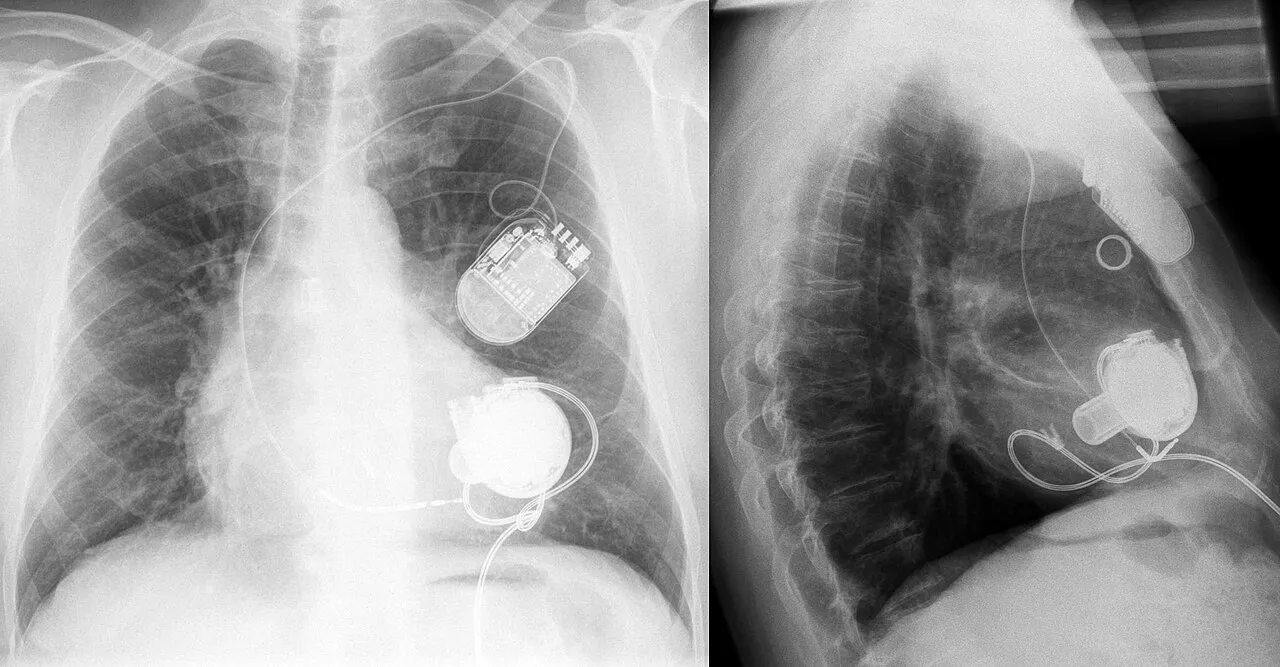
Advanced (stage D) heart failure is severe, persistent heart failure despite optimal medical and device therapy, with recurrent admissions, poor exercise capacity, intolerance of disease-modifying drugs, end-organ dysfunction or dependence on inotropes. These patients should be referred early to a specialist heart failure centre, because the options are limited and time-sensitive: heart transplantation, a durable left ventricular assist device (LVAD), temporary mechanical circulatory support as a bridge, or palliative care. Assessment uses cardiopulmonary exercise testing (peak VO2), right heart catheterisation, INTERMACS profiles and risk scores. Heart transplantation offers the best long-term survival, with a median of more than 12 years, but donor hearts are scarce and recipients face rejection, infection, malignancy, kidney injury and cardiac allograft vasculopathy. Modern fully magnetically levitated LVADs improve survival and quality of life as a bridge or as destination therapy, but need anticoagulation and bring driveline infection, bleeding, stroke and right heart failure.
Patient case, mechanism, investigations, management, flashcards and exam-style questions.Open the lesson →
Key facts
- Advanced HF: NYHA III–IV despite optimal therapy, severe LV dysfunction, recurrent admissions and markedly reduced exercise capacity
- Refer early: IV inotropes, repeated admissions, persistent NYHA IIIb–IV, end-organ dysfunction, low BP, intolerance of disease-modifying drugs, ICD shocks
- Peak VO2 of 12 mL/kg/min or less on a beta-blocker (14 or less if intolerant) supports transplant listing
- INTERMACS profiles grade severity from 1 (critical cardiogenic shock) to 7 (advanced NYHA III)
- Durable LVAD strategies: bridge to transplant, bridge to candidacy and destination therapy
- Continuous-flow LVAD patients often have no palpable pulse; measure BP with Doppler and anticoagulate with warfarin
- After transplant: tacrolimus, mycophenolate and steroids; watch for rejection, CMV and other infections, skin cancer, CKD and allograft vasculopathy
- The transplanted heart is denervated: resting tachycardia, slow rise with exercise, no response to atropine and silent ischaemia
Differential diagnosis
| Condition | Clues | Key test |
|---|---|---|
| Inadequately treated HFrEF | Not on full doses of foundational therapy | Medication review, titration plan |
| Reversible cause of deterioration | Ischaemia, arrhythmia, valve lesion, thyroid disease, non-adherence | ECG, echo, angiography, TFTs |
| Constrictive pericarditis | Raised JVP, normal LVEF, previous surgery or TB | Echo, CT/CMR, catheterisation |
| Infiltrative cardiomyopathy (amyloid) | Thick walls, low voltages, neuropathy | Scintigraphy, light chains, CMR |
| Severe valve disease amenable to intervention | Severe AS or secondary MR | Echo; heart team for TAVI or TEER |
| Non-cardiac breathlessness | Lung disease or anaemia | Lung function, Hb, CPET |
Exam pearls
Guideline
2026 ESC Guidelines for heart failure, 2022 AHA/ACC/HFSA heart failure guideline, HFA 2018 advanced heart failure position statement, ISHLT 2023 mechanical circulatory support guidelines, ISHLT 2024 transplant candidate guidelines and ISHLT recipient care guidelines
References
- Køber L, Adamo M, et al.. 2026 ESC Guidelines for the management of heart failure. Eur Heart J 2026.
- Heidenreich PA, Bozkurt B, Aguilar D, et al.. 2022 AHA/ACC/HFSA Guideline for the Management of Heart Failure. Circulation 2022.
- Crespo-Leiro MG, Metra M, Lund LH, et al.. Advanced heart failure: a position statement of the Heart Failure Association of the European Society of Cardiology. Eur J Heart Fail 2018.
- Saeed D, Feldman D, Banayosy AE, et al.. The 2023 International Society for Heart and Lung Transplantation Guidelines for Mechanical Circulatory Support: A 10-Year Update. J Heart Lung Transplant 2023.
- Peled Y, Ducharme A, Kittleson M, et al.. International Society for Heart and Lung Transplantation Guidelines for the Evaluation and Care of Cardiac Transplant Candidates—2024. J Heart Lung Transplant 2024.
- Velleca A, Shullo MA, Dhital K, et al.. The International Society for Heart and Lung Transplantation (ISHLT) guidelines for the care of heart transplant recipients. J Heart Lung Transplant 2023.
Related topics
By Dr Khalid Seidi (B.Sc., M.D.) · MedEd World Clinical Knowledge library. Original teaching content checked against current guidelines (November 2026); confirm the latest local guidance before clinical use. Not a substitute for clinical judgement.