Clinical Knowledge › Internal medicine › Cardiology and angiology › Heart failure
Cardiogenic shock
Cardiogenic shock is a state of critical end-organ hypoperfusion caused by a primary cardiac disorder that lowers cardiac output. Clinically it is persistent hypotension (systolic BP below 90 mmHg or need for vasopressors) with signs of hypoperfusion such as cold extremities, oliguria, confusion and a lactate above 2 mmol/L. Acute myocardial infarction with left ventricular failure remains a leading cause, but decompensated chronic heart failure now accounts for about half of cases; others include mechanical complications, RV infarction, myocarditis, valve disease and arrhythmias. Mortality is 30–50%; SCAI stages A to E guide escalation. Management means rapid diagnosis with ECG and echocardiography, a multidisciplinary shock team, immediate revascularisation of the culprit artery in infarct-related shock, noradrenaline for hypotension and inotropes for low output, and selective temporary mechanical circulatory support. Routine intra-aortic balloon pumping and routine VA-ECMO do not improve survival; a microaxial flow pump reduced mortality in selected STEMI-related shock.
Patient case, mechanism, investigations, management, flashcards and exam-style questions.Open the lesson →
Key facts
- Definition: systolic BP below 90 mmHg for 30 minutes or vasopressors needed, plus hypoperfusion (lactate above 2 mmol/L, oliguria, cold skin, confusion)
- Haemodynamics: cardiac index below 2.2 L/min/m² with raised filling pressure (PCWP above 15 mmHg); low output with high systemic vascular resistance
- SCAI stages: A at risk, B beginning (hypotension without hypoperfusion), C classic, D deteriorating, E extremis
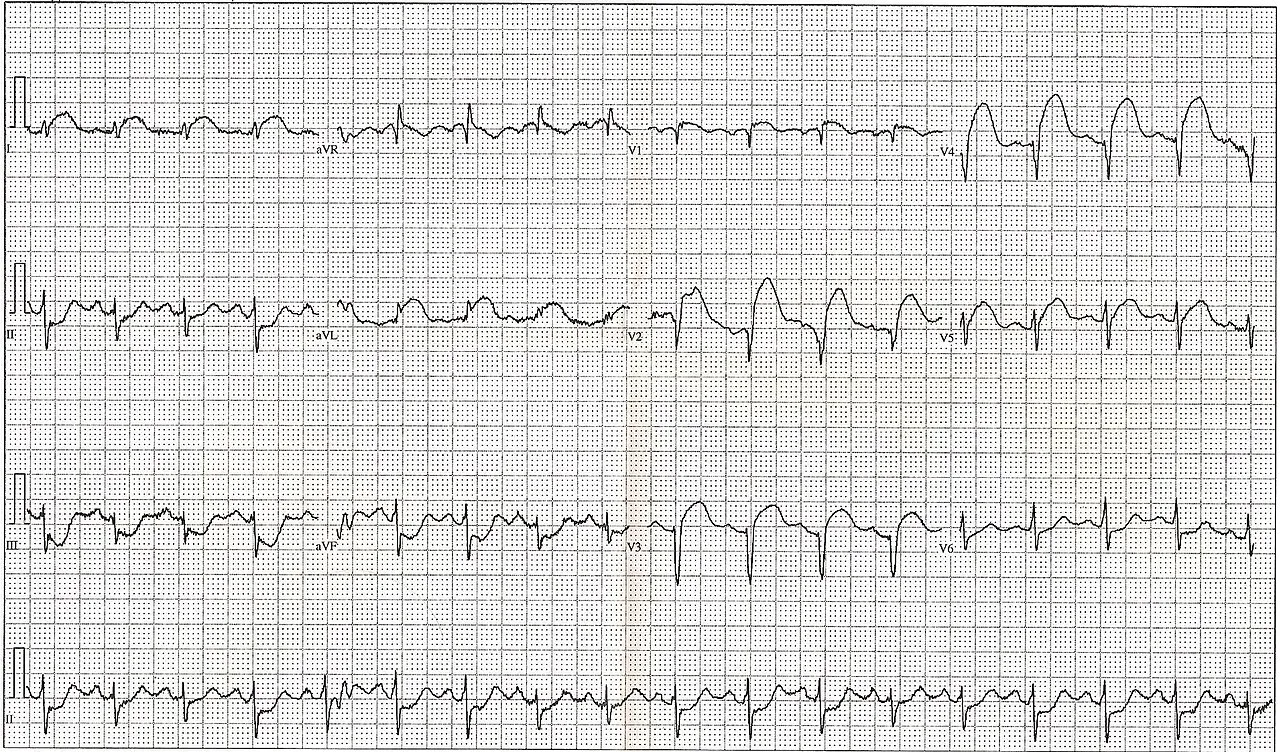
- Get an ECG and echocardiogram immediately: they identify infarction, mechanical complications, tamponade and RV failure
- In infarct-related shock, revascularise the culprit artery immediately (SHOCK trial); culprit-only PCI is preferred to immediate multivessel PCI (CULPRIT-SHOCK)
- Noradrenaline is the first-line vasopressor; dobutamine or milrinone for low output; dopamine causes more arrhythmia (SOAP II)
- Routine IABP (IABP-SHOCK II) and routine VA-ECMO (ECLS-SHOCK) do not reduce mortality; a microaxial flow pump improved 180-day survival in selected STEMI shock (DanGer Shock)
- Shock teams and transfer to a high-volume shock centre improve outcomes; consider palliative care early
Differential diagnosis
| Condition | Clues | Key test |
|---|---|---|
| Septic shock | Fever, source of infection, warm peripheries early, low SVR | Lactate, cultures, echo showing normal or hyperdynamic LV |
| Hypovolaemic or haemorrhagic shock | Bleeding or fluid loss, flat neck veins, collapsing IVC | Haemoglobin, bedside ultrasound, response to fluids |
| Cardiac tamponade (obstructive) | Raised JVP, clear lungs, pulsus paradoxus, muffled heart sounds | Echo: effusion with RA/RV diastolic collapse |
| Massive pulmonary embolism (obstructive) | Sudden collapse, hypoxaemia, dilated RV, clear lungs | Echo, CTPA |
| Tension pneumothorax | Absent breath sounds, tracheal deviation, raised JVP | Clinical diagnosis; needle decompression |
| Anaphylaxis | Urticaria, angio-oedema, bronchospasm after exposure | Clinical; mast cell tryptase |
| Aortic dissection | Tearing pain, pulse deficit, aortic regurgitation, tamponade | CT aortography or TOE |
Exam pearls
Guideline
2025 ACC Concise Clinical Guidance on cardiogenic shock; 2026 ESC heart failure guideline (temporary mechanical support); 2023 ESC and 2025 ACC/AHA acute coronary syndrome guidelines
References
- Sinha SS, Morrow DA, Kapur NK, Kataria R, Roswell RO.. 2025 Concise Clinical Guidance: an ACC Expert Consensus Statement on the evaluation and management of cardiogenic shock. J Am Coll Cardiol 2025.
- Køber L, Adamo M, Ruwald AC, et al.. 2026 ESC Guidelines for the management of heart failure. Eur Heart J 2026.
- Byrne RA, Rossello X, Coughlan JJ, et al.. 2023 ESC Guidelines for the management of acute coronary syndromes. Eur Heart J 2023.
- Rao SV, O'Donoghue ML, Ruel M, et al.. 2025 ACC/AHA/ACEP/NAEMSP/SCAI Guideline for the Management of Patients With Acute Coronary Syndromes. Circulation 2025.
- Naidu SS, Baran DA, Jentzer JC, et al.. SCAI SHOCK Stage Classification Expert Consensus Update: a review and incorporation of validation studies. J Am Coll Cardiol 2022.
- Hochman JS, Sleeper LA, Webb JG, et al.. Early revascularization in acute myocardial infarction complicated by cardiogenic shock. N Engl J Med 1999.
Related topics
By Dr Khalid Seidi (B.Sc., M.D.) · MedEd World Clinical Knowledge library. Original teaching content checked against current guidelines (November 2026); confirm the latest local guidance before clinical use. Not a substitute for clinical judgement.