Clinical Knowledge › Internal medicine › Cardiology and angiology › Basics of cardiology
Ambulatory ECG and blood pressure monitoring
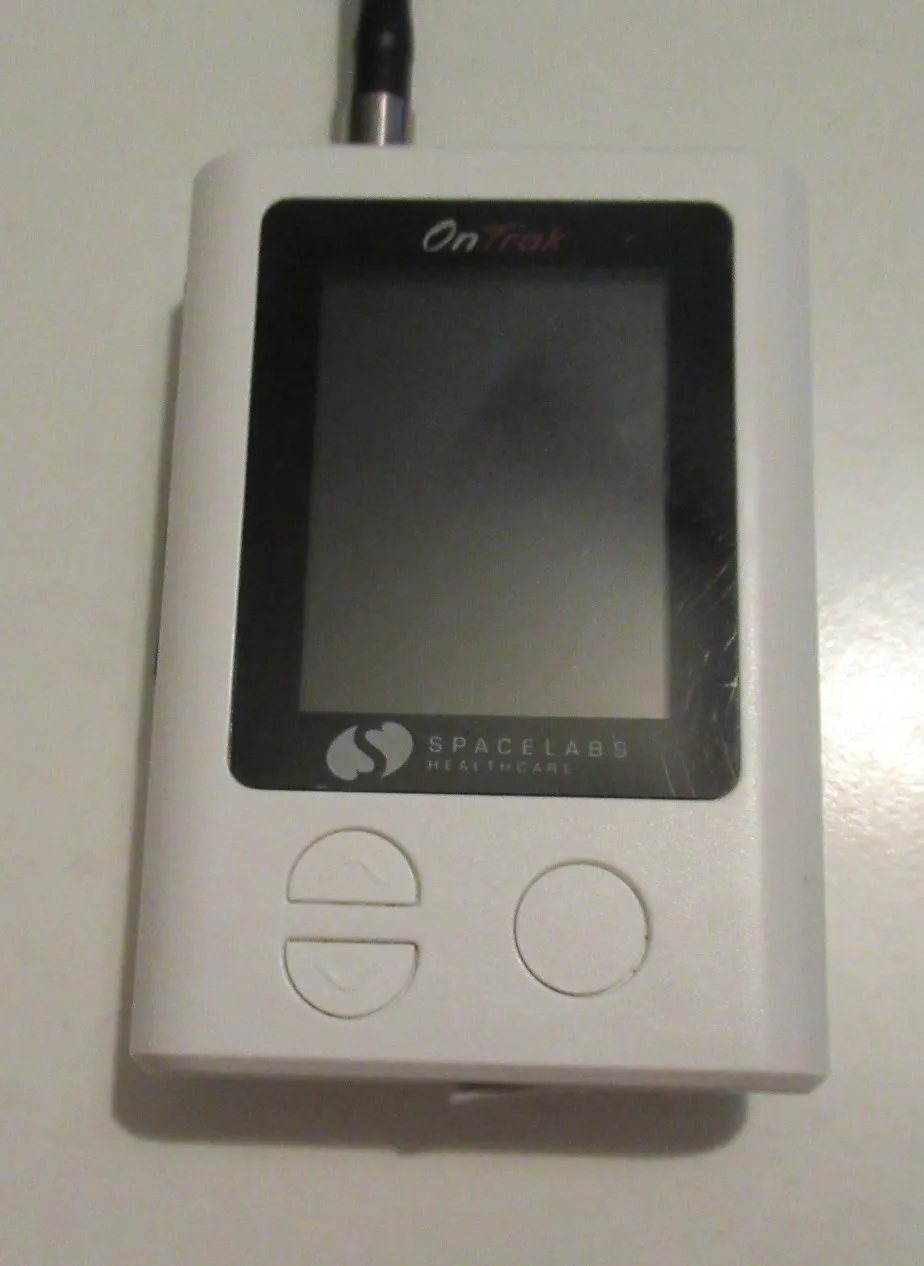
Ambulatory monitoring records the heart rhythm or blood pressure while patients go about normal life, capturing events that a 10-second ECG or a single clinic reading misses. Ambulatory ECG ranges from 24–48-hour Holter recording and 7–14-day adhesive patches, through external event and loop recorders worn for up to a month, to implantable loop recorders that last about three years; the choice follows how often symptoms occur. The key aim is symptom–rhythm correlation: palpitations or syncope recorded during sinus rhythm exclude an arrhythmic cause as firmly as a recorded arrhythmia confirms one. Ambulatory blood pressure monitoring (ABPM) takes readings every 15–30 minutes for 24 hours, and home monitoring adds readings over a week. Out-of-office readings diagnose hypertension more accurately, reveal white-coat and masked hypertension, and show nocturnal non-dipping, which predicts cardiovascular events better than clinic pressure. European and American guidelines now confirm hypertension with out-of-office readings.
Patient case, mechanism, investigations, management, flashcards and exam-style questions.Open the lesson →
Key facts
- Choose the ambulatory ECG device by symptom frequency: daily – 24–48 h Holter; weekly – 7–14-day patch or event recorder; monthly – 30-day external loop recorder; rarer or unexplained syncope – implantable loop recorder
- Diagnosis rests on symptom–rhythm correlation; a normal rhythm during typical symptoms rules out arrhythmia as the cause
- Findings significant even without symptoms: Mobitz II or complete AV block, pauses over 3 s while awake, sustained VT, and rapid prolonged SVT
- AF is diagnosed when a 12-lead ECG or a single-lead strip of at least 30 seconds shows it; device-detected short episodes are subclinical AF
- ABPM hypertension thresholds (ESC/ESH): 24-hour average 130/80 mmHg or more, daytime 135/85 or more, night-time 120/70 or more; home BP 135/85 or more
- AHA/ACC thresholds are lower: daytime ABPM or home BP 130/80, night-time 110/65 and 24-hour 125/75 mmHg, matching clinic 130/80
- Normal nocturnal dip is 10–20%; non-dipping (less than 10%) or reverse dipping is linked to sleep apnoea, CKD, diabetes, autonomic failure and higher cardiovascular risk
- White-coat hypertension = high clinic but normal out-of-office BP; masked hypertension = normal clinic but high out-of-office BP, with risk close to sustained hypertension
Differential diagnosis
| Condition | Clues | Key test |
|---|---|---|
| 24–48-hour Holter monitor | Daily symptoms; burden of ectopics, AF rate control, pauses | Continuous 2–12-lead recording with diary |
| Adhesive patch monitor (7–14 days) | Weekly symptoms; better adherence, single-lead | Continuous single-lead ECG |
| External event or loop recorder (up to 30 days) | Symptoms every few weeks; patient-activated or auto-triggered | Stored pre- and post-event strips |
| Mobile cardiac telemetry | High-risk patients needing real-time alerts | Continuous transmission to a monitoring centre |
| Implantable loop recorder (2–3+ years) | Infrequent unexplained syncope, cryptogenic stroke | Subcutaneous device with automatic detection |
| Consumer wearables (smartwatch ECG, photoplethysmography) | Opportunistic AF detection; patient-initiated recordings | Single-lead ECG of 30 s confirms AF |
| 24-hour ABPM | Diagnosis of hypertension, white-coat and masked hypertension, nocturnal BP | Readings every 15–30 min day, 30–60 min night |
| Home BP monitoring | Diagnosis and long-term follow-up, engages patient | Duplicate morning and evening readings for 7 days |
Exam pearls
Guideline
2024 ESC elevated blood pressure and hypertension guideline, 2025 AHA/ACC multisociety high blood pressure guideline, 2023 ESH hypertension guideline with 2021 ESH BP measurement guidance, 2024 ESC atrial fibrillation guideline, 2018 ESC syncope guideline and 2017 ISHNE-HRS ambulatory ECG consensus
References
- Steinberg JS, Varma N, Cygankiewicz I, et al.. 2017 ISHNE-HRS expert consensus statement on ambulatory ECG and external cardiac monitoring/telemetry. Heart Rhythm 2017.
- McEvoy JW, McCarthy CP, Bruno RM, et al.. 2024 ESC Guidelines for the management of elevated blood pressure and hypertension. Eur Heart J 2024.
- Jones DW, Ferdinand KC, Taler SJ, et al.. 2025 AHA/ACC/AANP/AAPA/ABC/ACCP/ACPM/AGS/AMA/ASPC/NMA/PCNA/SGIM Guideline for the Prevention, Detection, Evaluation and Management of High Blood Pressure in Adults. Circulation 2025.
- Stergiou GS, Palatini P, Parati G, et al.. 2021 European Society of Hypertension practice guidelines for office and out-of-office blood pressure measurement. J Hypertens 2021.
- Brignole M, Moya A, de Lange FJ, et al.. 2018 ESC Guidelines for the diagnosis and management of syncope. Eur Heart J 2018.
- Van Gelder IC, Rienstra M, Bunting KV, et al.. 2024 ESC Guidelines for the management of atrial fibrillation developed in collaboration with the European Association for Cardio-Thoracic Surgery (EACTS). Eur Heart J 2024.
Related topics
By Dr Khalid Seidi (B.Sc., M.D.) · MedEd World Clinical Knowledge library. Original teaching content checked against current guidelines (November 2026); confirm the latest local guidance before clinical use. Not a substitute for clinical judgement.