Clinical Knowledge › Neurology › Basics of neurology
Cerebrospinal fluid analysis and lumbar puncture
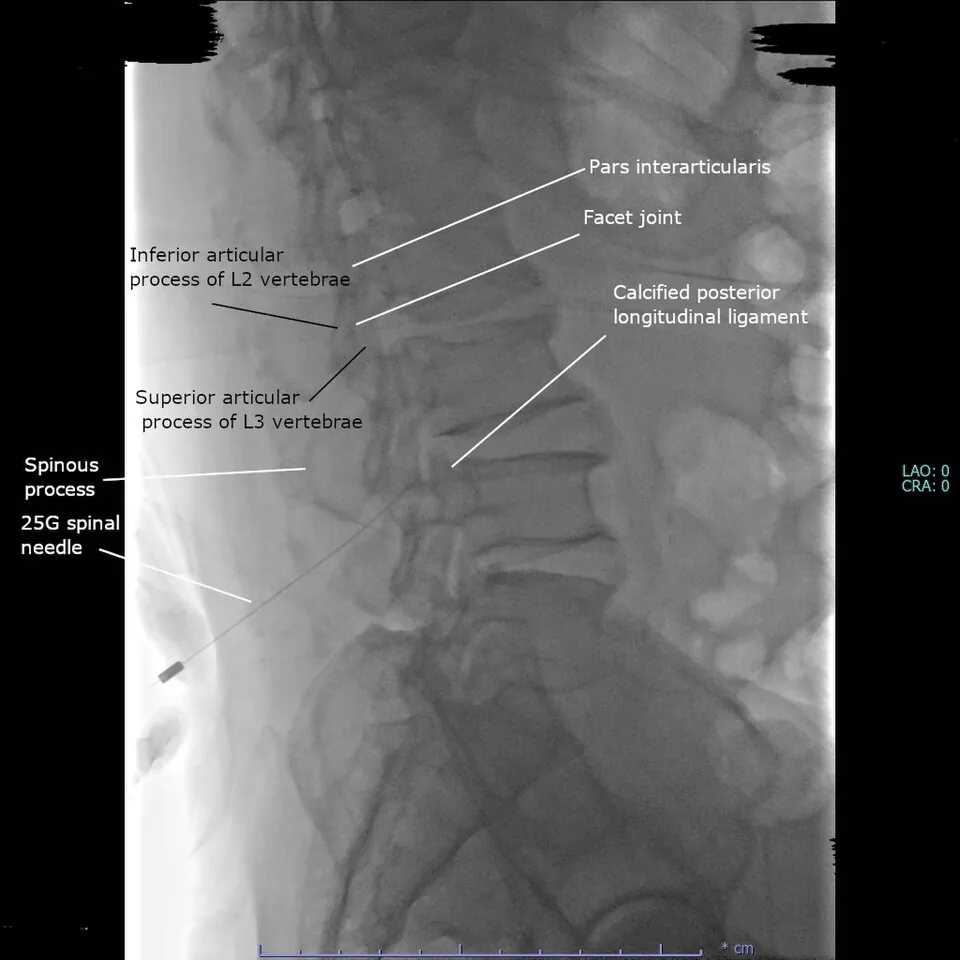
Lumbar puncture (LP) samples cerebrospinal fluid (CSF) from the lumbar subarachnoid space below the conus (L3–4 or L4–5) to diagnose CNS infection, subarachnoid haemorrhage with a normal CT, inflammatory disease, leptomeningeal malignancy and pressure disorders. Before LP, assess for contraindications: signs of raised intracranial pressure or a mass lesion (reduced consciousness, focal signs, papilloedema, new seizures, immunocompromise – image first), coagulopathy or anticoagulation, thrombocytopenia and local skin infection. Normal CSF is clear, opening pressure 10–20 cmH2O (lateral position), white cells ≤5/µL, protein 0.15–0.45 g/L and glucose about 60% of blood glucose. Bacterial meningitis shows neutrophils, high protein and low glucose; viral shows lymphocytes with normal glucose; TB and fungal show lymphocytes, very high protein and low glucose; GBS shows high protein with normal cells; MS shows unmatched oligoclonal bands. In suspected bacterial meningitis, antibiotics must never be delayed for LP.
Patient case, mechanism, investigations, management, flashcards and exam-style questions.Open the lesson →
Key facts
- Perform LP at L3–4 or L4–5 (line between iliac crests ≈ L4); the adult cord ends at L1–2
- Normal opening pressure 10–20 cmH2O (up to 25 in obese adults), lateral decubitus
- Normal CSF: ≤5 white cells/µL (lymphocytes), protein 0.15–0.45 g/L, CSF:serum glucose ratio ≥0.6
- Image before LP if GCS <13 or falling, focal signs, papilloedema, new seizures, or severe immunocompromise
- Never delay empirical antibiotics for imaging or LP in suspected bacterial meningitis
- Xanthochromia (bilirubin on spectrophotometry ≥12 hours after headache onset) confirms SAH when CT is negative
- Unmatched (CSF-specific) oligoclonal bands support MS and can substitute for dissemination in time
- Atraumatic (pencil-point) needles reduce post-dural puncture headache
Differential diagnosis
| Condition | Clues | Key test |
|---|---|---|
| Bacterial meningitis | Neutrophils hundreds to thousands, protein >1 g/L, glucose ratio <0.4 | Gram stain, culture, PCR, lactate >3.5 mmol/L |
| Viral meningitis or encephalitis | Lymphocytes 10–500, protein mildly raised, normal glucose | Enterovirus, HSV, VZV PCR |
| Tuberculous meningitis | Lymphocytes, very high protein (1–5 g/L), very low glucose, subacute onset | AFB smear, culture, Xpert MTB/RIF Ultra, adenosine deaminase |
| Cryptococcal meningitis | High opening pressure, lymphocytes, low glucose, HIV | Cryptococcal antigen (CSF and serum), India ink |
| Subarachnoid haemorrhage | Xanthochromia, red cells not clearing across tubes | Spectrophotometry ≥12 hours after onset |
| Guillain–Barré syndrome | Albuminocytological dissociation (high protein, normal cells) | NCS |
| Multiple sclerosis | Normal or mildly raised cells, unmatched oligoclonal bands | Paired serum and CSF isoelectric focusing |
| Leptomeningeal malignancy | Malignant cells, high protein, low glucose | Cytology (large volume, repeated), flow cytometry |
Exam pearls
Guideline
NICE NG240 Meningitis (bacterial) and meningococcal disease (2024), ESCMID bacterial meningitis guideline (2016), AHA/ASA 2023 aneurysmal SAH guideline, and 2024 McDonald criteria for MS (published 2025)
References
- National Institute for Health and Care Excellence (NICE). Meningitis (bacterial) and meningococcal disease: recognition, diagnosis and management (NG240). NICE guideline 2024.
- van de Beek D, Cabellos C, Dzupova O, et al.. ESCMID guideline: diagnosis and treatment of acute bacterial meningitis. Clin Microbiol Infect 2016.
- Hoh BL, Ko NU, Amin-Hanjani S, et al.. 2023 Guideline for the Management of Patients With Aneurysmal Subarachnoid Hemorrhage. Stroke 2023.
- Montalban X, Lebrun-Frénay C, Oh J, et al.. Diagnosis of multiple sclerosis: 2024 revisions of the McDonald criteria. Lancet Neurol 2025.
- Engelborghs S, Niemantsverdriet E, Struyfs H, et al.. Consensus guidelines for lumbar puncture in patients with neurological diseases. Alzheimers Dement (Amst) 2017.
- Papadakis MA, Rabow MW, McQuaid KR, eds.. CURRENT Medical Diagnosis & Treatment 2026. McGraw Hill 2026.
Related topics
By Dr Khalid Seidi (B.Sc., M.D.) · MedEd World Clinical Knowledge library. Original teaching content checked against current guidelines (November 2026); confirm the latest local guidance before clinical use. Not a substitute for clinical judgement.