Clinical Knowledge › Internal medicine › Rheumatology and immunology › Clinical problems
Chronic widespread pain: approach to the patient
Chronic widespread pain (CWP) is pain in several body regions, on both sides and above and below the waist, lasting at least 3 months. It affects about one in ten adults. Most people have chronic primary pain such as fibromyalgia, in which central sensitisation amplifies pain with fatigue, unrefreshing sleep and cognitive symptoms. The task of the clinician is to recognise that pattern positively while not missing treatable causes: polymyalgia rheumatica, inflammatory arthritis, myositis, hypothyroidism, osteomalacia, hyperparathyroidism, drug-induced myalgia (statins, aromatase inhibitors), myeloma and metastases. A focused history and examination with a small panel of tests (full blood count, ESR/CRP, calcium, ALP, TSH, CK, vitamin D, kidney and liver function) is enough for most patients. Broad autoantibody screening without clinical features creates false positives. Management follows NICE NG193 and EULAR: explanation, graded exercise and psychological therapy first; antidepressants for selected patients; and avoidance of opioids and other drugs with poor benefit and real harm.
Patient case, mechanism, investigations, management, flashcards and exam-style questions.Open the lesson →
Key facts
- CWP: pain in at least 4 of 5 body regions (or both sides, above and below the waist, plus axial) for 3 months or more
- Affects about 10% of adults; fibromyalgia (a subset) about 2–4%, commoner in women and with age
- Most CWP is chronic primary pain (IASP ICD-11 MG30.01): a condition in its own right with distress or disability, not a symptom of tissue damage
- Key secondary causes: PMR, RA, SpA, myositis, hypothyroidism, osteomalacia, hyperparathyroidism, statin myopathy, myeloma, metastases
- Baseline tests: FBC, ESR/CRP, U&E, LFT, calcium, ALP, TSH, CK, 25-OH vitamin D; HbA1c and coeliac serology if indicated
- Do not test ANA or RF without objective signs: low pre-test probability makes positives misleading
- NICE NG193: offer supervised group exercise; consider ACT or CBT for pain, a single course of acupuncture and an antidepressant
- Do not start opioids, gabapentinoids, NSAIDs, benzodiazepines or corticosteroids for chronic primary pain
Differential diagnosis
| Condition | Clues | Key test |
|---|---|---|
| Fibromyalgia (chronic primary pain) | Diffuse pain, fatigue, poor sleep, cognitive fog; normal examination apart from tenderness; normal tests | ACR 2016 criteria; normal FBC, ESR/CRP, TSH, CK |
| Polymyalgia rheumatica | Over 50; shoulder and hip girdle stiffness over 45 minutes; rapid steroid response | ESR/CRP raised; ultrasound bursitis |
| Hypothyroidism | Fatigue, weight gain, cold intolerance, myalgia, slow reflexes | TSH, free T4; CK may be raised |
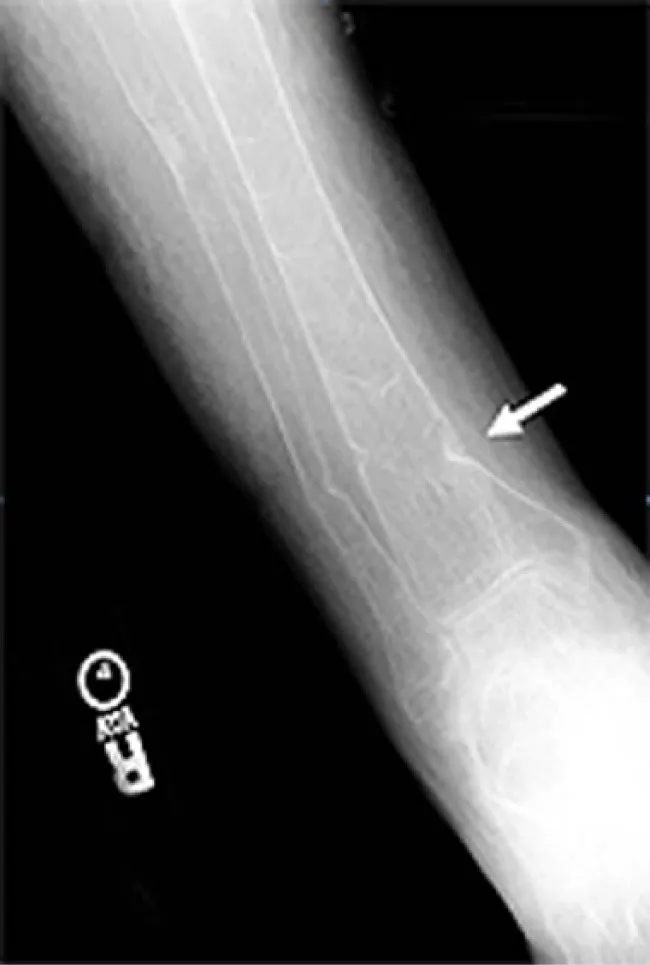
| Osteomalacia (vitamin D deficiency) | Bone pain and tenderness, proximal weakness, waddling gait; dark skin, covered clothing, malabsorption | 25-OH vitamin D, calcium, phosphate, ALP, PTH |
| Inflammatory myopathy or statin myopathy | Proximal weakness more than pain; statin exposure | CK, myositis antibodies, anti-HMGCR, EMG/MRI |
| Inflammatory arthritis (RA, SpA) | Joint swelling, morning stiffness over an hour, inflammatory back pain | Examination for synovitis, CRP, anti-CCP, HLA-B27, imaging |
| Myeloma or bony metastases | Age over 50, weight loss, night pain, anaemia, hypercalcaemia | FBC, calcium, serum free light chains and electrophoresis, imaging |
| Depression or somatic symptom disorder | Low mood, anhedonia, multiple symptoms with excessive worry | PHQ-9, GAD-7; may coexist with fibromyalgia |
Exam pearls
Guideline
NICE NG193 Chronic pain (primary and secondary) in over 16s (2021), EULAR revised recommendations for the management of fibromyalgia (2016, published 2017), 2016 revised ACR fibromyalgia criteria and the IASP chronic pain classification for ICD-11 (2019)
References
- National Institute for Health and Care Excellence (NICE). Chronic pain (primary and secondary) in over 16s: assessment of all chronic pain and management of chronic primary pain (NG193). NICE guideline 2021.
- Macfarlane GJ, Kronisch C, Dean LE, et al.. EULAR revised recommendations for the management of fibromyalgia. Ann Rheum Dis 2017.
- Wolfe F, Clauw DJ, Fitzcharles MA, et al.. 2016 Revisions to the 2010/2011 fibromyalgia diagnostic criteria. Semin Arthritis Rheum 2016.
- Wolfe F, Smythe HA, Yunus MB, et al.. The American College of Rheumatology 1990 criteria for the classification of fibromyalgia. Arthritis Rheum 1990.
- Nicholas M, Vlaeyen JWS, Rief W, et al.. The IASP classification of chronic pain for ICD-11: chronic primary pain. Pain 2019.
- Treede RD, Rief W, Barke A, et al.. Chronic pain as a symptom or a disease: the IASP Classification of Chronic Pain for the International Classification of Diseases (ICD-11). Pain 2019.
Related topics
By Dr Khalid Seidi (B.Sc., M.D.) · MedEd World Clinical Knowledge library. Original teaching content checked against current guidelines (November 2026); confirm the latest local guidance before clinical use. Not a substitute for clinical judgement.