Clinical Knowledge › Ear, nose and throat › External ear
Earwax impaction
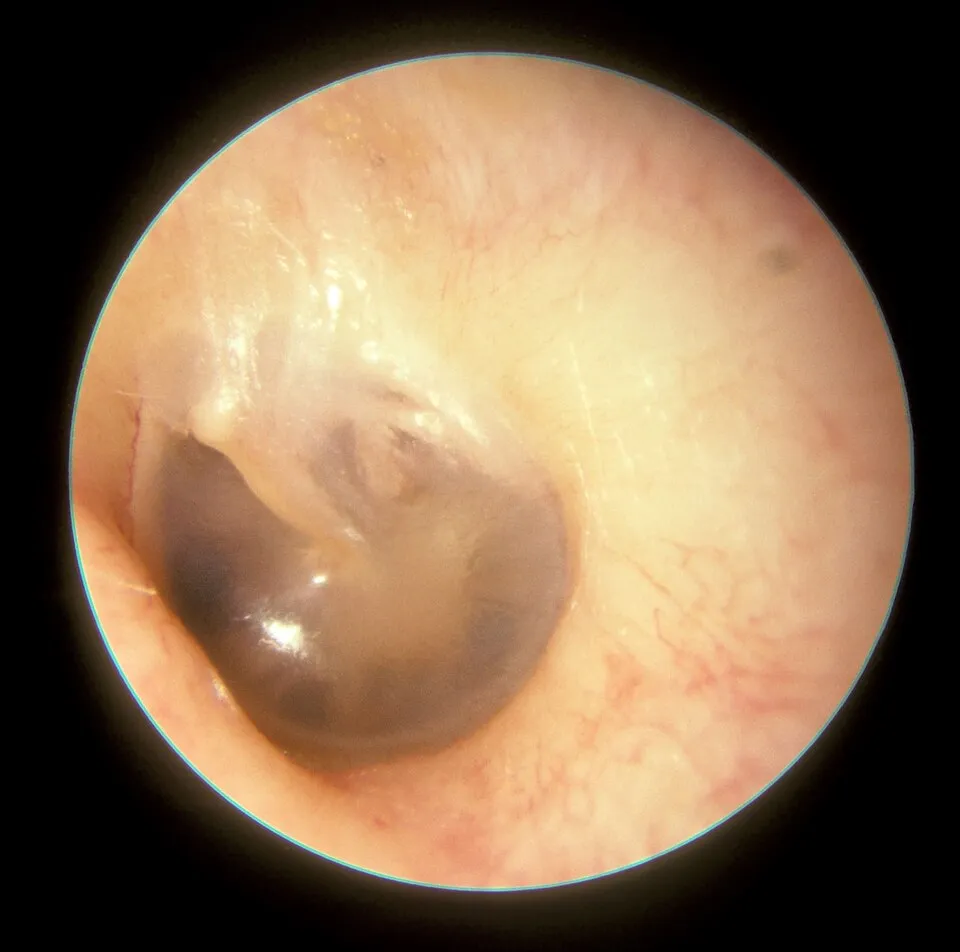
Earwax (cerumen) is a normal, protective mixture of secretions from ceruminous and sebaceous glands in the outer cartilaginous ear canal mixed with shed skin. It is cleared by epithelial migration and jaw movement. Impaction means wax that causes symptoms, prevents examination of the canal or drum, or both. It is common in older adults, people with learning disabilities, hearing aid users and those who use cotton buds. Symptoms include muffled hearing, fullness, itch, tinnitus and cough. Asymptomatic wax that does not hide something important needs no treatment. When removal is needed, options are softening drops (olive oil, sodium bicarbonate or proprietary drops), irrigation with an electronic irrigator, microsuction, or manual removal under direct vision. Old-style metal syringing should not be used. Irrigation is avoided with a perforation, grommets, previous ear surgery, active otitis externa or an only-hearing ear. Ear candling and cotton buds are not recommended. Wax can hide important pathology, so always examine after removal and test hearing if symptoms persist.
Patient case, mechanism, investigations, management, flashcards and exam-style questions.Open the lesson →
Key facts
- Cerumen is self-cleaning: epithelial migration carries it outward; it lubricates, is mildly acidic and antimicrobial
- Impaction = wax causing symptoms or preventing an adequate examination, not simply wax that is visible
- Risk factors: older age, hearing aids, cotton bud use, narrow or hairy canals, exostoses, learning disability, dementia
- Softening drops (olive oil, sodium bicarbonate 5%, proprietary drops) for 3–5 days; Cochrane found no drop clearly superior and water/saline perform similarly
- Electronic irrigation or microsuction are the recommended removal methods (NICE NG98); do not use a manual metal syringe
- Avoid irrigation with a perforation or history of one, grommets, previous ear surgery, acute otitis externa, cleft palate repair or an only-hearing ear
- Complications of removal: otitis externa, canal trauma, perforation, vertigo, tinnitus and hearing loss
- Ear candling and cotton buds are ineffective or harmful and should be discouraged
Differential diagnosis
| Condition | Clues | Key test |
|---|---|---|
| Otitis externa | Painful, swollen canal, tragal tenderness, debris | Otoscopy; responds to topical drops |
| Foreign body | Child, unilateral, visible object | Otoscopy; removal under direct vision |
| Keratosis obturans / canal cholesteatoma | Plug of keratin, canal widening or bone erosion, pain | Microscopy; CT if erosion |
| Otomycosis | Itch, fungal hyphae and spores, wet debris | Microscopy; culture |
| Exostoses | Bony swellings narrowing medial canal, cold-water swimmer | Otoscopy; CT if surgery planned |
| Otitis media with effusion / Eustachian tube dysfunction | Fullness with visible dull or retracted drum | Tympanometry (type B or C) |
| Sensorineural hearing loss | Hearing loss persists after canal is clear | Pure tone audiometry |
Exam pearls
Guideline
AAO-HNS Clinical Practice Guideline (Update): Earwax (Cerumen Impaction) 2017; NICE NG98 Hearing loss in adults (2018, with later updates)
References
- Schwartz SR, Magit AE, Rosenfeld RM, et al.. Clinical practice guideline (update): earwax (cerumen impaction). Otolaryngol Head Neck Surg 2017.
- Aaron K, Cooper TE, Warner L, Burton MJ.. Ear drops for the removal of ear wax. Cochrane Database Syst Rev 2018.
- National Institute for Health and Care Excellence. Hearing loss in adults: assessment and management (NG98). NICE, London 2018.
- Rosenfeld RM, Schwartz SR, Cannon CR, et al.. Clinical practice guideline: acute otitis externa. Otolaryngol Head Neck Surg 2014.
- Papadakis MA, Rabow MW, McQuaid KR, eds.. CURRENT Medical Diagnosis & Treatment 2026 (chapter 8: Ear, nose and throat disorders). McGraw Hill 2026.
- World Health Organization. World report on hearing. WHO, Geneva 2021.
Related topics
By Dr Khalid Seidi (B.Sc., M.D.) · MedEd World Clinical Knowledge library. Original teaching content checked against current guidelines (November 2026); confirm the latest local guidance before clinical use. Not a substitute for clinical judgement.