Clinical Knowledge › Urology › Urological infections
Emphysematous pyelonephritis
Emphysematous pyelonephritis (EPN) is a severe necrotising infection of the renal parenchyma and surrounding tissues in which bacteria produce gas. Most patients (about 80–95% across series) have diabetes, usually poorly controlled, and about a quarter have urinary obstruction; women are affected more often than men. E. coli and Klebsiella pneumoniae cause most cases; they ferment the high tissue glucose into carbon dioxide and hydrogen, which accumulate because diabetic microvascular disease impairs perfusion. Patients present with fever, loin pain, vomiting, confusion and often septic shock, thrombocytopenia and acute kidney injury. CT is diagnostic, showing gas in the kidney, collecting system or perinephric space, and the Huang–Tseng classification (classes 1–4) guides treatment. Management is resuscitation, broad-spectrum antibiotics, tight glucose control, relief of obstruction and percutaneous drainage as first-line; nephrectomy is kept for failure of drainage. Mortality is about 10–20%, higher with shock, confusion, thrombocytopenia and hyponatraemia.
Patient case, mechanism, investigations, management, flashcards and exam-style questions.Open the lesson →
Key facts
- Gas-forming necrotising infection of renal parenchyma and perirenal tissues; most patients (about 80–95%) are diabetic
- Women predominate; urinary obstruction (stones, papillary necrosis) is present in about 20–30%
- E. coli (about two thirds) and Klebsiella pneumoniae (about a third) cause most cases; gas is CO₂ and H₂ from mixed acid fermentation of glucose
- CT is diagnostic; ultrasound may show echogenic foci with dirty shadowing and can be misread as bowel gas or stones
- Huang–Tseng class 1: gas in collecting system; 2: parenchyma; 3A: perinephric; 3B: pararenal; 4: bilateral or solitary kidney
- Poor prognostic factors: shock, confusion, thrombocytopenia, AKI and hyponatraemia
- First-line: resuscitation, IV antibiotics, glucose control, relief of obstruction and percutaneous drainage
- Emergency nephrectomy carries higher mortality and is reserved for failed drainage or extensive disease with multiple risk factors
Differential diagnosis
| Condition | Clues | Key test |
|---|---|---|
| Emphysematous pyelitis (class 1) | Gas only in collecting system; better prognosis | CT |
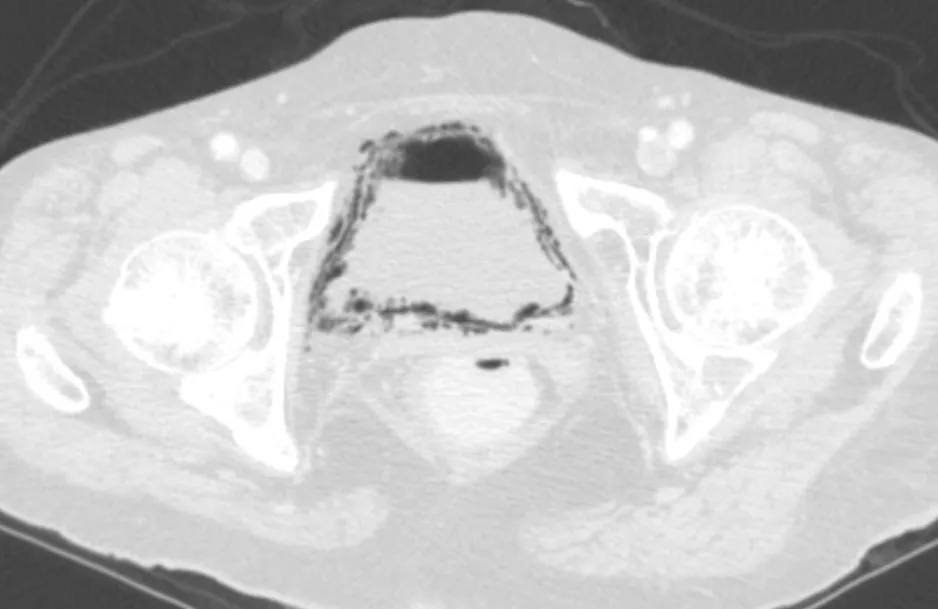
| Emphysematous cystitis | Gas in the bladder wall, pneumaturia, often diabetic | CT or plain X-ray |
| Infected obstructed kidney without gas | Hydronephrosis with infection | CT KUB |
| Renal or perinephric abscess | Collection without parenchymal gas | Contrast CT |
| Air after instrumentation or nephrostomy | Recent procedure, patient well | History; CT pattern |
| Enterorenal fistula | Gas and faecal material in collecting system, Crohn disease or colonic cancer | CT with oral contrast |
| Xanthogranulomatous pyelonephritis | Chronic course, staghorn stone, non-functioning kidney | CT |
Exam pearls
Guideline
No dedicated international guideline; management follows EAU Guidelines on Urological Infections (2025 edition), the IDSA complicated UTI guideline (2025) and Surviving Sepsis Campaign (2026), informed by the Huang–Tseng classification (2000) and systematic reviews (2008, 2022)
References
- Huang JJ, Tseng CC. Emphysematous pyelonephritis: clinicoradiological classification, management, prognosis, and pathogenesis. Arch Intern Med 2000.
- Somani BK, Nabi G, Thorpe P, Hussey J, Cook J, N'Dow J; ABACUS Research Group. Is percutaneous drainage the new gold standard in the management of emphysematous pyelonephritis? Evidence from a systematic review. J Urol 2008.
- Desai R, Batura D. A systematic review and meta-analysis of risk factors and treatment choices in emphysematous pyelonephritis. Int Urol Nephrol 2022.
- European Association of Urology. EAU Guidelines on Urological Infections (2025 edition). EAU Guidelines Office, Arnhem 2025.
- Infectious Diseases Society of America (IDSA). Clinical Practice Guideline for the Management of Complicated Urinary Tract Infections, including pyelonephritis. Infectious Diseases Society of America 2025.
- Prescott HC, Antonelli M, Alhazzani W, et al.. Surviving Sepsis Campaign: International Guidelines for Management of Sepsis and Septic Shock 2026. Crit Care Med 2026.
Related topics
By Dr Khalid Seidi (B.Sc., M.D.) · MedEd World Clinical Knowledge library. Original teaching content checked against current guidelines (November 2026); confirm the latest local guidance before clinical use. Not a substitute for clinical judgement.