Clinical Knowledge › Urology › Urological infections
Fournier gangrene
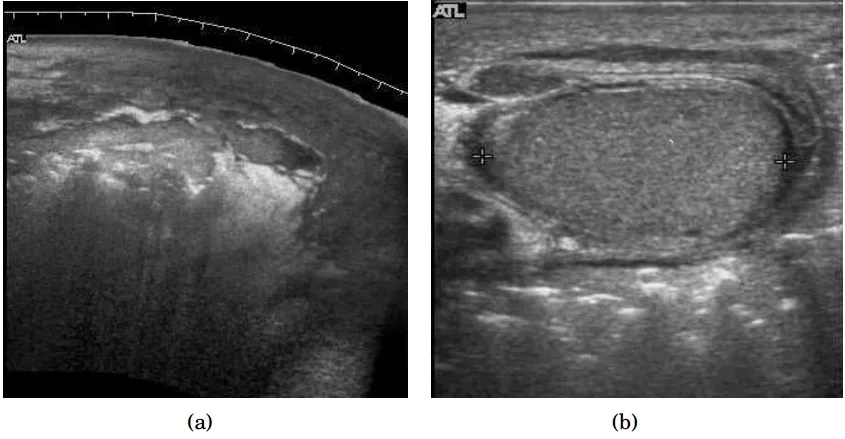
Fournier gangrene is necrotising fasciitis of the perineum, external genitalia and perianal region. It is a polymicrobial infection, usually arising from an anorectal source (perianal abscess, fistula), the urinary tract (urethral stricture, catheter trauma, epididymitis) or genital skin. Diabetes is the commonest risk factor; others are alcohol misuse, obesity, immunosuppression and SGLT2 inhibitor use. Thrombosis of small subcutaneous vessels causes necrosis that spreads rapidly along Colles', dartos and Scarpa's fascia towards the abdominal wall. Early signs are pain out of proportion to visible changes, swelling and fever; later come dusky skin, crepitus, foul discharge and septic shock. The testes are usually spared because they have a separate blood supply. Diagnosis is clinical; CT can show gas and the source but must not delay surgery. Treatment is resuscitation, broad-spectrum IV antibiotics including clindamycin, and emergency radical debridement repeated every 24–48 hours, with urinary and sometimes faecal diversion, wound care and later reconstruction.
Patient case, mechanism, investigations, management, flashcards and exam-style questions.Open the lesson →
Key facts
- Necrotising fasciitis of the perineum, genitalia and perianal region; usually polymicrobial (type 1) with aerobes and anaerobes
- Sources: anorectal (most common), urogenital (stricture, catheter, epididymitis, prostate biopsy) and skin; often after minor procedures
- Risk factors: diabetes, alcohol misuse, obesity, immunosuppression, HIV, cirrhosis, CKD, malignancy and SGLT2 inhibitors
- Spreads along Colles' fascia, dartos and Scarpa's fascia to the abdominal wall; testes usually spared (testicular arteries from the aorta)
- Pain out of proportion, swelling and fever come first; crepitus, dusky or black skin, bullae and foul discharge are late signs
- Clinical diagnosis: do not delay surgery for imaging; CT shows fascial gas and the source in stable patients; LRINEC cannot exclude it
- Treat with resuscitation, broad-spectrum antibiotics plus clindamycin, and emergency radical debridement with re-look within 24–48 hours
- Population mortality about 7.5%, higher (20–40%) in tertiary case series; Fournier gangrene severity index predicts outcome
Differential diagnosis
| Condition | Clues | Key test |
|---|---|---|
| Scrotal or perineal cellulitis | Erythema and swelling without crepitus, necrosis or systemic toxicity; responds to antibiotics | Clinical review; CT if doubt |
| Perianal or ischiorectal abscess | Localised fluctuant swelling, no spreading necrosis | Examination; CT or MRI pelvis |
| Epididymo-orchitis | Tender epididymis and testis, scrotal skin intact | Urine NAAT and culture; scrotal ultrasound |
| Testicular torsion | Sudden testicular pain in a young male, no skin necrosis | Urgent surgical exploration |
| Strangulated inguinoscrotal hernia | Irreducible tender groin swelling, bowel obstruction | Examination; CT |
| Scrotal oedema (heart, liver or renal failure) | Painless bilateral oedema, no fever | Clinical; albumin; echocardiography |
| Pyoderma gangrenosum or vasculitic ulcer | Ulcer with violaceous edge, pathergy, no gas | Biopsy; exclude infection |
Exam pearls
Guideline
EAU Guidelines on Urological Infections (2025 edition, Fournier gangrene section), IDSA skin and soft tissue infection guideline (2014), WSES/SIS-E consensus on skin and soft-tissue infections (2018) and Surviving Sepsis Campaign guidelines (2026)
References
- European Association of Urology. EAU Guidelines on Urological Infections (2025 edition). EAU Guidelines Office, Arnhem 2025.
- Stevens DL, Bisno AL, Chambers HF, et al.. Practice guidelines for the diagnosis and management of skin and soft tissue infections: 2014 update by the Infectious Diseases Society of America. Clin Infect Dis 2014.
- Sartelli M, Guirao X, Hardcastle TC, et al.. 2018 WSES/SIS-E consensus conference: recommendations for the management of skin and soft-tissue infections. World J Emerg Surg 2018.
- Prescott HC, Antonelli M, Alhazzani W, et al.. Surviving Sepsis Campaign: International Guidelines for Management of Sepsis and Septic Shock 2026. Crit Care Med 2026.
- Laor E, Palmer LS, Tolia BM, Reid RE, Winter HI. Outcome prediction in patients with Fournier's gangrene. J Urol 1995.
- Sorensen MD, Krieger JN, Rivara FP, et al.. Fournier's Gangrene: population based epidemiology and outcomes. J Urol 2009.
Related topics
By Dr Khalid Seidi (B.Sc., M.D.) · MedEd World Clinical Knowledge library. Original teaching content checked against current guidelines (November 2026); confirm the latest local guidance before clinical use. Not a substitute for clinical judgement.