Clinical Knowledge › Dermatology › Blistering diseases
Linear IgA disease
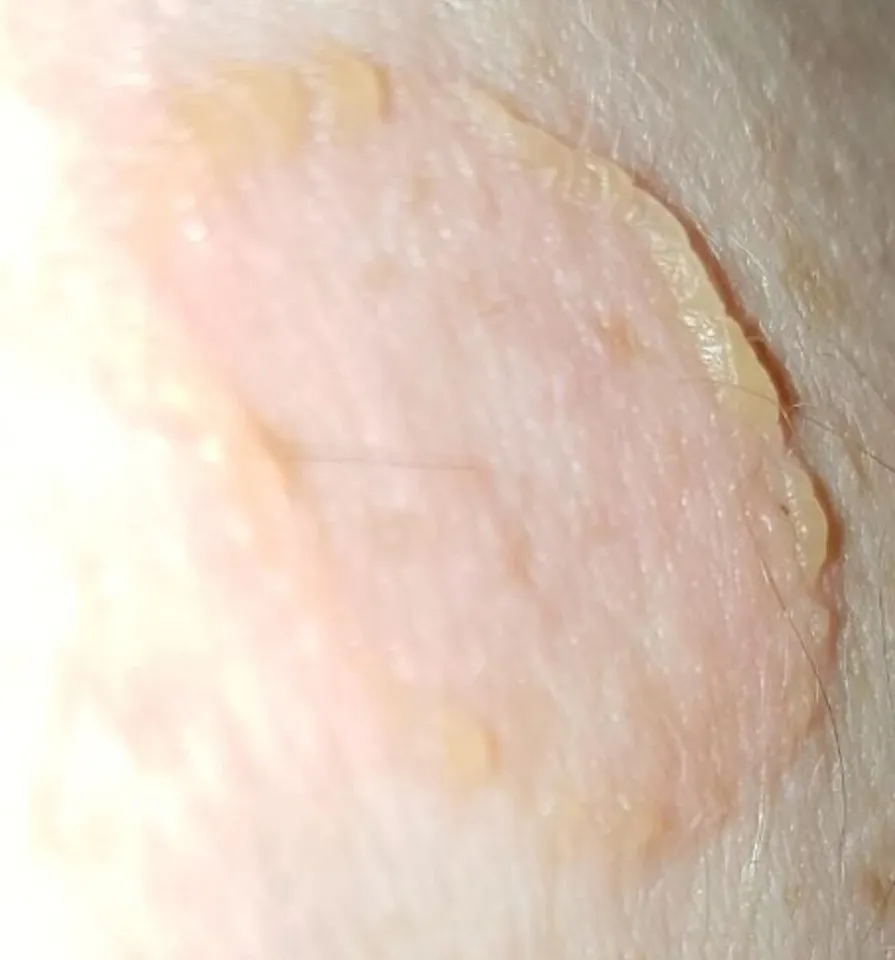
Linear IgA disease (linear IgA bullous dermatosis, LAD) is an uncommon autoimmune subepidermal blistering disease defined by linear deposition of IgA along the basement membrane zone. The main targets are fragments of the BP180 ectodomain (LAD-1 and LABD97), so it is a close cousin of bullous pemphigoid with an IgA rather than IgG response. It has two peaks: preschool children (chronic bullous disease of childhood) and adults over 60. In adults a drug trigger is common, classically vancomycin, followed by beta-lactam antibiotics, NSAIDs and ACE inhibitors. Typical lesions are tense vesicles and bullae arranged around the edge of annular red plaques, giving a 'string of pearls' or 'cluster of jewels' appearance, often on the perineum, lower trunk, thighs and face in children. Mucosal disease, including scarring of the eyes, is frequent. Drug-induced cases can mimic toxic epidermal necrolysis. Diagnosis rests on DIF of perilesional skin. Management (EADV S2k 2024) is to stop any culprit drug and use dapsone with topical steroids, adding systemic steroids or other agents if needed.
Patient case, mechanism, investigations, management, flashcards and exam-style questions.Open the lesson →
Key facts
- Defined by linear IgA along the basement membrane zone on direct immunofluorescence of perilesional skin
- Main antigens: LAD-1 (120 kDa) and LABD97, shed fragments of BP180 (type XVII collagen); sometimes type VII collagen
- Bimodal: children under 5 years (chronic bullous disease of childhood) and adults over 60
- Drug-induced LAD: vancomycin is the commonest culprit; also penicillins, cephalosporins, NSAIDs, captopril, amiodarone, phenytoin
- Classic morphology: annular or polycyclic plaques with blisters at the rim ('string of pearls', 'cluster of jewels')
- Mucosal involvement is common (oral, ocular); eye disease can scar like mucous membrane pemphigoid
- Histology: subepidermal blister with neutrophils, sometimes papillary microabscesses mimicking dermatitis herpetiformis
- First line (EADV 2024): withdraw culprit drug; dapsone plus potent topical corticosteroid; add prednisolone for severe disease
Differential diagnosis
| Condition | Clues | Key test |
|---|---|---|
| Dermatitis herpetiformis | Grouped itchy papulovesicles on extensors, coeliac association | DIF granular (not linear) IgA in dermal papillae |
| Bullous pemphigoid | Older adults, tense bullae, rarely annular rosettes | DIF linear IgG/C3; BP180 IgG ELISA |
| Toxic epidermal necrolysis | Drug-induced, painful skin, sheet-like detachment, systemic illness | Biopsy: full-thickness necrosis; DIF negative |
| Bullous impetigo | Children, flaccid blisters, honey crust, localised | Swab for S. aureus; DIF negative |
| Erythema multiforme | Target lesions on acral sites, HSV trigger | Clinical; biopsy interface dermatitis |
| Mucous membrane pemphigoid | Predominantly mucosal scarring, older adults | DIF IgG and/or IgA at BMZ; overlap exists |
| Childhood bullous pemphigoid or EBA | Acral or trauma-induced blisters | DIF IgG; salt-split skin |
Exam pearls
Guideline
EADV S2k guideline on diagnosis and treatment of linear IgA dermatosis (2024)
References
- Caux F, Patsatsi A, Karakioulaki M, et al.. S2k guidelines on diagnosis and treatment of linear IgA dermatosis initiated by the European Academy of Dermatology and Venereology. J Eur Acad Dermatol Venereol 2024.
- Lammer J, Hein R, Roenneberg S, et al.. Drug-induced linear IgA bullous dermatosis: a case report and review of the literature. Acta Derm Venereol 2019.
- Khan M, Park L, Skopit S. Management options for linear immunoglobulin A (IgA) bullous dermatosis: a literature review. Cureus 2023.
- van Beek N, Holtsche MM, Atefi I, et al.. State-of-the-art diagnosis of autoimmune blistering diseases. Front Immunol 2024.
- Schmidt E, Zillikens D. Pemphigoid diseases. Lancet 2013.
- Patel PM, Jones VA, Murray TN, Amber KT. A review comparing international guidelines for the management of bullous pemphigoid, pemphigoid gestationis, mucous membrane pemphigoid, and epidermolysis bullosa acquisita. Am J Clin Dermatol 2020.
Related topics
By Dr Khalid Seidi (B.Sc., M.D.) · MedEd World Clinical Knowledge library. Original teaching content checked against current guidelines (November 2026); confirm the latest local guidance before clinical use. Not a substitute for clinical judgement.