Clinical Knowledge › Dermatology › Blistering diseases
Porphyria cutanea tarda
Porphyria cutanea tarda (PCT) is the commonest porphyria worldwide. It results from reduced activity of hepatic uroporphyrinogen decarboxylase (UROD), the fifth enzyme of haem synthesis. Most cases are sporadic (type 1) and are triggered when iron-driven oxidative stress in the liver generates an inhibitor of UROD; a minority are familial (type 2) with one inherited UROD mutation. Susceptibility factors include alcohol, hepatitis C, HIV, oestrogens, smoking, HFE haemochromatosis variants and chronic kidney disease. Uroporphyrin and heptacarboxyl porphyrin accumulate and, when activated by visible violet light (about 400-410 nm), damage the skin. Patients develop fragile skin with blisters, erosions, crusts, milia and scars on the backs of the hands and forearms, plus facial hypertrichosis and hyperpigmentation, but no acute neurovisceral attacks. Urine may be dark. Diagnosis rests on raised plasma porphyrins and a urine pattern dominated by uroporphyrin. Treatment is trigger removal, visible-light photoprotection, and either venesection to lower ferritin or low-dose hydroxychloroquine, with treatment of hepatitis C.
Patient case, mechanism, investigations, management, flashcards and exam-style questions.Open the lesson →
Key facts
- Commonest porphyria; reduced hepatic uroporphyrinogen decarboxylase (UROD) activity; cutaneous only, no acute attacks
- Type 1 sporadic (about 75-80%): acquired UROD inhibition; type 2 familial: heterozygous UROD mutation plus triggers
- Susceptibility factors: alcohol, hepatitis C, HIV, oestrogens, smoking, HFE variants (C282Y, H63D), iron overload, CKD/dialysis
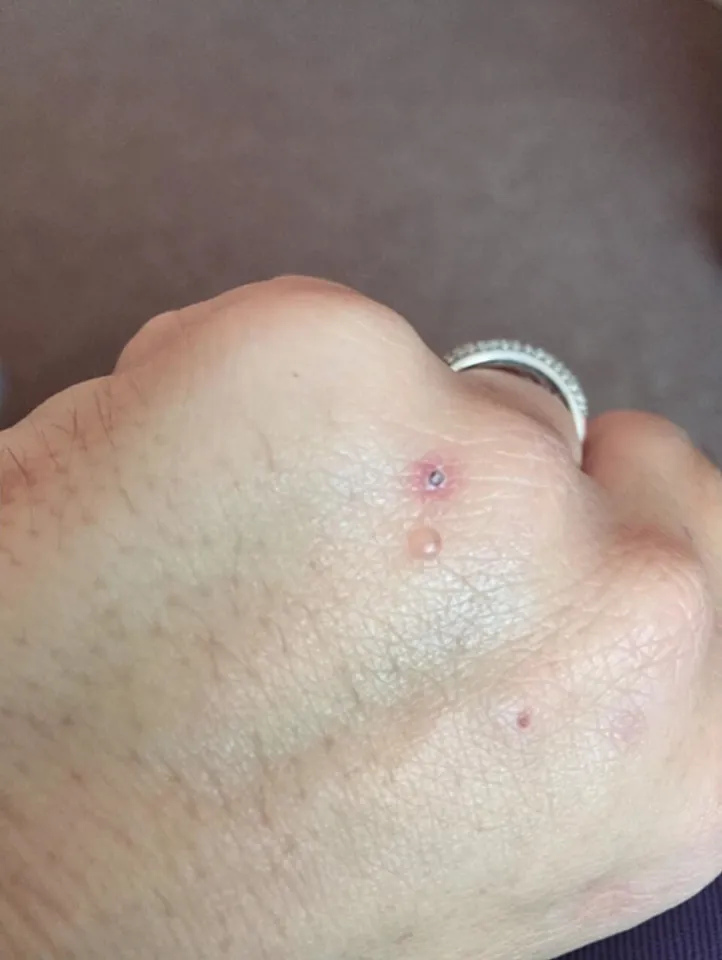
- Skin: fragility, vesicles and bullae, erosions, crusts, milia and scars on dorsal hands and forearms; facial hypertrichosis and hyperpigmentation
- Porphyrins absorb visible violet light (Soret band about 400-410 nm), so standard UV sunscreens give little protection
- Diagnosis: raised total plasma porphyrins (fluorescence peak about 619-620 nm) and urine uroporphyrin and heptacarboxyl porphyrin predominance
- Treatment: remove triggers plus venesection (to low-normal ferritin) or low-dose hydroxychloroquine 100 mg twice weekly (teaching dose)
- Higher-dose antimalarials cause a hepatotoxic porphyrin flush; associated risk of hepatocellular carcinoma in advanced liver disease
Differential diagnosis
| Condition | Clues | Key test |
|---|---|---|
| Pseudoporphyria | Identical blistering after NSAIDs (naproxen), furosemide, tetracyclines, sunbeds or dialysis | Normal plasma and urine porphyrins |
| Variegate porphyria | PCT-like skin plus acute neurovisceral attacks; South African ancestry | Plasma fluorescence peak about 626 nm; faecal protoporphyrin |
| Hereditary coproporphyria | Skin lesions with acute attacks | Urine and faecal coproporphyrin III |
| Erythropoietic protoporphyria | Childhood onset; immediate burning pain in sunlight without blisters | Raised erythrocyte protoporphyrin |
| Epidermolysis bullosa acquisita | Trauma-induced blisters, scars, milia; not photodistributed | DIF linear IgG at BMZ; anti-type VII collagen |
| Bullous pemphigoid | Older patient, itch, tense blisters on flexures | DIF linear IgG/C3; BP180 ELISA |
| Polymorphic light eruption | Itchy papules hours after sun, no fragility or milia | Clinical; normal porphyrins |
Exam pearls
Guideline
Porphyria expert reviews and practice recommendations (NEJM review 2017; ASH Education Program 2024; Liver International clinical management update 2024; Annual Review of Medicine porphyrias update 2024)
References
- Bissell DM, Anderson KE, Bonkovsky HL. Porphyria. N Engl J Med 2017.
- Singal AK, Kormos-Hallberg C, Lee C, et al.. Low-dose hydroxychloroquine is as effective as phlebotomy in treatment of patients with porphyria cutanea tarda. Clin Gastroenterol Hepatol 2012.
- Leaf RK, Dickey AK. Porphyria cutanea tarda: a unique iron-related disorder. Hematology Am Soc Hematol Educ Program 2024.
- Sarkany RPE, Phillips JD. The clinical management of porphyria cutanea tarda: an update. Liver Int 2024.
- Dickey AK, Leaf RK, Balwani M. Update on the porphyrias. Annu Rev Med 2024.
- Stölzel U, Doss MO, Schuppan D. Clinical guide and update on porphyrias. Gastroenterology 2019.
Related topics
By Dr Khalid Seidi (B.Sc., M.D.) · MedEd World Clinical Knowledge library. Original teaching content checked against current guidelines (November 2026); confirm the latest local guidance before clinical use. Not a substitute for clinical judgement.