Clinical Knowledge › Surgery › Breast and endocrine surgery
Mastitis and breast abscess
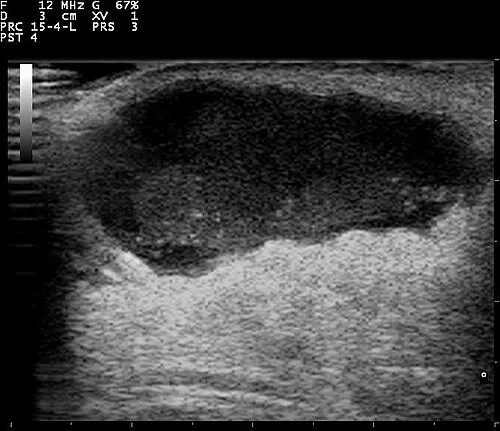
Mastitis is inflammation of the breast, with or without infection. Lactational mastitis affects up to 1 in 5 breastfeeding women, usually in the first 3 months, and is now seen as a spectrum: ductal narrowing and inflammation, bacterial mastitis, phlegmon and abscess. It causes a painful, red, hot, wedge-shaped area with fever. Staphylococcus aureus is the commonest pathogen. Management is continued breastfeeding from the affected side, avoiding over-pumping and deep massage, ice, NSAIDs and analgesia; antibiotics such as flucloxacillin are added if symptoms do not improve within 12–24 hours or the woman is systemically unwell. A breast abscess is a localised pus collection, diagnosed by ultrasound and treated by needle aspiration (or a small drain) with antibiotics, reserving incision for large, multiloculated or skin-threatening collections. Non-lactational infections include periductal mastitis in smokers, which can cause recurrent subareolar abscess and mammary duct fistula, and idiopathic granulomatous mastitis. Exclude inflammatory breast cancer if inflammation fails to settle.
Patient case, mechanism, investigations, management, flashcards and exam-style questions.Open the lesson →
Key facts
- Lactational mastitis is a spectrum: ductal narrowing → inflammatory mastitis → bacterial mastitis → phlegmon → abscess
- Continue breastfeeding (including from the affected side); breast milk is safe for a healthy term baby and stopping abruptly worsens stasis
- First-line: ice, NSAID (ibuprofen), paracetamol, supportive bra, normal feeding without over-pumping or deep massage
- Antibiotics if not improving within 12–24 hours or systemically unwell: flucloxacillin (or dicloxacillin or cefalexin); clarithromycin or clindamycin if penicillin-allergic; consider MRSA cover by local prevalence
- Breast abscess: confirm with ultrasound; treat with ultrasound-guided needle aspiration (repeated as needed) or percutaneous drain plus antibiotics
- Incision and drainage is reserved for large or multiloculated abscesses, failure of aspiration, or thinned, necrotic overlying skin
- Periductal mastitis: young smokers, subareolar inflammation, anaerobes; recurrent cases form a mammary duct fistula needing total duct excision and smoking cessation
- Non-lactational inflammation that does not resolve after one antibiotic course needs imaging and biopsy to exclude inflammatory breast cancer
Differential diagnosis
| Condition | Clues | Key test |
|---|---|---|
| Breast engorgement | Bilateral, diffuse fullness in first days postpartum, low-grade temperature | Clinical; resolves with effective milk removal |
| Blocked duct / ductal narrowing | Tender localised lump, no systemic symptoms | Clinical; ultrasound if persistent |
| Galactocele | Non-tender soft cystic lump during lactation | Ultrasound; aspiration yields milk |
| Inflammatory breast cancer | Non-lactating, painless or mildly painful diffuse erythema and peau d'orange, no fever, no response to antibiotics | Ultrasound, mammography, core and skin punch biopsy |
| Idiopathic granulomatous mastitis | Parous woman within a few years of pregnancy, firm mass with multiple sinuses | Core biopsy: non-caseating lobular granulomas; exclude TB |
| Tuberculous mastitis | Endemic area, chronic sinus, axillary nodes | Biopsy, acid-fast bacilli culture or PCR |
| Cellulitis of breast skin | After surgery, radiotherapy or lymphoedema | Clinical; no collection on ultrasound |
Exam pearls
Guideline
Academy of Breastfeeding Medicine Clinical Protocol #36: The Mastitis Spectrum (revised 2022), WHO Mastitis: causes and management (2000) and Cochrane reviews of antibiotics and abscess treatment
References
- Mitchell KB, Johnson HM, Rodríguez JM, et al.. Academy of Breastfeeding Medicine Clinical Protocol #36: The Mastitis Spectrum, Revised 2022. Breastfeed Med 2022.
- World Health Organization. Mastitis: causes and management (WHO/FCH/CAH/00.13). WHO 2000.
- Jahanfar S, Ng CJ, Teng CL. Antibiotics for mastitis in breastfeeding women. Cochrane Database Syst Rev 2013.
- Irusen H, Rohwer AC, Steyn DW, Young T. Treatments for breast abscesses in breastfeeding women. Cochrane Database Syst Rev 2015.
- Dixon JM. Breast infection. BMJ 2013.
- Townsend CM, Beauchamp RD, Evers BM, Mattox KL, eds.. Sabiston Textbook of Surgery: The Biological Basis of Modern Surgical Practice. 2022.
Related topics
By Dr Khalid Seidi (B.Sc., M.D.) · MedEd World Clinical Knowledge library. Original teaching content checked against current guidelines (November 2026); confirm the latest local guidance before clinical use. Not a substitute for clinical judgement.