Clinical Knowledge › Internal medicine › Cardiology and angiology › Pericardial diseases and cardiac tumours
Post-myocardial infarction and post-pericardiotomy syndromes (Dressler syndrome)
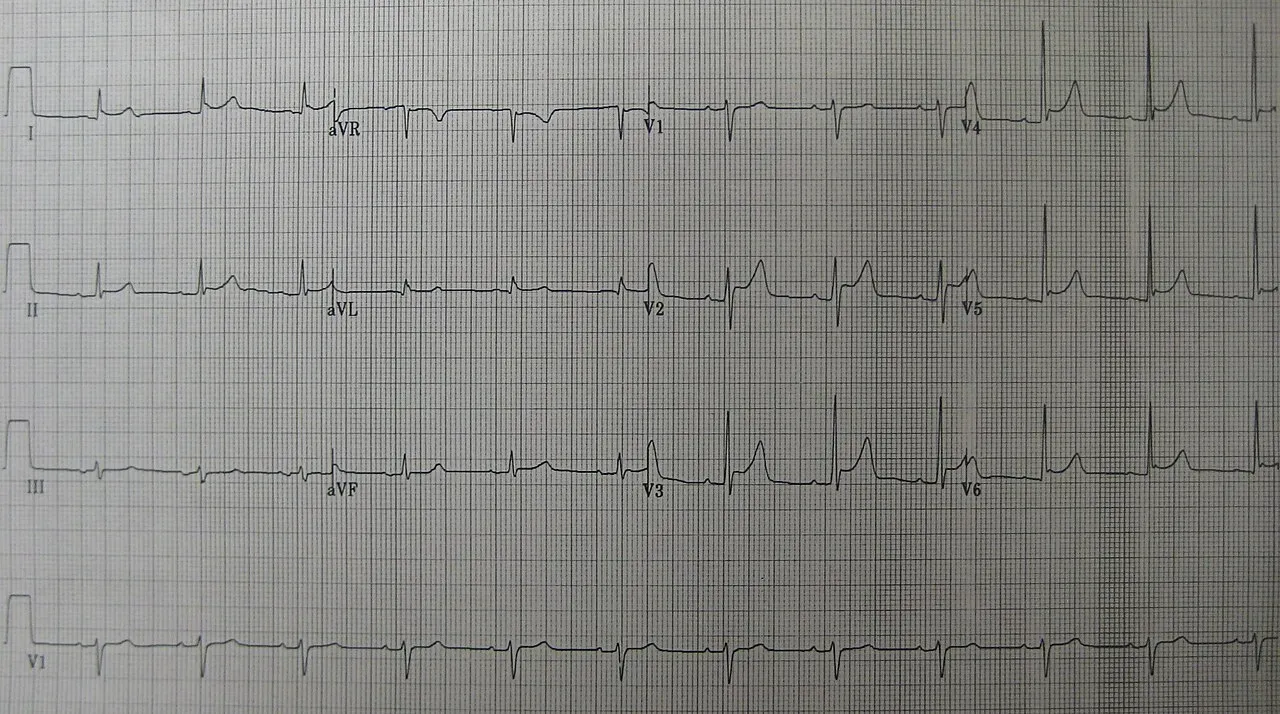
Post-cardiac injury syndromes are inflammatory pericardial and pleural reactions that follow damage to the pericardium or myocardium. They include early infarct-associated pericarditis (days 1–3 after a transmural myocardial infarction), late post-infarction pericarditis or Dressler syndrome (typically 1–6 weeks after infarction), post-pericardiotomy syndrome after cardiac surgery, and post-traumatic pericarditis after chest trauma or procedures such as PCI, pacing, ablation or TAVI. Delayed forms are thought to be immune-mediated, with antiheart antibodies released after myocardial or pericardial injury. Diagnosis needs at least two of: unexplained fever, pericarditic or pleuritic chest pain, a pericardial or pleural rub, pericardial effusion and pleural effusion with raised CRP. Treatment is aspirin (preferred after MI) or another NSAID plus colchicine, with corticosteroids only for refractory disease. Early reperfusion has made Dressler syndrome rare, while post-pericardiotomy syndrome still affects about 10–20% of cardiac surgery patients.
Patient case, mechanism, investigations, management, flashcards and exam-style questions.Open the lesson →
Key facts
- Post-cardiac injury syndromes: early post-MI pericarditis, Dressler syndrome, post-pericardiotomy syndrome and post-traumatic (including iatrogenic) pericarditis
- Early infarct-associated pericarditis occurs 1–3 days after a large transmural MI and reflects direct epicardial inflammation
- Dressler syndrome appears about 1–6 weeks after MI, is immune-mediated and is now rare (under 1%) in the primary PCI era
- Post-pericardiotomy syndrome follows about 10–20% of cardiac operations, usually within the first weeks
- Diagnosis: at least 2 of fever, pericarditic or pleuritic pain, rub, pericardial effusion, pleural effusion with raised CRP
- Treatment: aspirin (after MI) or NSAID plus colchicine for about 3 months; avoid non-aspirin NSAIDs and early steroids after recent MI
- Perioperative colchicine reduces post-pericardiotomy syndrome (COPPS trials) but causes more gastrointestinal adverse effects
- Main dangers: late postoperative tamponade, especially in anticoagulated patients, and differentiation from reinfarction, PE or infection
Differential diagnosis
| Condition | Clues | Key test |
|---|---|---|
| Reinfarction or stent thrombosis | New pressure-like pain, new territorial ST elevation, troponin re-rise | Serial ECGs and troponin, urgent angiography |
| Free wall rupture with haemopericardium | Days 1–7 after MI, sudden hypotension, PEA, effusion with tamponade | Bedside echocardiography |
| Pulmonary embolism | Pleuritic pain and dyspnoea after surgery or immobility; hypoxaemia | CTPA, leg ultrasound |
| Postoperative infection (sternal wound, mediastinitis, pneumonia) | High fever, wound discharge, sternal instability, high procalcitonin | Wound inspection, cultures, CT chest |
| Infective endocarditis after valve surgery | Persistent fever, new regurgitation, embolic phenomena | Blood cultures, TOE |
| Postoperative atrial fibrillation or heart failure | Breathlessness without fever or pleuritic pain | ECG, BNP, echocardiography |
| Drug fever or lupus-like reaction | Recent new drug (e.g. hydralazine, procainamide) | Drug history, ANA, withdrawal |
Exam pearls
Guideline
2025 ESC Guidelines for the management of myocarditis and pericarditis (post-cardiac injury syndromes), with the 2015 ESC pericardial disease guideline and 2023 ESC ACS guideline
References
- Schulz-Menger J, Collini V, Gröschel J, et al.. 2025 ESC Guidelines for the management of myocarditis and pericarditis. Eur Heart J 2025.
- Adler Y, Charron P, Imazio M, et al.. 2015 ESC Guidelines for the diagnosis and management of pericardial diseases. Eur Heart J 2015.
- Byrne RA, Rossello X, Coughlan JJ, et al.. 2023 ESC Guidelines for the management of acute coronary syndromes. Eur Heart J 2023.
- Imazio M, Hoit BD. Post-cardiac injury syndromes. An emerging cause of pericardial diseases. Int J Cardiol 2013.
- Imazio M, Trinchero R, Brucato A, et al.. COlchicine for the Prevention of the Post-pericardiotomy Syndrome (COPPS): a multicentre, randomized, double-blind, placebo-controlled trial. Eur Heart J 2010.
- Imazio M, Brucato A, Ferrazzi P, et al.. Colchicine for prevention of postpericardiotomy syndrome and postoperative atrial fibrillation: the COPPS-2 randomized clinical trial. JAMA 2014.
Related topics
By Dr Khalid Seidi (B.Sc., M.D.) · MedEd World Clinical Knowledge library. Original teaching content checked against current guidelines (November 2026); confirm the latest local guidance before clinical use. Not a substitute for clinical judgement.