Clinical Knowledge › Internal medicine › Endocrinology › Pituitary and hypothalamic disorders
Acromegaly
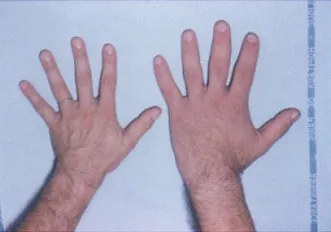
Acromegaly is the syndrome of chronic growth hormone (GH) excess after epiphyseal closure; before closure it causes gigantism. Over 95% of cases are due to a somatotroph pituitary neuroendocrine tumour, usually a macroadenoma, and about 40% of these carry a somatic GNAS (gsp) mutation. GH acts largely through hepatic insulin-like growth factor 1 (IGF-1), producing slow, insidious acral and soft-tissue overgrowth: enlarging hands and feet, coarse facial features, prognathism, macroglossia, sweating, arthropathy and carpal tunnel syndrome. Diagnosis is typically delayed by 5–10 years, by which time hypertension, cardiomyopathy, sleep apnoea, diabetes, colonic polyps and vertebral fractures are common. Screen with an age- and sex-adjusted IGF-1; confirm with failure of GH to suppress below 1 µg/L (or a lower assay-specific threshold) during a 75 g oral glucose tolerance test, then image with pituitary MRI. Transsphenoidal surgery is first-line. Medical therapy (somatostatin receptor ligands including oral options such as octreotide capsules and paltusotine, pegvisomant, cabergoline, pasireotide) and radiotherapy treat residual disease. Normalising IGF-1 and GH restores near-normal life expectancy.
Patient case, mechanism, investigations, management, flashcards and exam-style questions.Open the lesson →
Key facts
- Acromegaly = GH excess after epiphyseal fusion; gigantism = GH excess before fusion
- Over 95% are somatotroph PitNETs (most macroadenomas); rare causes include ectopic GHRH (pancreatic or bronchial NET) and familial syndromes (MEN1, AIP, Carney complex, X-LAG, McCune–Albright)
- Best screening test: serum IGF-1 adjusted for age and sex; random GH is unhelpful because GH is pulsatile
- Confirmatory test: GH fails to suppress below 1 µg/L (or below about 0.4 µg/L with sensitive assays) after a 75 g OGTT; may be omitted when IGF-1 is clearly high with typical features and a pituitary tumour
- Comorbidities to screen: hypertension, LVH and cardiomyopathy, obstructive sleep apnoea, diabetes, colonic polyps (colonoscopy at diagnosis), thyroid nodules, arthropathy, vertebral fractures
- First-line treatment: transsphenoidal surgery; remission defined as normal IGF-1 with random GH below 1 µg/L
- Medical options: SRLs (octreotide LAR, lanreotide autogel, oral octreotide capsules, oral paltusotine approved in the USA in 2025), pasireotide (hyperglycaemia), pegvisomant (GH receptor antagonist; monitor IGF-1 and liver enzymes), cabergoline for mild disease
- Uncontrolled acromegaly shortens life by about 10 years (mainly cardiovascular and respiratory); biochemical control normalises mortality
Differential diagnosis
| Condition | Clues | Key test |
|---|---|---|
| Familial or constitutional coarse features and large stature | Unchanged appearance on old photographs; normal IGF-1 | IGF-1 |
| Pachydermoperiostosis (primary hypertrophic osteoarthropathy) | Thick skin, clubbing, periostitis; normal IGF-1 | IGF-1, hand X-ray |
| Hypothyroidism | Coarse features, macroglossia, carpal tunnel, weight gain | TSH and free T4 |
| Pseudoacromegaly with severe insulin resistance | Acanthosis nigricans, acral enlargement, very high insulin, normal IGF-1 | IGF-1, insulin |
| Ectopic GHRH secretion | Acromegaly with pituitary hyperplasia rather than adenoma; pancreatic or lung NET | Plasma GHRH, chest and abdominal imaging |
| Physiological IGF-1 rise | Puberty or pregnancy (placental GH) | Age-adjusted ranges; clinical context |
| Marfan syndrome or Klinefelter syndrome (tall stature) | Tall but without acral and soft-tissue growth | Clinical assessment, karyotype or genetics |
Exam pearls
Guideline
Endocrine Society Acromegaly Guideline (2014), Pituitary Society update to acromegaly management (2021) and Acromegaly Consensus Group criteria for diagnosis and remission (2024)
References
- Katznelson L, Laws ER Jr, Melmed S, et al.. Acromegaly: an Endocrine Society clinical practice guideline. J Clin Endocrinol Metab 2014.
- Fleseriu M, Biller BMK, Freda PU, et al.. A Pituitary Society update to acromegaly management guidelines. Pituitary 2021.
- Giustina A, Biermasz N, Casanueva FF, et al.. Consensus on criteria for acromegaly diagnosis and remission. Pituitary 2024.
- Melmed S.. Pituitary-Tumor Endocrinopathies. N Engl J Med 2020.
- Asa SL, Mete O, Perry A, Osamura RY.. Overview of the 2022 WHO Classification of Pituitary Tumors. Endocr Pathol 2022.
- US Food and Drug Administration. PALSONIFY (paltusotine) tablets: prescribing information. FDA label, NDA 219070 2025.
Related topics
By Dr Khalid Seidi (B.Sc., M.D.) · MedEd World Clinical Knowledge library. Original teaching content checked against current guidelines (November 2026); confirm the latest local guidance before clinical use. Not a substitute for clinical judgement.