Clinical Knowledge › Internal medicine › Endocrinology › Pituitary and hypothalamic disorders
Sheehan syndrome
Sheehan syndrome is hypopituitarism caused by ischaemic necrosis of the pituitary gland after severe postpartum haemorrhage with hypotension. In pregnancy the gland enlarges, mainly through lactotroph hyperplasia, while its blood supply and the bony sella do not, so it is vulnerable to hypoperfusion. It has become rare where obstetric care is good, but remains an important cause of hypopituitarism in low- and middle-income countries. The classic first clue is failure of lactation after a complicated delivery, followed by failure of menses to return, loss of axillary and pubic hair, fatigue, cold intolerance, pallor without pigmentation and hyponatraemia. Growth hormone and prolactin are lost most often, then gonadotrophins, TSH and ACTH. Acute presentation with adrenal crisis is rare; diagnosis is usually delayed by years. MRI later shows a partially or completely empty sella. Treatment is lifelong hormone replacement, hydrocortisone before levothyroxine, and prevention rests on preventing and promptly treating postpartum haemorrhage.
Patient case, mechanism, investigations, management, flashcards and exam-style questions.Open the lesson →
Key facts
- Sheehan syndrome = postpartum pituitary necrosis after severe obstetric haemorrhage and hypotension
- The pituitary enlarges in pregnancy (lactotroph hyperplasia) without matching increase in blood supply, making it vulnerable to ischaemia
- Failure to lactate after delivery is the earliest and most characteristic symptom; failure of menses to return follows
- Order of hormone loss: GH and prolactin most often, then LH/FSH, then TSH and ACTH; AVP deficiency is uncommon
- Diagnosis is often delayed for years; ask every woman with hypopituitarism about previous postpartum haemorrhage and breastfeeding
- Pale skin without hyperpigmentation distinguishes secondary adrenal insufficiency from Addison disease; hyperkalaemia is absent because aldosterone is preserved
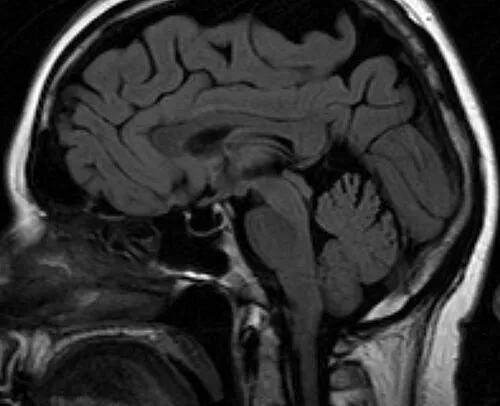
- Chronic phase MRI shows a small gland or partial or complete empty sella; an enlarged gland is seen in the acute phase
- Replace hydrocortisone before levothyroxine; monitor levothyroxine by free T4, not TSH
Differential diagnosis
| Condition | Clues | Key test |
|---|---|---|
| Lymphocytic hypophysitis | Late pregnancy or postpartum headache, no major haemorrhage, isolated ACTH deficiency common | MRI: symmetrically enlarged enhancing gland and thick stalk |
| Pituitary apoplexy | Sudden headache, visual loss and ophthalmoplegia from a pre-existing adenoma | MRI shows haemorrhagic sellar mass |
| Primary adrenal insufficiency (Addison disease) | Hyperpigmentation, hyperkalaemia, salt craving | High ACTH and renin; low aldosterone |
| Primary hypothyroidism (postpartum thyroiditis) | Hypothyroid symptoms after delivery but normal lactation | TSH raised with low free T4 |
| Postpartum depression | Fatigue, low mood and poor sleep | Normal pituitary hormones; screening questionnaires |
| Lactational amenorrhoea or hyperprolactinaemia | Amenorrhoea with breastfeeding or galactorrhoea | Prolactin normal-high or high; other axes normal |
| Pituitary adenoma or other sellar mass | Hypopituitarism with headache or field defect | MRI shows mass rather than empty sella |
Exam pearls
Guideline
Endocrine Society Clinical Practice Guideline: Hormonal Replacement in Hypopituitarism in Adults (2016), with the European Thyroid Association guideline on central hypothyroidism (2018) and the WHO–FIGO–ICM consolidated guideline on postpartum haemorrhage (2025)
References
- Fleseriu M, Hashim IA, Karavitaki N, et al.. Hormonal Replacement in Hypopituitarism in Adults: An Endocrine Society Clinical Practice Guideline. J Clin Endocrinol Metab 2016.
- Karaca Z, Laway BA, Dokmetas HS, Atmaca H, Kelestimur F.. Sheehan syndrome. Nat Rev Dis Primers 2016.
- Karaca Z, Kelestimur F.. Sheehan syndrome: a current approach to a dormant disease. Pituitary 2025.
- Persani L, Brabant G, Dattani M, et al.. 2018 European Thyroid Association (ETA) Guidelines on the Diagnosis and Management of Central Hypothyroidism. Eur Thyroid J 2018.
- Higham CE, Johannsson G, Shalet SM.. Hypopituitarism. Lancet 2016.
- World Health Organization, International Federation of Gynecology and Obstetrics and International Confederation of Midwives. Consolidated guideline on the prevention, diagnosis and treatment of postpartum haemorrhage. WHO 2025.
Related topics
By Dr Khalid Seidi (B.Sc., M.D.) · MedEd World Clinical Knowledge library. Original teaching content checked against current guidelines (November 2026); confirm the latest local guidance before clinical use. Not a substitute for clinical judgement.