Clinical Knowledge › Internal medicine › Endocrinology › Pituitary and hypothalamic disorders
Prolactinoma and hyperprolactinaemia
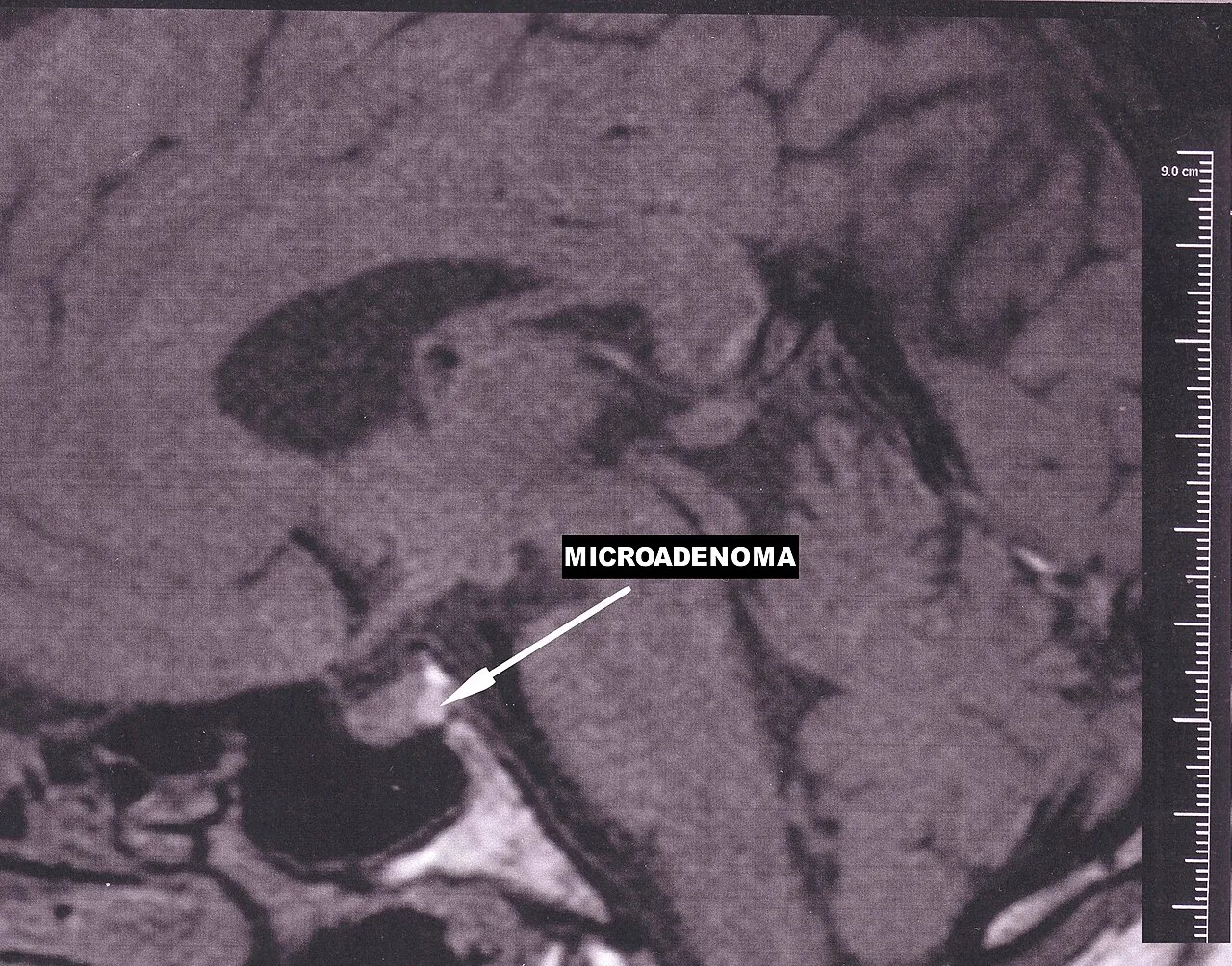
Hyperprolactinaemia is a raised serum prolactin. Prolactin is the only anterior pituitary hormone under predominantly inhibitory hypothalamic control (dopamine through D2 receptors), so it rises with lactotroph tumours, with anything that blocks dopamine (antipsychotics, metoclopramide, stalk compression) and with pregnancy, lactation, stress, primary hypothyroidism, chronic kidney disease and macroprolactin. Prolactinomas are the most common functioning pituitary tumours: microprolactinomas (below 10 mm) mainly affect premenopausal women and cause oligo- or amenorrhoea, galactorrhoea and infertility, while men and postmenopausal women more often present late with macroprolactinomas, headache, visual loss and hypogonadism. Prolactin rises roughly in proportion to tumour size. Before imaging, exclude pregnancy, drugs, hypothyroidism, renal failure and macroprolactin. Cabergoline is first-line for almost all prolactinomas, normalising prolactin and shrinking tumours in about 80–90%, even with visual field loss. The 2023 Pituitary Society consensus also accepts surgery as a first option for selected tumours in expert centres. Watch for impulse control disorders, valvulopathy at high doses and tumour growth in pregnancy.
Patient case, mechanism, investigations, management, flashcards and exam-style questions.Open the lesson →
Key facts
- Dopamine from the hypothalamus tonically inhibits prolactin via D2 receptors; any interruption raises prolactin
- Exclude physiological and secondary causes first: pregnancy, lactation, stress, drugs (antipsychotics, metoclopramide, domperidone, some antidepressants, opioids), primary hypothyroidism, CKD, cirrhosis, chest wall injury and macroprolactin
- Prolactin above about 5000 mU/L (around 235 µg/L) is almost always due to a prolactinoma; stalk compression usually gives below about 2000 mU/L (94 µg/L)
- Women: oligo/amenorrhoea, galactorrhoea, infertility, low bone density. Men: low libido, erectile dysfunction, gynaecomastia, late mass effects
- Cabergoline (D2 agonist, twice weekly) is first-line; better tolerated and more effective than bromocriptine
- Dopamine agonists are first-line even for macroprolactinomas causing visual field loss; vision often improves within days
- Consider withdrawal after at least 2 years of normal prolactin and marked tumour shrinkage, with a slow taper and monitoring
- In pregnancy usually stop the dopamine agonist for microprolactinomas; monitor symptoms and visual fields in macroprolactinomas (growth risk about 20%)
Differential diagnosis
| Condition | Clues | Key test |
|---|---|---|
| Pregnancy | Amenorrhoea with raised prolactin in a woman of reproductive age | Serum hCG |
| Drug-induced hyperprolactinaemia | Antipsychotic (risperidone, haloperidol), metoclopramide or domperidone use | Drug history; repeat after stopping if safe, or MRI |
| Primary hypothyroidism | Fatigue, weight gain; TRH stimulates lactotrophs; pituitary hyperplasia | TSH and free T4 |
| Non-functioning macroadenoma (stalk effect) | Large tumour with only modestly raised prolactin | MRI and diluted prolactin |
| Macroprolactinaemia | Raised prolactin with no symptoms | Polyethylene glycol (PEG) precipitation |
| Polycystic ovary syndrome | Oligomenorrhoea, hirsutism, mild prolactin rise | Androgens, pelvic ultrasound; prolactin usually only mildly raised |
| Chronic kidney disease or cirrhosis | Reduced clearance; mild rise | Creatinine, liver tests |
| Acromegaly with prolactin co-secretion | Acral enlargement, coarse features | IGF-1 |
Exam pearls
Guideline
Pituitary Society international Consensus Statement on prolactin-secreting adenomas (2023), building on the Endocrine Society hyperprolactinaemia guideline (2011)
References
- Petersenn S, Fleseriu M, Casanueva FF, et al.. Diagnosis and management of prolactin-secreting pituitary adenomas: a Pituitary Society international Consensus Statement. Nat Rev Endocrinol 2023.
- Melmed S, Casanueva FF, Hoffman AR, et al.. Diagnosis and treatment of hyperprolactinemia: an Endocrine Society clinical practice guideline. J Clin Endocrinol Metab 2011.
- Colao A, Di Sarno A, Cappabianca P, et al.. Withdrawal of long-term cabergoline therapy for tumoral and nontumoral hyperprolactinemia. N Engl J Med 2003.
- Schade R, Andersohn F, Suissa S, Haverkamp W, Garbe E.. Dopamine agonists and the risk of cardiac-valve regurgitation. N Engl J Med 2007.
- Asa SL, Mete O, Perry A, Osamura RY.. Overview of the 2022 WHO Classification of Pituitary Tumors. Endocr Pathol 2022.
- Fleseriu M, Hashim IA, Karavitaki N, et al.. Hormonal Replacement in Hypopituitarism in Adults: An Endocrine Society Clinical Practice Guideline. J Clin Endocrinol Metab 2016.
Related topics
By Dr Khalid Seidi (B.Sc., M.D.) · MedEd World Clinical Knowledge library. Original teaching content checked against current guidelines (November 2026); confirm the latest local guidance before clinical use. Not a substitute for clinical judgement.