Clinical Knowledge › Obstetrics and gynaecology › Medical disorders in pregnancy
Acute fatty liver of pregnancy
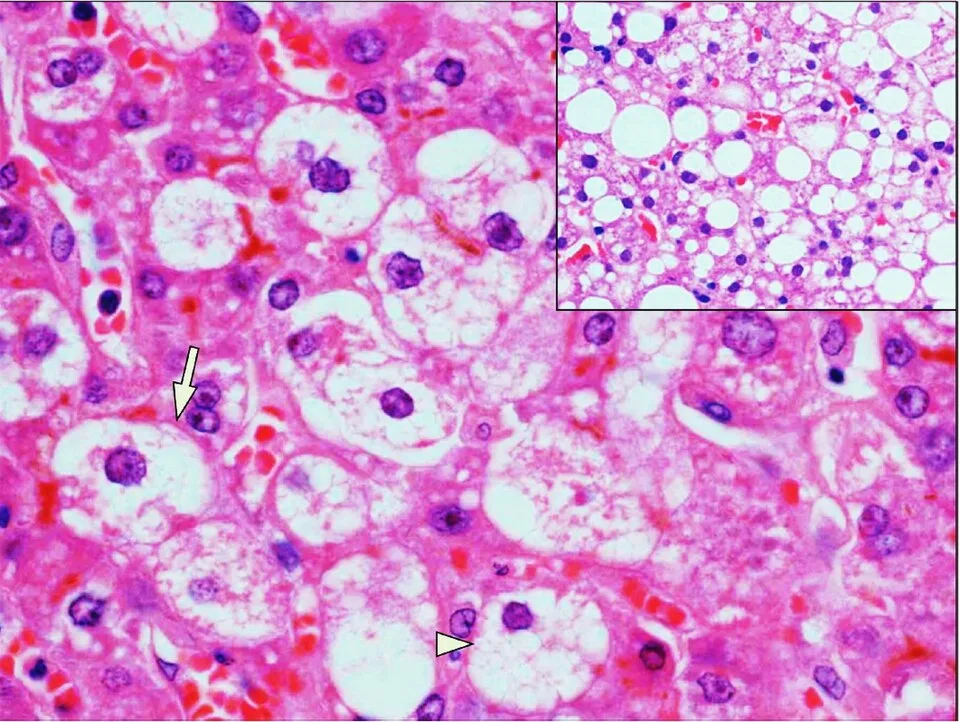
Acute fatty liver of pregnancy (AFLP) is a rare third-trimester obstetric emergency in which microvesicular fat accumulates in maternal hepatocytes and causes acute liver failure. It affects about 1 in 7,000–20,000 births (UK surveillance: 5 per 100,000 maternities) and is more common with twins, a first pregnancy, a male fetus and low maternal BMI. Some cases are linked to fetal long-chain 3-hydroxyacyl-CoA dehydrogenase (LCHAD) deficiency, so the baby must be tested. Women present usually after 30 weeks with nausea, vomiting, abdominal pain, malaise, polydipsia and later jaundice and encephalopathy. Hypoglycaemia, a prolonged prothrombin time with low fibrinogen, raised bilirubin, urate and creatinine, and leucocytosis distinguish it from HELLP syndrome; the Swansea criteria (6 or more of 14 features) support the diagnosis. Treatment is maternal stabilisation (intravenous glucose, correction of coagulopathy, blood pressure and fluid control) followed by prompt delivery, whatever the gestation, with intensive care, a liver unit and planning for postpartum haemorrhage. Maternal mortality is now about 2% and perinatal mortality about 10%.
Patient case, mechanism, investigations, management, flashcards and exam-style questions.Open the lesson →
Key facts
- Third-trimester (mean about 35–36 weeks) or early postpartum acute liver failure from microvesicular steatosis; rare (about 1 in 7,000–20,000 births)
- Risk factors: twin pregnancy (about 1 in 5 cases), nulliparity, male fetus, low BMI, previous AFLP and fetal fatty acid oxidation defects
- Fetal LCHAD deficiency (HADHA mutation, commonly E474Q/G1528C) with a heterozygous mother: test every baby after AFLP
- Hypoglycaemia, high INR with low fibrinogen, encephalopathy and acute kidney injury point to liver failure, not HELLP
- Swansea criteria: 6 or more of 14 clinical, laboratory, imaging or biopsy features without another cause
- Management: resuscitate, IV glucose, correct coagulopathy, then deliver promptly; liver biopsy is rarely needed
- Postpartum haemorrhage is common; expect liver tests to worsen for 48–72 hours after delivery before recovery
- UKOSS 2008: maternal case fatality 1.8%, perinatal mortality 104 per 1,000; 60% need intensive care
Differential diagnosis
| Condition | Clues | Key test |
|---|---|---|
| HELLP syndrome | Hypertension, proteinuria, haemolysis and low platelets; glucose and INR usually normal | Blood film, LDH, platelets, glucose, PT and fibrinogen |
| Pre-eclampsia with liver involvement | Hypertension and proteinuria with right upper quadrant pain; no liver failure | BP, urine protein:creatinine ratio, sFlt-1/PlGF |
| Intrahepatic cholestasis of pregnancy | Itching of palms and soles; patient otherwise well | Serum bile acids; normal glucose and INR |
| Acute viral hepatitis (HEV, HSV, HAV, HBV) | Exposure or travel; HSV with fever and very high transaminases | Viral serology and PCR |
| Paracetamol or other drug-induced liver injury | History of ingestion; very high ALT | Paracetamol level, medication history |
| Thrombotic microangiopathy (TTP or atypical HUS) | Severe thrombocytopenia, neurological or renal involvement, normal coagulation | ADAMTS13 activity, blood film |
| Hyperemesis gravidarum | First-trimester vomiting with mild LFT rise | Gestation and ketonuria; resolves with rehydration |
Exam pearls
Guideline
EASL Clinical Practice Guidelines on the management of liver diseases in pregnancy (2023); ACG clinical guideline on liver disease and pregnancy (2016); Swansea diagnostic criteria (UKOSS validation 2008)
References
- European Association for the Study of the Liver. EASL Clinical Practice Guidelines on the management of liver diseases in pregnancy. J Hepatol 2023.
- Tran TT, Ahn J, Reau NS.. ACG clinical guideline: liver disease and pregnancy. Am J Gastroenterol 2016.
- Knight M, Nelson-Piercy C, Kurinczuk JJ, Spark P, Brocklehurst P; UK Obstetric Surveillance System.. A prospective national study of acute fatty liver of pregnancy in the UK. Gut 2008.
- Ch'ng CL, Morgan M, Hainsworth I, Kingham JG.. Prospective study of liver dysfunction in pregnancy in Southwest Wales. Gut 2002.
- Ibdah JA, Bennett MJ, Rinaldo P, et al.. A fetal fatty-acid oxidation disorder as a cause of liver disease in pregnant women. N Engl J Med 1999.
- Liu J, Ghaziani TT, Wolf JL.. Acute fatty liver disease of pregnancy: updates in pathogenesis, diagnosis, and management. Am J Gastroenterol 2017.
Related topics
By Dr Khalid Seidi (B.Sc., M.D.) · MedEd World Clinical Knowledge library. Original teaching content checked against current guidelines (November 2026); confirm the latest local guidance before clinical use. Not a substitute for clinical judgement.