Clinical Knowledge › Internal medicine › Cardiology and angiology › Relevant pharmacology
Anticoagulants (heparins, warfarin, DOACs)
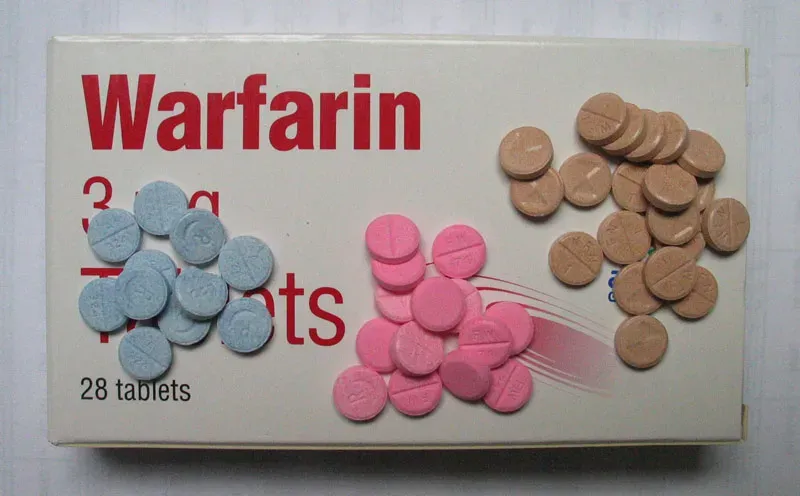
Anticoagulants prevent and treat thrombus formed in low-flow, fibrin-rich settings: atrial fibrillation, venous thromboembolism and mechanical heart valves. Unfractionated heparin and low-molecular-weight heparin (LMWH) work by boosting antithrombin; fondaparinux is a pure indirect factor Xa inhibitor. Warfarin, a vitamin K antagonist (VKA), blocks synthesis of factors II, VII, IX and X and proteins C and S, needs INR monitoring and has many food and drug interactions. Direct oral anticoagulants (DOACs) – the thrombin inhibitor dabigatran and the factor Xa inhibitors apixaban, rivaroxaban and edoxaban – are now preferred for most patients with non-valvular AF or VTE because they cause about half the intracranial bleeding of warfarin. Warfarin remains the drug of choice for mechanical valves, rheumatic mitral stenosis and high-risk antiphospholipid syndrome. Safe use means dosing for kidney function, weight and age, spotting heparin-induced thrombocytopenia and knowing the reversal options: protamine, vitamin K with prothrombin complex concentrate (PCC), idarucizumab for dabigatran and four-factor PCC for factor Xa inhibitors (andexanet alfa was withdrawn from the US market in December 2025; availability elsewhere varies by country).
Patient case, mechanism, investigations, management, flashcards and exam-style questions.Open the lesson →
Key facts
- Unfractionated heparin (UFH) binds antithrombin and inactivates thrombin and factor Xa equally; it is monitored by aPTT and fully reversed by protamine
- LMWH (enoxaparin, dalteparin) mainly inhibits factor Xa, is given by weight without routine monitoring and accumulates when CrCl is below 30 mL/min
- Heparin-induced thrombocytopenia: platelets fall by more than 50% 5–10 days after starting heparin, with paradoxical thrombosis; stop all heparin and use a non-heparin anticoagulant
- Warfarin inhibits vitamin K epoxide reductase (VKORC1); target INR 2.0–3.0 for most indications, 2.5–3.5 for higher-risk mechanical mitral valves
- Early warfarin is prothrombotic because protein C falls first: overlap with heparin for at least 5 days and until INR is 2 or more for 24 hours
- DOACs are preferred over warfarin for non-valvular AF and VTE: similar or better stroke prevention with about half the intracranial haemorrhage
- DOACs are not used with mechanical valves, moderate–severe rheumatic mitral stenosis, triple-positive antiphospholipid syndrome or pregnancy
- Reversal: protamine (heparin), vitamin K plus four-factor PCC (warfarin), idarucizumab (dabigatran), four-factor PCC (factor Xa inhibitors; andexanet alfa withdrawn from the US market in December 2025, availability varies by country)
Differential diagnosis
| Condition | Clues | Key test |
|---|---|---|
| Unfractionated heparin (IV) | Short half-life, fully reversible; used in renal failure, around procedures and when thrombolysis may follow | aPTT or anti-Xa level |
| Low-molecular-weight heparin (SC) | Weight-based, predictable; VTE in cancer and pregnancy, bridging | Anti-Xa level in renal impairment, obesity, pregnancy |
| Fondaparinux (SC) | Synthetic pentasaccharide; no HIT cross-reactivity in practice; avoid in severe renal impairment | Renal function |
| Warfarin (VKA) | Mechanical valves, rheumatic mitral stenosis, antiphospholipid syndrome, severe renal failure | INR |
| Dabigatran (direct thrombin inhibitor) | 80% renal excretion; dyspepsia; specific reversal with idarucizumab | Creatinine clearance; thrombin time |
| Apixaban (factor Xa inhibitor) | Twice daily; lowest bleeding of the DOACs in trials; least renal dependence | Age, weight and creatinine for dose |
| Rivaroxaban / edoxaban (factor Xa inhibitors) | Once daily; rivaroxaban taken with food; edoxaban less effective at very high CrCl | Creatinine clearance; calibrated anti-Xa |
| Parenteral direct thrombin inhibitors (argatroban, bivalirudin) | Heparin-induced thrombocytopenia and PCI | aPTT |
Exam pearls
Guideline
2024 ESC atrial fibrillation guideline, 2023 ACC/AHA/ACCP/HRS AF guideline, CHEST VTE guideline (2021 update), 2026 AHA/ACC multisociety pulmonary embolism guideline and ASH 2018 heparin-induced thrombocytopenia guideline
References
- Van Gelder IC, Rienstra M, Bunting KV, et al.. 2024 ESC Guidelines for the management of atrial fibrillation developed in collaboration with the European Association for Cardio-Thoracic Surgery (EACTS). Eur Heart J 2024.
- Joglar JA, Chung MK, Armbruster AL, et al.. 2023 ACC/AHA/ACCP/HRS Guideline for the Diagnosis and Management of Atrial Fibrillation. Circulation 2024.
- Stevens SM, Woller SC, Kreuziger LB, et al.. Antithrombotic Therapy for VTE Disease: Second Update of the CHEST Guideline and Expert Panel Report. Chest 2021.
- Cuker A, Arepally GM, Chong BH, et al.. American Society of Hematology 2018 guidelines for management of venous thromboembolism: heparin-induced thrombocytopenia. Blood Adv 2018.
- Ruff CT, Giugliano RP, Braunwald E, et al.. Comparison of the efficacy and safety of new oral anticoagulants with warfarin in patients with atrial fibrillation: a meta-analysis of randomised trials. Lancet 2014.
- Granger CB, Alexander JH, McMurray JJ, et al.. Apixaban versus warfarin in patients with atrial fibrillation. N Engl J Med 2011.
Related topics
By Dr Khalid Seidi (B.Sc., M.D.) · MedEd World Clinical Knowledge library. Original teaching content checked against current guidelines (November 2026); confirm the latest local guidance before clinical use. Not a substitute for clinical judgement.