Clinical Knowledge › Internal medicine › Infectious diseases › Sepsis and cardiovascular infections
Catheter-related bloodstream infection
Catheter-related bloodstream infection (CRBSI) is bacteraemia or fungaemia that arises from an intravascular device, proven when the same organism grows from the catheter (tip or catheter-drawn blood) and from a peripheral blood culture. Central venous catheters, haemodialysis catheters, PICC lines and parenteral nutrition carry the highest risk, but peripheral cannulas cause a significant share of hospital Staphylococcus aureus bacteraemia. Organisms reach the bloodstream along the outside of the catheter from the skin (early) or through a contaminated hub and lumen (later), then persist in protective biofilm. Coagulase-negative staphylococci, S. aureus, enterococci, Gram-negative bacilli and Candida predominate. Paired catheter and peripheral blood cultures with a differential time to positivity of 2 hours or more support the diagnosis. Treatment combines catheter removal (mandatory for S. aureus, Pseudomonas, Candida and mycobacteria) with organism-directed therapy for a defined duration. Most CRBSI is preventable with care bundles and prompt removal of unneeded lines.
Patient case, mechanism, investigations, management, flashcards and exam-style questions.Open the lesson →
Key facts
- CRBSI = same organism in catheter-derived and peripheral blood (or catheter tip) with no other source; CLABSI is a looser surveillance definition
- Differential time to positivity: catheter-drawn culture positive at least 2 hours before the peripheral culture supports CRBSI when the line is kept
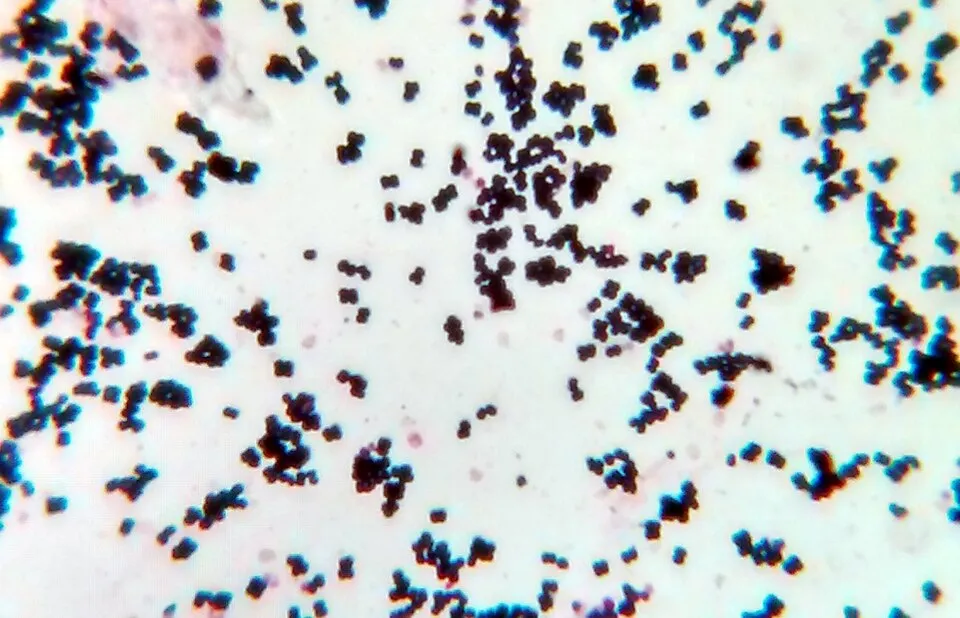
- Coagulase-negative staphylococci are the commonest cause; S. aureus, enterococci, Gram-negative bacilli and Candida follow
- Remove the catheter for S. aureus, Pseudomonas aeruginosa, Candida, mycobacteria, tunnel or pocket infection, septic thrombophlebitis, endocarditis or persistent bacteraemia over 72 hours
- S. aureus CRBSI needs at least 14 days of IV therapy from the first negative culture, repeat blood cultures and echocardiography
- Candidaemia from a line: remove it, start an echinocandin, treat for 14 days after clearance and arrange dilated fundoscopy
- Catheter tips are cultured only when CRBSI is suspected; 15 CFU or more on roll-plate culture is significant
- Insertion bundle: hand hygiene, maximal sterile barriers, 2% chlorhexidine in 70% alcohol, avoid the femoral site in adults, ultrasound guidance, daily review of need
Differential diagnosis
| Condition | Clues | Key test |
|---|---|---|
| Contaminated blood culture | Single bottle of skin flora (CoNS, Bacillus, Cutibacterium) in a well patient | Repeat paired cultures; one of several sets positive |
| Exit-site or tunnel infection without bacteraemia | Erythema, tenderness or pus around the catheter | Exit-site swab; blood cultures negative |
| Infective endocarditis | New murmur, embolic phenomena, persistent bacteraemia after line removal | Echocardiography (TOE); modified Duke criteria |
| Septic thrombophlebitis | Persistent bacteraemia, tender cord or swollen limb near the catheter | Doppler ultrasound or CT venography |
| Other hospital-acquired source | Pneumonia, urinary catheter, surgical site, C. difficile | Targeted cultures and imaging |
| Infusion-related or drug fever | Fever with rigors immediately after an infusion, cultures negative | Stop the infusion; cultures of infusate if contamination suspected |
| Non-infective SIRS | Pancreatitis, transfusion reaction, venous thromboembolism | Negative cultures; specific tests |
Exam pearls
Guideline
IDSA Clinical practice guidelines for intravascular catheter-related infection (2009 update), SHEA/IDSA/APIC Compendium – strategies to prevent CLABSI (2022 update), CDC/HICPAC prevention guideline (2011) and WHO guidelines for preventing bloodstream infections from intravascular catheters (2024, peripheral catheters)
References
- Mermel LA, Allon M, Bouza E, et al.. Clinical practice guidelines for the diagnosis and management of intravascular catheter-related infection: 2009 update by the Infectious Diseases Society of America. Clin Infect Dis 2009.
- Buetti N, Marschall J, Drees M, et al.. Strategies to prevent central line-associated bloodstream infections in acute-care hospitals: 2022 update. Infect Control Hosp Epidemiol 2022.
- O'Grady NP, Alexander M, Burns LA, et al.. Guidelines for the prevention of intravascular catheter-related infections. Clin Infect Dis 2011.
- World Health Organization. Guidelines for the prevention of bloodstream infections and other infections associated with the use of intravascular catheters. Part 1: peripheral catheters. WHO, Geneva 2024.
- Loveday HP, Wilson JA, Pratt RJ, et al.. epic3: national evidence-based guidelines for preventing healthcare-associated infections in NHS hospitals in England. J Hosp Infect 2014.
- Pronovost P, Needham D, Berenholtz S, et al.. An intervention to decrease catheter-related bloodstream infections in the ICU. N Engl J Med 2006.
Related topics
By Dr Khalid Seidi (B.Sc., M.D.) · MedEd World Clinical Knowledge library. Original teaching content checked against current guidelines (November 2026); confirm the latest local guidance before clinical use. Not a substitute for clinical judgement.