Clinical Knowledge › Internal medicine › Infectious diseases › Sepsis and cardiovascular infections
Staphylococcus aureus bacteraemia
Staphylococcus aureus bacteraemia (SAB) is the growth of S. aureus from one or more blood culture sets. It is never a contaminant and carries a 90-day mortality of about 15–30%. S. aureus seeds heart valves, bones, joints, the spine and devices, so a large minority of patients have complicated infection, including endocarditis in roughly 10–20%. A care bundle improves survival: infectious diseases consultation, repeat blood cultures until negative, echocardiography (TTE for all, TEE if risk features), source control and an anti-staphylococcal beta-lactam for meticillin-susceptible strains. The SNAP trial (2026) showed cefazolin non-inferior to flucloxacillin with less kidney injury, and benzylpenicillin is an option for penicillin-susceptible isolates. MRSA is treated with vancomycin (AUC-guided) or daptomycin. The 2026 IDSA/ESCMID consensus stratifies risk and suggests 14 days of therapy from the first negative culture when no deep focus is found; complicated infection needs 4–6 weeks. Adjunctive rifampicin or gentamicin does not improve outcomes.
Patient case, mechanism, investigations, management, flashcards and exam-style questions.Open the lesson →
Key facts
- A single positive blood culture for S. aureus is significant and must be treated; it is not a skin contaminant (unlike coagulase-negative staphylococci)
- 90-day mortality is about 15–30%; key risk factors are older age, endocarditis, septic shock, persistent bacteraemia, MRSA and lack of ID consultation
- Repeat blood cultures at 48 hours after the first positive set, then every 24–48 hours until negative; bacteraemia persisting 48 hours or more suggests a deep focus
- TTE for all adults with SAB; TEE if TTE is negative and there is an intracardiac device, valve disease, persistent bacteraemia, embolic events or multiple foci
- MSSA: cefazolin or flucloxacillin (cloxacillin/nafcillin); cefazolin was non-inferior with less AKI in SNAP (2026); vancomycin is inferior for MSSA
- MRSA: vancomycin with AUC-guided dosing (target AUC 400–600 mg·h/L) or daptomycin 8–10 mg/kg (not for pneumonia); ceftobiprole is a newer alternative
- Duration: 14 days from first negative culture when no deep-seated focus (IDSA/ESCMID 2026); 4–6 weeks for endocarditis, osteomyelitis or other complicated infection
- Remove infected or suspected central venous catheters; adjunctive rifampicin (ARREST) and gentamicin do not improve outcomes
Differential diagnosis
| Condition | Clues | Key test |
|---|---|---|
| Coagulase-negative staphylococcal contamination | Single positive bottle, slow growth, well patient, no device | Repeat cultures; identification as CoNS not S. aureus |
| Infective endocarditis | Murmur, embolic phenomena, persistent bacteraemia, injecting drug use | TTE then TEE; 2023 Duke–ISCVID criteria |
| Vertebral osteomyelitis or epidural abscess | Back pain, fever, neurological deficit | MRI whole spine with contrast |
| Septic arthritis | Hot swollen joint, especially prosthetic | Joint aspiration with Gram stain and culture |
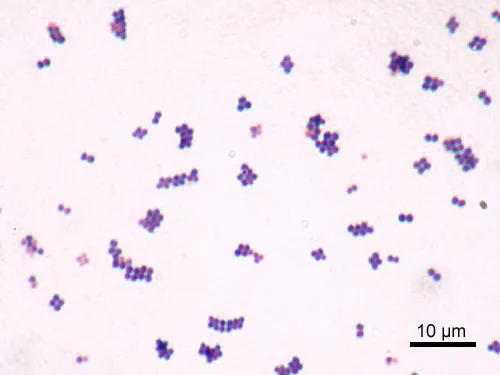
| Streptococcal bacteraemia | Gram-positive cocci in chains rather than clusters | Culture identification |
| Toxic shock syndrome | Erythroderma, shock, multiorgan failure; blood cultures often negative in staphylococcal TSS | Clinical criteria; site cultures |
Exam pearls
Guideline
IDSA/ESCMID consensus statements on Staphylococcus aureus bacteraemia (2026, part 1: risk stratification, diagnosis and duration); IDSA MRSA guideline (2011); ASHP/IDSA/PIDS/SIDP vancomycin therapeutic monitoring consensus (2020); 2023 Duke–ISCVID endocarditis criteria
References
- Infectious Diseases Society of America / European Society of Clinical Microbiology and Infectious Diseases. IDSA/ESCMID consensus statements on Staphylococcus aureus bacteremia, part 1: risk stratification, diagnosis and duration of therapy. IDSA 2026.
- Liu C, Bayer A, Cosgrove SE, et al.. Clinical practice guidelines by the Infectious Diseases Society of America for the treatment of methicillin-resistant Staphylococcus aureus infections in adults and children. Clin Infect Dis 2011.
- SNAP Trial Group. Cefazolin versus flucloxacillin or cloxacillin for methicillin-susceptible Staphylococcus aureus bacteremia (SNAP trial). N Engl J Med 2026.
- Rybak MJ, Le J, Lodise TP, et al.. Therapeutic monitoring of vancomycin for serious methicillin-resistant Staphylococcus aureus infections: a revised consensus guideline and review. Am J Health Syst Pharm 2020.
- Tong SYC, Davis JS, Eichenberger E, Holland TL, Fowler VG.. Staphylococcus aureus infections: epidemiology, pathophysiology, clinical manifestations, and management. Clin Microbiol Rev 2015.
- Holland TL, Arnold C, Fowler VG.. Clinical management of Staphylococcus aureus bacteremia: a review. JAMA 2014.
Related topics
By Dr Khalid Seidi (B.Sc., M.D.) · MedEd World Clinical Knowledge library. Original teaching content checked against current guidelines (November 2026); confirm the latest local guidance before clinical use. Not a substitute for clinical judgement.