Clinical Knowledge › Internal medicine › Gastroenterology and hepatology › Diseases of the gallbladder and biliary tract
Choledocholithiasis and acute cholangitis
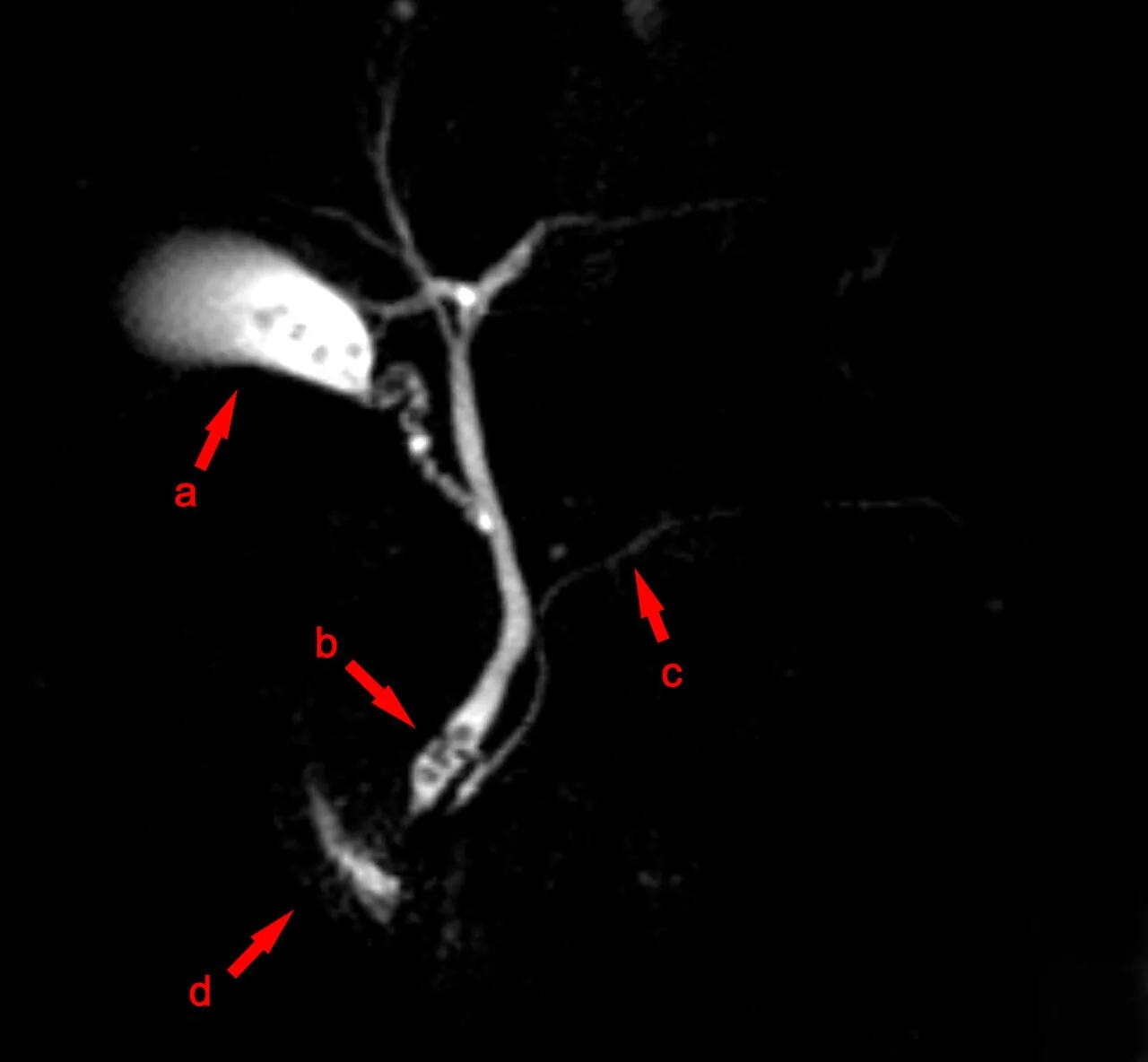
Choledocholithiasis means stones in the common bile duct, found in about 10–20% of people with symptomatic gallstones. Most migrate from the gallbladder; primary duct stones form behind strictures or in infected bile. Duct stones may be silent or cause biliary pain, obstructive jaundice, acute pancreatitis or acute cholangitis. Cholangitis is infection of an obstructed biliary tree: Charcot triad of fever, jaundice and right upper quadrant pain, with shock and confusion (Reynolds pentad) in severe cases. The Tokyo Guidelines 2018 diagnose cholangitis from systemic inflammation, cholestasis and imaging and grade it by organ dysfunction. Management is resuscitation, blood cultures, broad-spectrum antibiotics and biliary drainage, usually by ERCP, urgently in severe disease. For suspected duct stones without cholangitis, ASGE and ESGE guidance stratifies risk: high-probability patients go straight to ERCP, intermediate ones have MRCP or EUS first. Cholecystectomy should follow in the same admission in fit patients.
Patient case, mechanism, investigations, management, flashcards and exam-style questions.Open the lesson →
Key facts
- Charcot triad: fever with rigors, jaundice and RUQ pain; Reynolds pentad adds hypotension and confusion
- TG18 cholangitis: systemic inflammation + cholestasis + biliary dilatation or cause on imaging = definite diagnosis
- Grade III (severe) cholangitis has organ dysfunction and needs urgent biliary drainage as soon as the patient is resuscitated
- Biliary drainage by ERCP is the definitive treatment; antibiotics alone cannot clear infected, obstructed bile
- ASGE 2019 high-probability criteria: duct stone on imaging, cholangitis, or bilirubin above 4 mg/dL (about 68 µmol/L) with a dilated duct → ERCP
- Intermediate probability (abnormal LFTs, age over 55, or a dilated duct on ultrasound): MRCP or EUS before ERCP, or intraoperative cholangiography
- Ultrasound misses many duct stones; a normal ultrasound does not exclude choledocholithiasis
- Post-ERCP pancreatitis is the commonest serious complication; rectal NSAID (indometacin or diclofenac 100 mg) reduces it
Differential diagnosis
| Condition | Clues | Key test |
|---|---|---|
| Acute cholecystitis | Murphy sign, fever, no or only mild jaundice | Ultrasound: thick-walled gallbladder with impacted stone |
| Malignant biliary obstruction | Painless progressive jaundice, weight loss, palpable gallbladder | Pancreatic-protocol CT, EUS |
| Acute hepatitis | Prodrome, very high ALT, no duct dilatation | Viral serology, ultrasound |
| Acute pancreatitis | Epigastric pain radiating to the back | Lipase over 3 times normal; CT if diagnosis unclear |
| Liver abscess | Swinging fever, tender liver, raised ALP | Ultrasound or CT; aspirate |
| Primary sclerosing cholangitis | Cholestasis in a patient with IBD; recurrent cholangitis | MRCP: multifocal strictures |
| Recurrent pyogenic cholangitis | East Asian origin, repeated cholangitis, intrahepatic stones | MRCP or CT; association with liver flukes |
Exam pearls
Guideline
Tokyo Guidelines 2018 (TG18) for acute cholangitis, ASGE guideline on choledocholithiasis (2019), ESGE guideline on endoscopic management of common bile duct stones (2019), ASGE guideline on cholangitis (2021) and BSG guideline on common bile duct stones (2017)
References
- Kiriyama S, Kozaka K, Takada T, et al.. Tokyo Guidelines 2018: diagnostic criteria and severity grading of acute cholangitis (with videos). J Hepatobiliary Pancreat Sci 2018.
- Buxbaum JL, Abbas Fehmi SM, Sultan S, et al.. ASGE guideline on the role of endoscopy in the evaluation and management of choledocholithiasis. Gastrointest Endosc 2019.
- Manes G, Paspatis G, Aabakken L, et al.. Endoscopic management of common bile duct stones: European Society of Gastrointestinal Endoscopy (ESGE) guideline. Endoscopy 2019.
- Williams E, Beckingham I, El Sayed G, et al.. Updated guideline on the management of common bile duct stones (CBDS). Gut 2017.
- Buxbaum JL, Buitrago C, Lee A, et al.. ASGE guideline on the management of cholangitis. Gastrointest Endosc 2021.
- Gomi H, Solomkin JS, Schlossberg D, et al.. Tokyo Guidelines 2018: antimicrobial therapy for acute cholangitis and cholecystitis. J Hepatobiliary Pancreat Sci 2018.
Related topics
By Dr Khalid Seidi (B.Sc., M.D.) · MedEd World Clinical Knowledge library. Original teaching content checked against current guidelines (November 2026); confirm the latest local guidance before clinical use. Not a substitute for clinical judgement.