Clinical Knowledge › Internal medicine › Gastroenterology and hepatology › Diseases of the gallbladder and biliary tract
Gallbladder polyps and gallbladder cancer
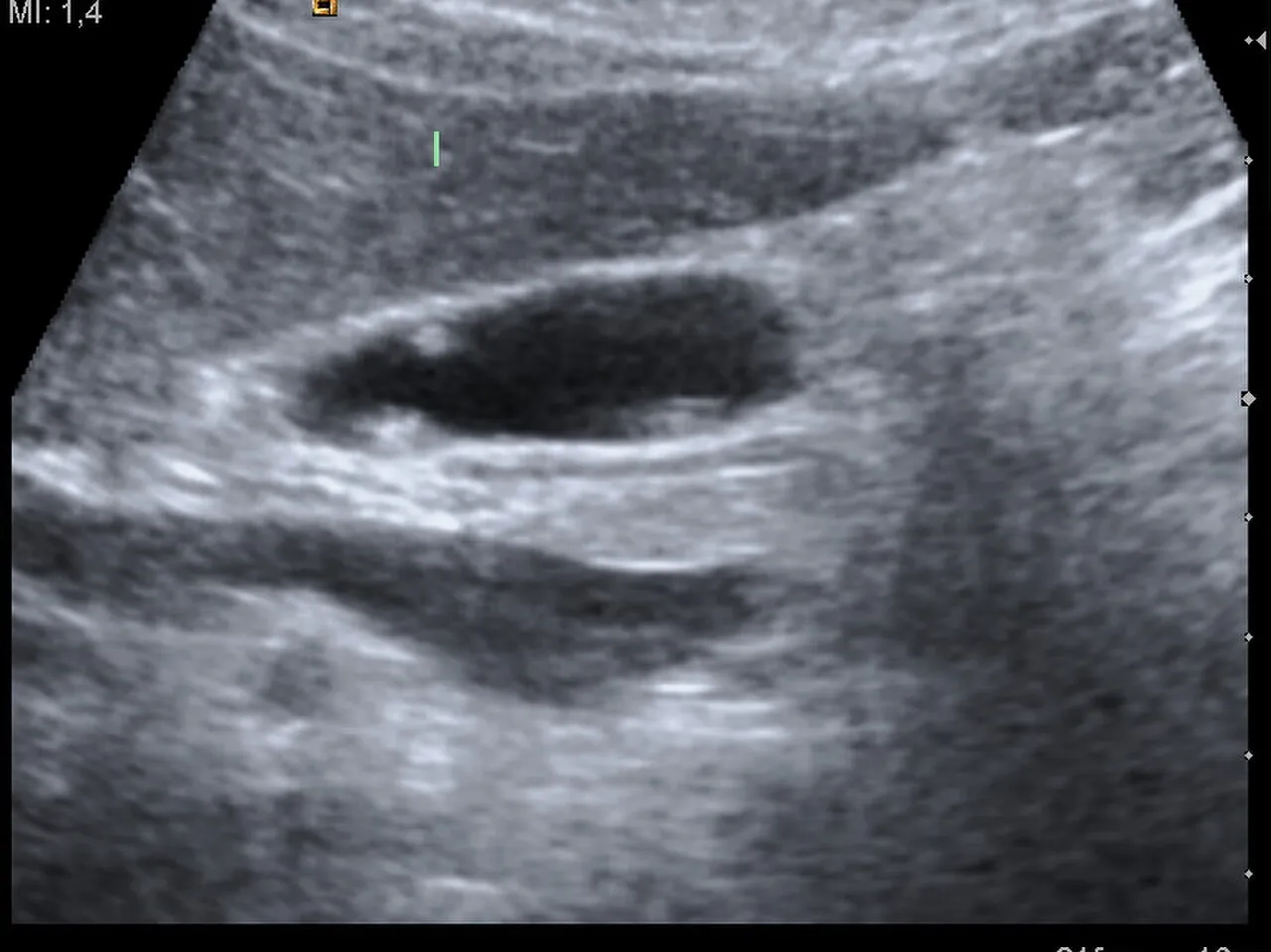
Gallbladder polyps are seen on ultrasound in about 5% of adults. Most are cholesterol pseudopolyps that are never malignant; true adenomas are uncommon but can progress to cancer. Size is the strongest predictor of neoplasia: European guidelines advise cholecystectomy for polyps of 10 mm or more, for symptomatic polyps and for 6–9 mm polyps with risk factors (age over 60, primary sclerosing cholangitis, Asian ethnicity, sessile shape), with ultrasound follow-up for smaller lesions. Gallbladder cancer is the commonest biliary tract cancer worldwide, with very high rates in Chile, Bolivia, northern India and Pakistan and a female predominance. Gallstones, anomalous pancreaticobiliary junction, chronic typhoid carriage and large polyps are key risk factors. It presents late with pain, a mass or jaundice, or is found incidentally after cholecystectomy. Early tumours (T1b or more) need extended cholecystectomy with liver resection and lymphadenectomy, then adjuvant capecitabine; advanced disease is treated with gemcitabine, cisplatin and an immune checkpoint inhibitor.
Patient case, mechanism, investigations, management, flashcards and exam-style questions.Open the lesson →
Key facts
- Most gallbladder polyps are cholesterol pseudopolyps with no malignant potential
- Polyps of 10 mm or more, symptomatic polyps and 6–9 mm polyps with risk factors warrant cholecystectomy (ESGAR 2022)
- Risk factors for a malignant polyp: age over 60, PSC, Asian ethnicity, sessile shape or focal wall thickening over 4 mm
- On ultrasound, a polyp is fixed and does not cast an acoustic shadow, whereas a stone is mobile and shadows
- Gallbladder cancer is commonest in Chile, Bolivia, northern India and Pakistan and in women
- Gallstones are present in most gallbladder cancers, but only a small fraction of people with stones develop cancer
- An incidental T1b or deeper cancer after cholecystectomy needs re-resection (liver bed and lymph nodes); T1a needs no more surgery if margins are clear
- HER2 amplification is a therapeutic target in gallbladder cancer
Differential diagnosis
| Condition | Clues | Key test |
|---|---|---|
| Gallstone | Mobile, dependent and casts an acoustic shadow | Ultrasound with change of patient position |
| Sludge ball (tumefactive sludge) | Mobile, no internal blood flow, may change shape | Repeat ultrasound or colour Doppler; contrast-enhanced ultrasound |
| Adenomyomatosis | Wall thickening with comet-tail artefacts from Rokitansky–Aschoff sinuses | Ultrasound or MRI showing intramural cysts |
| Xanthogranulomatous cholecystitis | Diffuse wall thickening with intramural nodules, often mimics cancer | CT/MRI; histology at cholecystectomy |
| Chronic cholecystitis | Smooth diffuse wall thickening with stones | Ultrasound; resolution or histology |
| Cholangiocarcinoma or metastasis to gallbladder | Hilar mass or known primary (e.g. melanoma) | CT/MRI and histology |
Exam pearls
Guideline
ESGAR/EAES/EFISDS/ESGE joint guideline on gallbladder polyps (2022), SRU consensus on incidentally detected gallbladder polyps (2022) with Canadian Association of Radiologists update (2025), ESMO Clinical Practice Guideline on biliary tract cancer (2023) with interim update (2025) and NCCN Guidelines: Biliary Tract Cancers (2026 versions)
References
- Foley KG, Lahaye MJ, Thoeni RF, et al.. Management and follow-up of gallbladder polyps: updated joint guidelines between the ESGAR, EAES, EFISDS and ESGE. Eur Radiol 2022.
- Kamaya A, Fung C, Szpakowski JL, et al.. Management of incidentally detected gallbladder polyps: Society of Radiologists in Ultrasound consensus conference recommendations. Radiology 2022.
- Fung CI, Kamaya A, Brahm GL, et al.. Recommendations for the management of incidentally detected gallbladder polyps: update of the 2020 Canadian Association of Radiologists recommendations for the management of incidental hepatobiliary findings in adults. Can Assoc Radiol J 2025.
- Vogel A, Bridgewater J, Edeline J, et al.. Biliary tract cancer: ESMO Clinical Practice Guideline for diagnosis, treatment and follow-up. Ann Oncol 2023.
- Vogel A, et al.. ESMO Clinical Practice Guideline interim update on the management of biliary tract cancer. ESMO Open 2025.
- Primrose JN, Fox RP, Palmer DH, et al.. Capecitabine compared with observation in resected biliary tract cancer (BILCAP): a randomised, controlled, multicentre, phase 3 study. Lancet Oncol 2019.
Related topics
By Dr Khalid Seidi (B.Sc., M.D.) · MedEd World Clinical Knowledge library. Original teaching content checked against current guidelines (November 2026); confirm the latest local guidance before clinical use. Not a substitute for clinical judgement.