Clinical Knowledge › Ear, nose and throat › Middle ear
Chronic suppurative otitis media
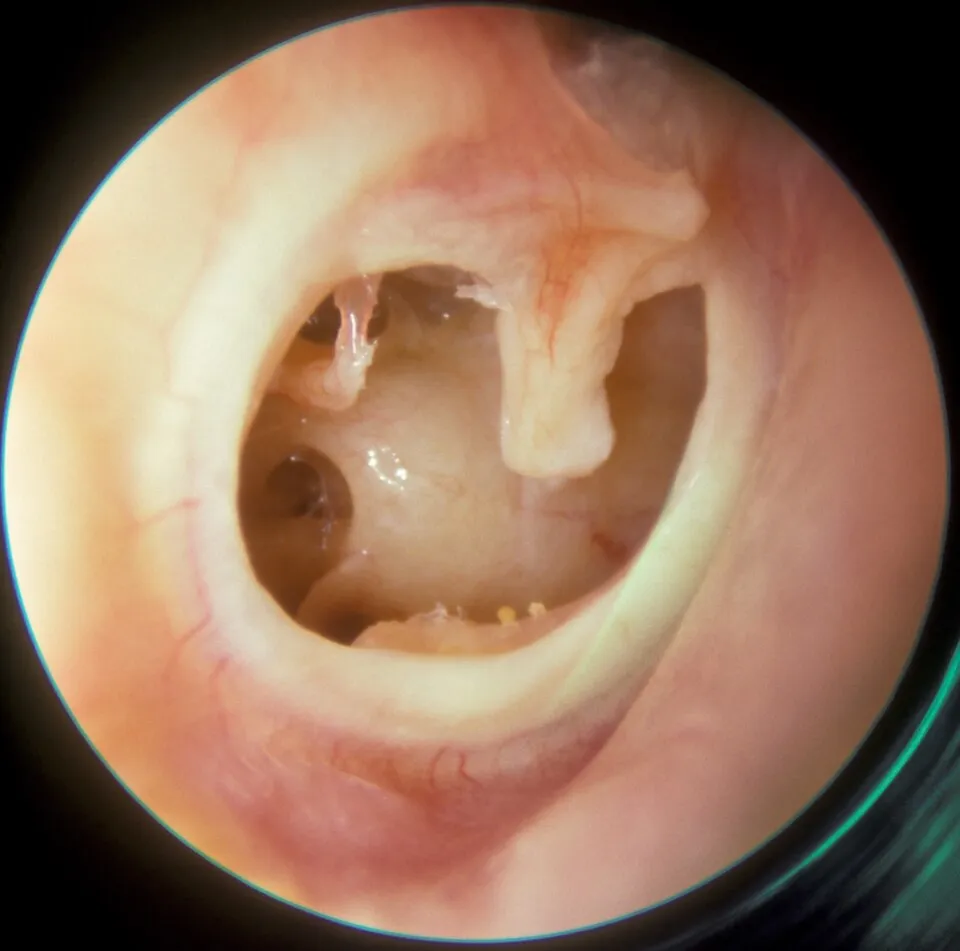
Chronic suppurative otitis media (CSOM) is chronic inflammation of the middle ear and mastoid with persistent or recurrent discharge through a perforated tympanic membrane, usually defined as discharge for at least 2 weeks. It affects an estimated 200–300 million people, mostly children and adults in low- and middle-income countries, and is a leading cause of preventable hearing loss. The main symptoms are painless otorrhoea and conductive hearing loss. Mucosal disease (a central perforation with mucopurulent discharge) differs from squamous disease (cholesteatoma: attic or marginal retraction with scanty, foul discharge), which erodes bone and causes more complications. First-line treatment is regular aural toilet with topical quinolone drops and water precautions; systemic antibiotics are reserved for complications. Myringoplasty or tympanoplasty closes the perforation once the ear is dry. Headache, fever, vertigo, facial weakness or neck stiffness suggest intratemporal or intracranial complications and need urgent imaging and ENT care.
Patient case, mechanism, investigations, management, flashcards and exam-style questions.Open the lesson →
Key facts
- Definition: chronic middle ear and mastoid inflammation with discharge through a perforated drum, usually for 2 weeks or more
- Global burden: about 200–300 million affected, mostly in low- and middle-income countries; major cause of preventable hearing loss
- Mucosal (formerly 'tubotympanic', central perforation) versus squamous (cholesteatoma, attic/marginal, 'unsafe') disease
- Organisms: Pseudomonas aeruginosa and Staphylococcus aureus (including MRSA), Proteus, Klebsiella, anaerobes, fungi
- First-line: aural toilet plus topical quinolone drops (ciprofloxacin or ofloxacin) and keeping the ear dry
- Topical treatment is more effective than oral antibiotics for drying the ear (Cochrane, 2025)
- Aminoglycoside drops are potentially ototoxic with a perforation; prefer quinolones
- Complications: hearing loss, mastoiditis, facial palsy, labyrinthitis, lateral sinus thrombosis, meningitis, brain abscess
Differential diagnosis
| Condition | Clues | Key test |
|---|---|---|
| Cholesteatoma | Scanty foul discharge, attic or posterosuperior marginal defect with keratin | Microscopy; CT temporal bone |
| Otitis externa | Painful canal, tragal tenderness, intact drum | Otoscopy after cleaning |
| Acute otitis media with perforation | Recent pain and fever relieved by discharge; resolves in days | History; heals in weeks |
| Tuberculous otitis media | Painless discharge, multiple perforations, pale granulations, early facial palsy | AFB stain, mycobacterial culture and PCR; chest X-ray |
| Granulomatosis with polyangiitis | Ear disease with nasal crusting, lung or kidney involvement | ANCA, biopsy |
| Malignancy of ear canal or middle ear | Bloody discharge, pain, granulation, facial palsy | Biopsy; CT/MRI |
| CSF otorrhoea | Clear watery discharge after trauma or surgery | Beta-2 transferrin |
Exam pearls
Guideline
WHO Chronic suppurative otitis media: burden and management (2004) and World report on hearing (2021); Cochrane reviews of non-surgical CSOM treatment (2020, updated 2025)
References
- Brennan-Jones CG, Head K, Chong LY, et al.. Topical antibiotics for chronic suppurative otitis media. Cochrane Database Syst Rev 2025.
- Chong LY, Head K, Webster KE, et al.. Topical versus systemic antibiotics for chronic suppurative otitis media. Cochrane Database Syst Rev 2025.
- Head K, Chong LY, Bhutta MF, et al.. Antibiotics versus topical antiseptics for chronic suppurative otitis media. Cochrane Database Syst Rev 2020.
- Onifade A, Katolo HW, Mookerjee S, Bhutta MF.. Epidemiology of chronic suppurative otitis media: systematic review to estimate global prevalence. J Epidemiol Glob Health 2025.
- Schilder AG, Chonmaitree T, Cripps AW, et al.. Otitis media. Nat Rev Dis Primers 2016.
- World Health Organization. Chronic suppurative otitis media: burden of illness and management options. WHO, Geneva 2004.
Related topics
By Dr Khalid Seidi (B.Sc., M.D.) · MedEd World Clinical Knowledge library. Original teaching content checked against current guidelines (November 2026); confirm the latest local guidance before clinical use. Not a substitute for clinical judgement.