Clinical Knowledge › Ear, nose and throat › Middle ear
Otitic barotrauma
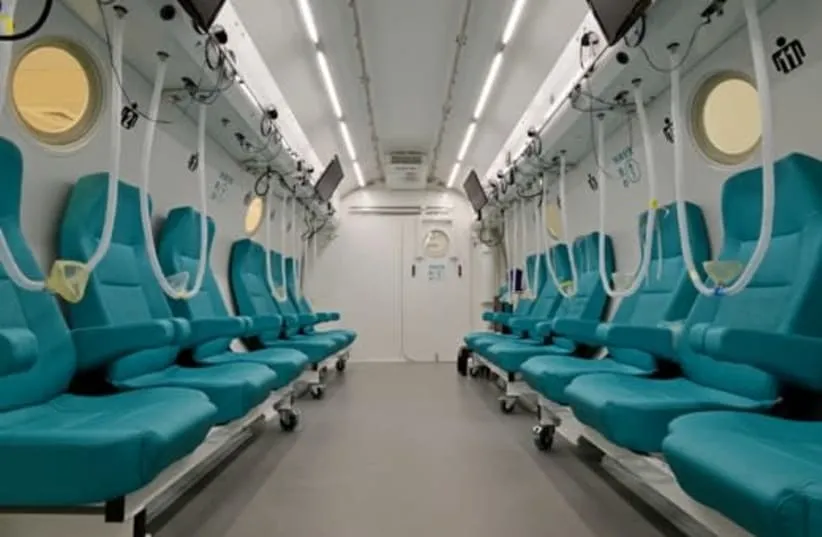
Otitic barotrauma is injury to the ear caused by a pressure difference between the middle ear and the environment, usually because the Eustachian tube cannot open quickly enough. It is most common on aircraft descent and diving descent, when rising ambient pressure creates relative negative pressure in the middle ear (Boyle's law), and during hyperbaric oxygen therapy, where it is the commonest complication. Risk factors are upper respiratory infection, rhinitis, sinusitis and Eustachian tube dysfunction. Patients feel pain, fullness and muffled hearing. Otoscopy ranges from retraction and redness to haemorrhage in the drum, haemotympanum or perforation (Teed grades 0–5). Middle ear barotrauma causes conductive loss and usually settles within days to weeks with analgesia, short-term decongestants and avoiding further pressure change. Sensorineural loss, tinnitus or vertigo suggests inner ear barotrauma with round or oval window rupture and needs urgent ENT review; in divers it must be distinguished from inner ear decompression sickness, which needs recompression.
Patient case, mechanism, investigations, management, flashcards and exam-style questions.Open the lesson →
Key facts
- Mechanism: Boyle's law; failure of the Eustachian tube to equalise during pressure change, especially on descent
- Settings: flying (descent), scuba and free diving, hyperbaric oxygen therapy, blast
- Risk factors: URTI, allergic rhinitis, sinusitis, ETD, children, poor equalisation technique
- Symptoms: aural pain and fullness, muffled hearing, bleeding; tinnitus or vertigo raise concern
- Teed grading: 0 symptoms only, 1 retraction/redness, 2–3 haemorrhage in the drum, 4 haemotympanum, 5 perforation
- Middle ear barotrauma causes conductive loss; inner ear barotrauma causes sensorineural loss and vertigo (perilymph fistula)
- Treat middle ear barotrauma with analgesia, short decongestant course, no flying or diving until resolved
- Diver with vertigo after ascent from a deep dive: consider inner ear decompression sickness → 100% oxygen and recompression
Differential diagnosis
| Condition | Clues | Key test |
|---|---|---|
| Inner ear decompression sickness | Deep or long dive, symptoms after ascent, other DCS features | Clinical; dive profile; urgent recompression |
| Acute otitis media | Fever, URTI, bulging red drum without pressure exposure | Otoscopy, history |
| Otitis externa (swimmer's ear) | Painful canal, tragal tenderness | Otoscopy |
| External ear barotrauma | Tight hood or earplugs while diving; canal petechiae and blebs | Otoscopy |
| Alternobaric vertigo | Brief vertigo on ascent from unequal middle ear pressures, normal hearing | History; resolves in minutes |
| Sudden sensorineural hearing loss (idiopathic) | Unilateral SNHL without pressure exposure | Audiometry; MRI IAM |
Exam pearls
Guideline
No dedicated international guideline; consensus from the 2015 ETD consensus statement, AAO-HNS sudden hearing loss CPG update (2019) for SNHL after barotrauma, AAO-HNS balloon dilation consensus (2019) and diving-medicine practice
References
- Mirza S, Richardson H. Otic barotrauma from air travel. J Laryngol Otol 2005.
- Nasole E, Zanon V, Marcolin P, Bosco G. Middle ear barotrauma during hyperbaric oxygen therapy; a review of occurrences in 5,962 patients. Undersea Hyperb Med 2019.
- Schilder AG, Bhutta MF, Butler CC, et al.. Eustachian tube dysfunction: consensus statement on definition, types, clinical presentation and diagnosis. Clin Otolaryngol 2015.
- Tucci DL, McCoul ED, Rosenfeld RM, et al.. Clinical consensus statement: balloon dilation of the Eustachian tube. Otolaryngol Head Neck Surg 2019.
- Duek I, Oron Y, Handzel O, et al.. To patch or not to patch acute isolated traumatic tympanic membrane perforations: a case series and systematic review. Eur Arch Otorhinolaryngol 2022.
- Chandrasekhar SS, Tsai Do BS, Schwartz SR, et al.. Clinical practice guideline: sudden hearing loss (update). Otolaryngol Head Neck Surg 2019.
Related topics
By Dr Khalid Seidi (B.Sc., M.D.) · MedEd World Clinical Knowledge library. Original teaching content checked against current guidelines (November 2026); confirm the latest local guidance before clinical use. Not a substitute for clinical judgement.