Clinical Knowledge › Ear, nose and throat › Middle ear
Eustachian tube dysfunction
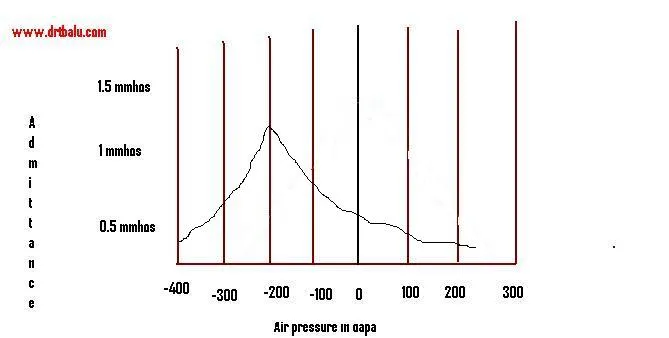
Eustachian tube dysfunction (ETD) is failure of the tube to open and close normally, so middle ear pressure is not equalised. The 2015 international consensus divides it into dilatory ETD (the tube fails to open, from mucosal swelling, muscle failure or anatomical blockage), baro-challenge-induced ETD (symptoms only with flying or diving) and patulous ETD (the tube stays open). Dilatory ETD is very common after colds and with allergic rhinitis, and in children with adenoid hypertrophy or cleft palate. Patients feel aural fullness, muffled hearing, popping or discomfort and cannot equalise. The drum is retracted or has an effusion; tympanometry is type C or B. Patulous ETD causes autophony and hearing one's own breathing, relieved by lying flat, and is linked to weight loss and pregnancy. An adult with a persistent unilateral effusion needs nasopharyngeal examination to exclude carcinoma. Most acute cases resolve; treatment is autoinflation, treating rhinitis, short-term decongestants, grommets for persistent effusion and balloon dilation for refractory chronic dilatory ETD in adults.
Patient case, mechanism, investigations, management, flashcards and exam-style questions.Open the lesson →
Key facts
- Types (2015 consensus): dilatory (functional, dynamic or anatomical obstruction), baro-challenge-induced, and patulous ETD
- Dilatory ETD: aural fullness, muffled hearing, popping, inability to equalise; retracted drum, type C tympanogram
- Patulous ETD: autophony, hearing own breathing, relief when lying flat or head down; drum moves with respiration
- Common causes: upper respiratory infection, allergic and non-allergic rhinitis, smoking, reflux, adenoids, cleft palate
- Adult with persistent unilateral middle ear effusion: examine the nasopharynx to exclude nasopharyngeal carcinoma
- ETDQ-7 questionnaire (score ≥14.5) supports diagnosis of obstructive ETD but there is no single gold-standard test
- First-line: watchful waiting, autoinflation, treat rhinitis (intranasal steroid); decongestant sprays only for a few days
- Refractory chronic dilatory ETD in adults: balloon dilation of the Eustachian tube; grommets for persistent effusion or deep retraction
Differential diagnosis
| Condition | Clues | Key test |
|---|---|---|
| Nasopharyngeal carcinoma | Adult with unilateral effusion, neck node, epistaxis, cranial neuropathy; Southern Chinese or North African background | Flexible nasendoscopy, biopsy, MRI |
| Superior semicircular canal dehiscence | Autophony, sound-induced vertigo, pulsatile tinnitus; drum normal | VEMP, HRCT |
| Temporomandibular joint dysfunction | Fullness with jaw clicking and tender joint | Clinical examination |
| Ménière disease or low-frequency SNHL | Fullness with fluctuating hearing, tinnitus, vertigo | Audiometry (sensorineural) |
| Wax impaction | Fullness, canal blocked | Otoscopy |
| Otitis media with effusion | Persistent fluid behind the drum (often consequence of ETD) | Type B tympanogram |
Exam pearls
Guideline
International consensus on ETD definition and types (Schilder et al. 2015); AAO-HNS Clinical Consensus Statement on balloon dilation (2019); NICE IPG665 balloon dilation for chronic ETD (2019)
References
- Schilder AG, Bhutta MF, Butler CC, et al.. Eustachian tube dysfunction: consensus statement on definition, types, clinical presentation and diagnosis. Clin Otolaryngol 2015.
- Tucci DL, McCoul ED, Rosenfeld RM, et al.. Clinical consensus statement: balloon dilation of the Eustachian tube. Otolaryngol Head Neck Surg 2019.
- McCoul ED, Anand VK, Christos PJ. Validating the clinical assessment of eustachian tube dysfunction: the Eustachian Tube Dysfunction Questionnaire (ETDQ-7). Laryngoscope 2012.
- National Institute for Health and Care Excellence. Balloon dilation for chronic eustachian tube dysfunction (IPG665). NICE, London 2019.
- Kwak MY, Lee HY, Kong SK, et al.. Consensus statement: postoperative management after balloon dilation of the Eustachian tube. Clin Exp Otorhinolaryngol 2024.
- Rosenfeld RM, Tunkel DE, Schwartz SR, et al.. Clinical practice guideline: tympanostomy tubes in children (update). Otolaryngol Head Neck Surg 2022.
Related topics
By Dr Khalid Seidi (B.Sc., M.D.) · MedEd World Clinical Knowledge library. Original teaching content checked against current guidelines (November 2026); confirm the latest local guidance before clinical use. Not a substitute for clinical judgement.