Clinical Knowledge › Internal medicine › Gastroenterology and hepatology › Gastrointestinal infections
Clostridioides difficile infection
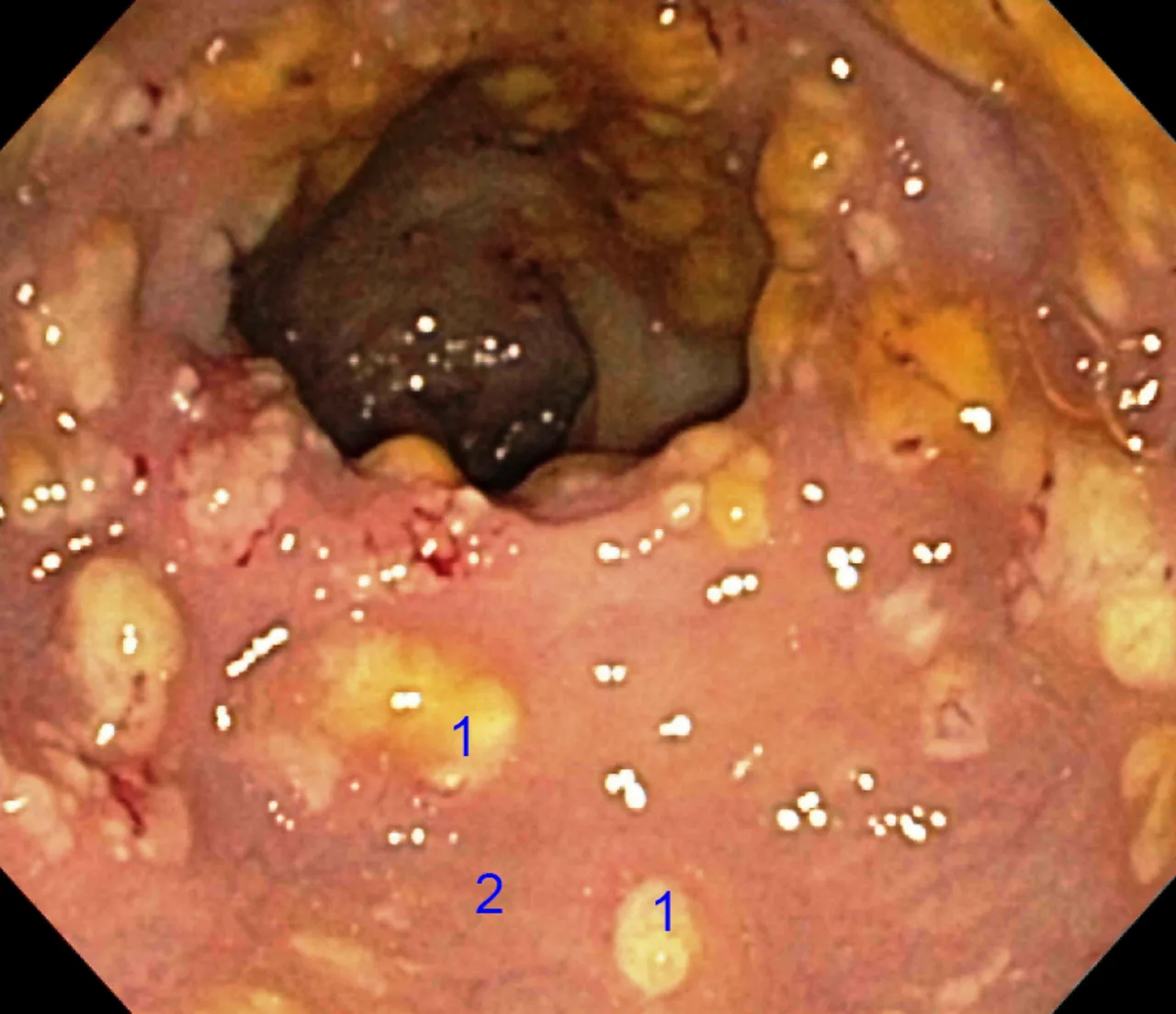
Clostridioides difficile infection (CDI) is toxin-mediated colitis caused by a spore-forming, Gram-positive anaerobe. It typically follows antibiotics that disrupt the colonic microbiota, especially clindamycin, cephalosporins and fluoroquinolones, and mainly affects older people in hospitals and care homes. Toxins A and B inactivate Rho GTPases in colonocytes, causing watery diarrhoea, pain and fever and, in severe cases, pseudomembranous colitis, toxic megacolon and death. Test only unexplained new diarrhoea (three or more unformed stools in 24 hours), using a multistep algorithm that includes a toxin assay. Treatment is to stop the inciting antibiotic where possible and give oral fidaxomicin (preferred in IDSA/SHEA 2021 and ESCMID 2021) or oral vancomycin; metronidazole is no longer first-line. Fulminant disease needs enteral vancomycin, IV metronidazole and early surgical review. Recurrence is common, and faecal microbiota-based therapy is recommended after repeated recurrences. Spores resist alcohol gel, so isolation, handwashing and sporicidal cleaning are essential.
Patient case, mechanism, investigations, management, flashcards and exam-style questions.Open the lesson →
Key facts
- Gram-positive, spore-forming anaerobic bacillus; disease is caused by toxins A (TcdA) and B (TcdB), which glucosylate and inactivate Rho GTPases
- Highest-risk antibiotics: clindamycin, cephalosporins, fluoroquinolones and broad-spectrum penicillins; other risks are age over 65, hospitalisation, PPIs and immunosuppression
- Test only unformed stool from patients with three or more unexplained unformed stools in 24 hours, using a multistep algorithm (GDH or NAAT plus toxin immunoassay); do not test for cure
- Severe CDI (IDSA/SHEA): white cell count above 15 × 10⁹/L or creatinine above 1.5 mg/dL (about 133 µmol/L); fulminant: shock, ileus or megacolon
- Initial episode: fidaxomicin 200 mg twice daily for 10 days (preferred) or vancomycin 125 mg orally four times daily for 10 days
- Fulminant CDI: vancomycin 500 mg orally or by tube four times daily plus intravenous metronidazole 500 mg every 8 hours; rectal vancomycin if ileus; early surgical review
- Recurrence (within 8 weeks) follows about one in five first episodes; after multiple recurrences, faecal microbiota-based therapy is recommended
- Spores survive alcohol gel: contact precautions, single room, soap-and-water handwashing and chlorine-based (sporicidal) cleaning
Differential diagnosis
| Condition | Clues | Key test |
|---|---|---|
| Antibiotic-associated diarrhoea without CDI | Mild diarrhoea during antibiotics, settles on stopping, toxin negative | Stool C. difficile testing |
| Other infectious diarrhoea (Campylobacter, Salmonella, norovirus) | Community outbreak, food history, vomiting | Stool culture or multiplex PCR |
| Ulcerative colitis or Crohn disease flare | Bloody diarrhoea, known IBD (but CDI may coexist) | Toxin testing plus endoscopy and biopsy |
| Ischaemic colitis | Sudden pain and bloody diarrhoea in older vascular patient | CT; colonoscopy with biopsy |
| Laxative or enteral feed-related diarrhoea | Recent laxatives, tube feeding | Review drug and feed chart; stop laxatives |
| Microscopic colitis | Chronic watery diarrhoea in older woman on NSAIDs or PPIs | Colonoscopy with random biopsies |
| Neutropenic enterocolitis or CMV colitis | Immunosuppressed or chemotherapy patient | CT; biopsy for CMV |
Exam pearls
Guideline
IDSA/SHEA 2021 focused update on CDI in adults, ESCMID 2021 treatment guidance, ACG 2021 CDI guideline, NICE NG199 (2021) and AGA clinical practice update on CDI in IBD (2026)
References
- Johnson S, Lavergne V, Skinner AM, et al.. Clinical Practice Guideline by the Infectious Diseases Society of America (IDSA) and Society for Healthcare Epidemiology of America (SHEA): 2021 Focused Update Guidelines on Management of Clostridioides difficile Infection in Adults. Clin Infect Dis 2021.
- McDonald LC, Gerding DN, Johnson S, et al.. Clinical Practice Guidelines for Clostridium difficile Infection in Adults and Children: 2017 Update by IDSA and SHEA. Clin Infect Dis 2018.
- van Prehn J, Reigadas E, Vogelzang EH, et al.. European Society of Clinical Microbiology and Infectious Diseases: 2021 update on the treatment guidance document for Clostridioides difficile infection in adults. Clin Microbiol Infect 2021.
- Kelly CR, Fischer M, Allegretti JR, et al.. ACG Clinical Guidelines: Prevention, Diagnosis, and Treatment of Clostridioides difficile Infections. Am J Gastroenterol 2021.
- National Institute for Health and Care Excellence (NICE). Clostridioides difficile infection: antimicrobial prescribing (NG199). 2021.
- Khanna S, et al.. AGA Clinical Practice Update on Management of Clostridioides difficile Infection in Inflammatory Bowel Disease: Expert Review. Gastroenterology 2026.
Related topics
By Dr Khalid Seidi (B.Sc., M.D.) · MedEd World Clinical Knowledge library. Original teaching content checked against current guidelines (November 2026); confirm the latest local guidance before clinical use. Not a substitute for clinical judgement.