Clinical Knowledge › Internal medicine › Gastroenterology and hepatology › Gastrointestinal infections
Giardiasis
Giardiasis is small-bowel infection with the flagellated protozoan Giardia duodenalis (G. lamblia), the commonest intestinal parasite diagnosed worldwide. Chlorine-resistant cysts spread by the faecal–oral route through untreated water, food, childcare settings and sexual contact; as few as 10 cysts cause infection. Trophozoites attach to the duodenal and jejunal epithelium without invading it, blunting villi and reducing brush-border enzymes. After 1–2 weeks, patients develop greasy, foul-smelling stools, bloating, flatulence and sulphurous belching, without blood or much fever. Many infections are silent; others become chronic, with malabsorption, weight loss, lactose intolerance and post-infectious IBS. Antibody deficiency predisposes to persistent disease. Stool antigen tests or PCR are more sensitive than microscopy. Treatment is a nitroimidazole (single-dose tinidazole or metronidazole) or nitazoxanide, with paromomycin in early pregnancy. Prevention relies on boiled or filtered water, hand hygiene and exclusion until symptoms settle.
Patient case, mechanism, investigations, management, flashcards and exam-style questions.Open the lesson →
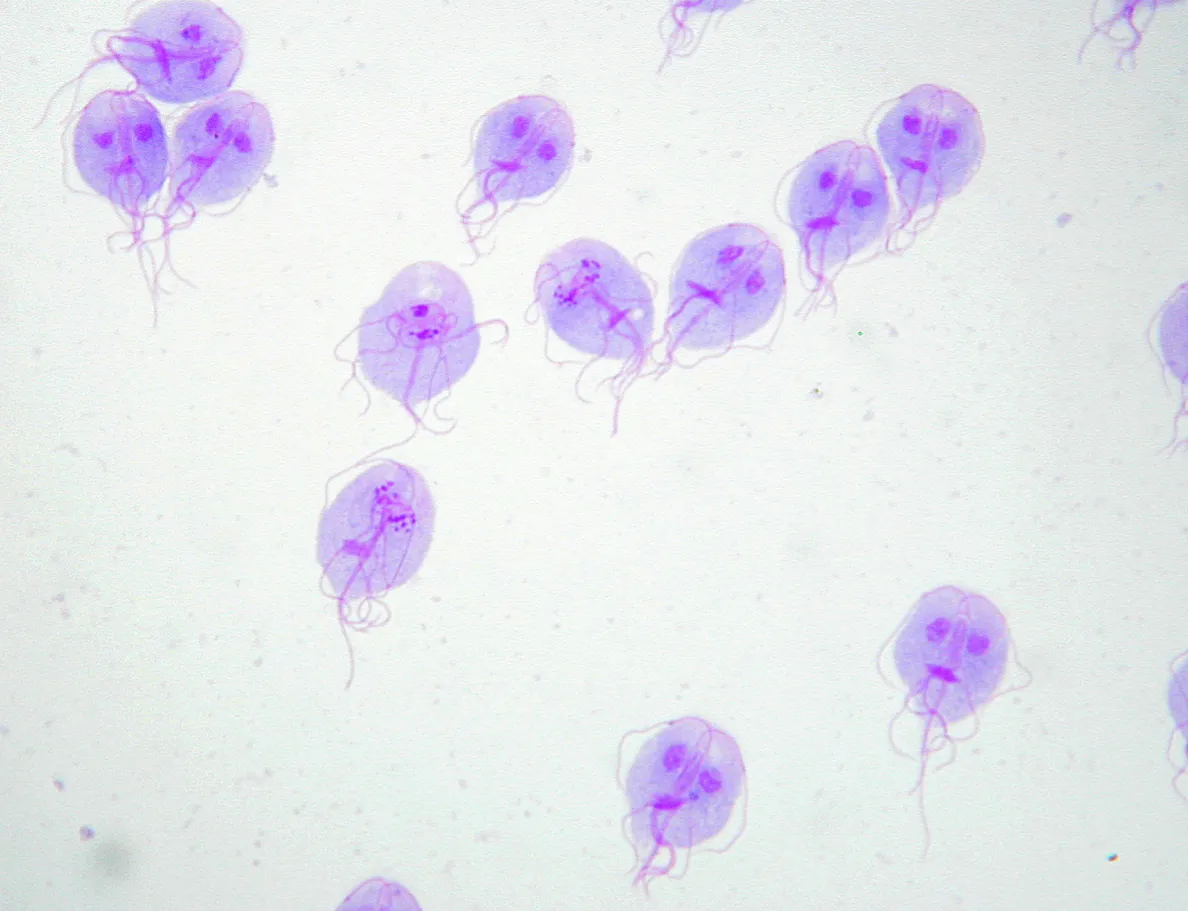
Key facts
- Giardia duodenalis is a binucleate, flagellated protozoan with a ventral adhesive disc; the infective form is the quadrinucleate cyst
- Faecal–oral spread via untreated water (campers, hikers, travellers), food, childcare centres and oral–anal sex; zoonotic spread is possible; cysts resist standard chlorination
- Non-invasive small-bowel infection: no blood, no faecal leucocytes and usually no eosinophilia
- Classic picture: 1–2 weeks after exposure, greasy foul-smelling floating stools, bloating, flatulence, sulphurous ('eggy') belching and weight loss
- Risk of severe or chronic disease: common variable immunodeficiency, X-linked agammaglobulinaemia, selective IgA deficiency, achlorhydria and young children
- Best diagnostic tests: stool antigen (EIA or direct fluorescent antibody) or PCR, including multiplex panels; microscopy for cysts and trophozoites is less sensitive
- Treatment: tinidazole 2 g single dose, metronidazole for 5–7 days, or nitazoxanide for 3 days; paromomycin is used in early pregnancy (teaching doses; check local formulary)
- After cure, transient lactose intolerance and post-infectious IBS are common; check adherence, reinfection and immunoglobulins in treatment failure
Differential diagnosis
| Condition | Clues | Key test |
|---|---|---|
| Cryptosporidiosis | Profuse watery diarrhoea, swimming pools, severe in advanced HIV | Stool PCR or modified acid-fast stain |
| Enterotoxigenic E. coli (traveller's diarrhoea) | Abrupt onset within days of arrival, settles in 3–5 days | Clinical diagnosis; multiplex stool PCR if persistent |
| Coeliac disease | Chronic malabsorption, iron deficiency, no travel or water exposure | Tissue transglutaminase IgA with total IgA; duodenal biopsy |
| Lactose intolerance | Bloating and diarrhoea after dairy; may follow giardiasis | Dietary exclusion trial or hydrogen breath test |
| Small intestinal bacterial overgrowth | Bloating, B12 deficiency, previous surgery or dysmotility | Glucose or lactulose hydrogen breath test |
| Tropical sprue | Months of residence in the tropics, folate deficiency, megaloblastic anaemia | Duodenal biopsy after excluding infection |
| Irritable bowel syndrome | Chronic pain related to defecation, no weight loss or nocturnal stools | Positive diagnosis after stool tests and basic bloods |
Exam pearls
Guideline
IDSA clinical practice guidelines for the diagnosis and management of infectious diarrhoea (2017), ACG clinical guideline on acute diarrhoeal infections in adults (2016) and CDC Yellow Book: Health Information for International Travel (2026 edition)
References
- Shane AL, Mody RK, Crump JA, et al.. 2017 Infectious Diseases Society of America Clinical Practice Guidelines for the Diagnosis and Management of Infectious Diarrhea. Clin Infect Dis 2017.
- Riddle MS, DuPont HL, Connor BA.. ACG Clinical Guideline: Diagnosis, Treatment, and Prevention of Acute Diarrheal Infections in Adults. Am J Gastroenterol 2016.
- Gardner TB, Hill DR.. Treatment of giardiasis. Clin Microbiol Rev 2001.
- Leung AKC, Leung AAM, Wong AHC, Sergi CM, Kam JKM.. Giardiasis: an overview. Recent Pat Inflamm Allergy Drug Discov 2019.
- Centers for Disease Control and Prevention. CDC Yellow Book 2026: Health Information for International Travel. 2025.
- Hemphill A, Müller N, Müller J.. Comparative pathobiology of the intestinal protozoan parasites Giardia lamblia, Entamoeba histolytica, and Cryptosporidium parvum. Pathogens 2019.
Related topics
By Dr Khalid Seidi (B.Sc., M.D.) · MedEd World Clinical Knowledge library. Original teaching content checked against current guidelines (November 2026); confirm the latest local guidance before clinical use. Not a substitute for clinical judgement.