Clinical Knowledge › Internal medicine › Gastroenterology and hepatology › Gastrointestinal infections
Intestinal helminth infections
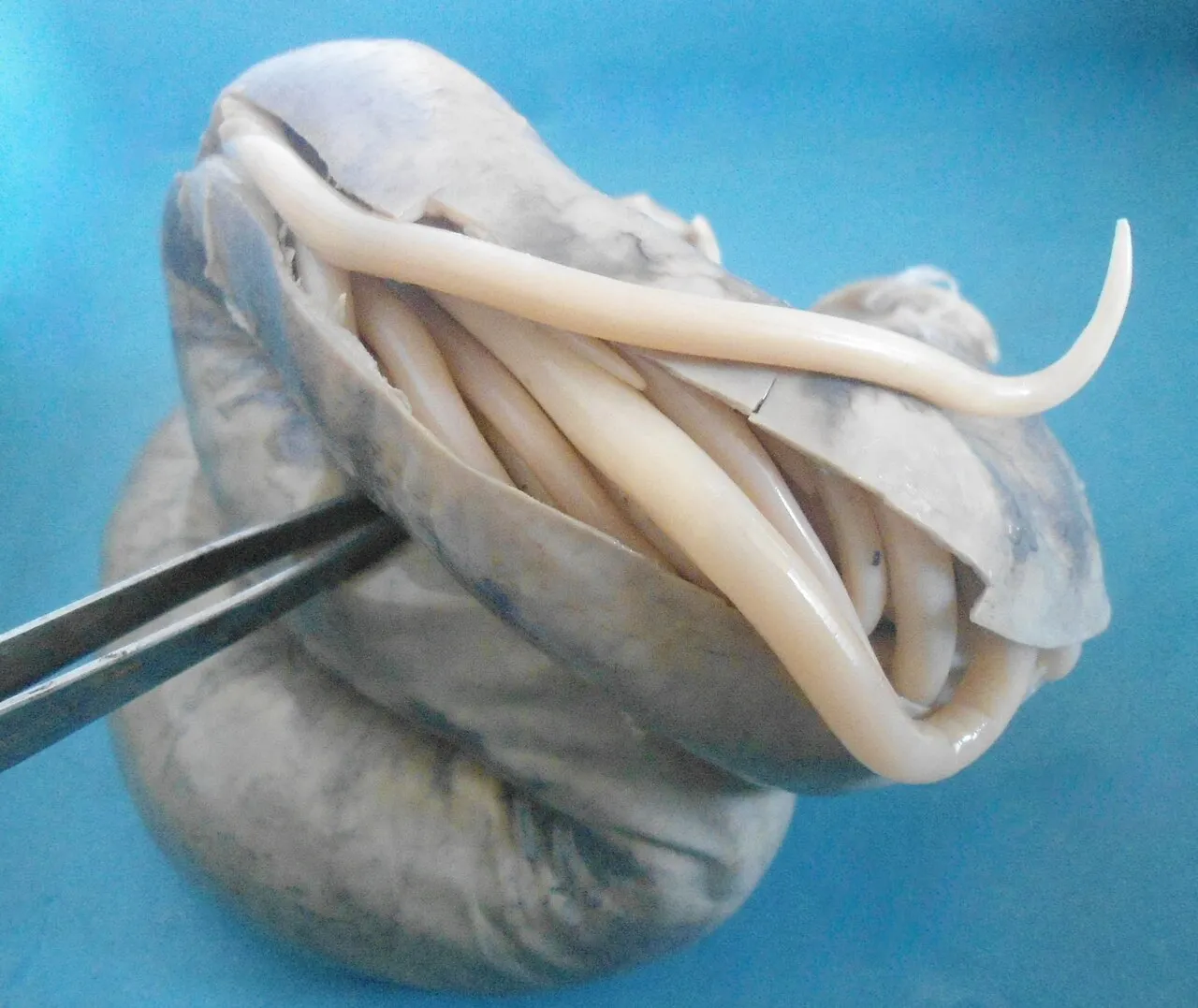
Intestinal helminths are parasitic worms living in the human gut. The soil-transmitted helminths (Ascaris lumbricoides, Trichuris trichiura, the hookworms Necator americanus and Ancylostoma duodenale, and Strongyloides stercoralis) infect over a billion people in areas with poor sanitation. Pinworm (Enterobius) is common in children everywhere; tapeworms follow undercooked meat or fish. Ascaris and hookworm larvae migrate through the lungs, causing Löffler syndrome with eosinophilia. Heavy Ascaris loads obstruct the bowel or biliary tree, hookworm causes iron-deficiency anaemia, and Trichuris causes dysentery and rectal prolapse. Strongyloides autoinfects and persists for decades; steroids or HTLV-1 can trigger fatal hyperinfection with Gram-negative sepsis. Diagnosis relies on stool microscopy, Strongyloides serology, the sticky-tape test and eosinophilia. Benzimidazoles (albendazole, mebendazole) treat most nematodes, ivermectin treats Strongyloides and praziquantel treats tapeworms. WHO recommends regular deworming of at-risk children and women in endemic areas.
Patient case, mechanism, investigations, management, flashcards and exam-style questions.Open the lesson →
Key facts
- Soil-transmitted helminths: Ascaris and Trichuris (swallowed eggs), hookworm and Strongyloides (larvae penetrate skin, usually bare feet)
- Tissue-migrating larvae (Ascaris, hookworm, Strongyloides) cause eosinophilia and transient pulmonary infiltrates with cough and wheeze (Löffler syndrome)
- Hookworms suck blood from the small bowel and are a leading cause of iron-deficiency anaemia in endemic areas
- Ascaris: bolus small-bowel obstruction in children and biliary ascariasis (colic, cholangitis, pancreatitis); Trichuris: dysentery and rectal prolapse
- Strongyloides persists by autoinfection; corticosteroids, HTLV-1 and transplantation cause hyperinfection with Gram-negative bacteraemia and meningitis
- Enterobius: nocturnal perianal itch in children; diagnose with the sticky-tape test; treat the whole household with mebendazole and repeat after 2 weeks
- Albendazole 400 mg single dose (Ascaris, hookworm), longer courses for Trichuris; ivermectin 200 µg/kg for Strongyloides; praziquantel for tapeworms (teaching doses; check local formulary)
- WHO: periodic preventive chemotherapy with albendazole or mebendazole for children and women of reproductive age where prevalence is 20% or more
Differential diagnosis
| Condition | Clues | Key test |
|---|---|---|
| Giardiasis | Greasy diarrhoea and bloating, no eosinophilia | Stool Giardia antigen or PCR |
| Schistosomiasis (intestinal) | Freshwater exposure in Africa, Katayama fever, hepatosplenomegaly | Schistosoma serology and stool or rectal snip for eggs |
| Eosinophilic gastroenteritis | Atopy, no travel, eosinophilic infiltration on biopsy | Exclude parasites; endoscopy with biopsies |
| Asthma or eosinophilic pneumonia | Wheeze and infiltrates without travel exposure | Stool tests and Strongyloides serology; chest imaging |
| Iron-deficiency anaemia from GI blood loss | Older patient, no exposure; occult bleeding | Stool for ova and parasites; endoscopy per guidelines |
| Adhesive small-bowel obstruction or intussusception | Previous surgery, no worm passage | Ultrasound or CT showing worm bolus versus other cause |
| Gram-negative sepsis of another source | Urinary or biliary source, no steroid exposure | Strongyloides serology and stool larvae in steroid-treated patients from endemic areas |
Exam pearls
Guideline
WHO guideline on preventive chemotherapy to control soil-transmitted helminth infections in at-risk population groups (2017), WHO guideline on preventive chemotherapy for public health control of strongyloidiasis (2024), WHO NTD road map 2021–2030 and CDC Yellow Book (2026 edition)
References
- World Health Organization. Guideline: preventive chemotherapy to control soil-transmitted helminth infections in at-risk population groups. 2017.
- World Health Organization. WHO guideline on preventive chemotherapy for public health control of strongyloidiasis. 2024.
- World Health Organization. Ending the neglect to attain the Sustainable Development Goals: a road map for neglected tropical diseases 2021–2030. 2020.
- Jourdan PM, Lamberton PHL, Fenwick A, Addiss DG.. Soil-transmitted helminth infections. Lancet 2018.
- Henriquez-Camacho C, Gotuzzo E, Echevarria J, et al.. Ivermectin versus albendazole or thiabendazole for Strongyloides stercoralis infection. Cochrane Database Syst Rev 2016.
- Krolewiecki A, Kepha S, Fleitas PE, et al.. Albendazole-ivermectin co-formulation for the treatment of Trichuris trichiura and other soil-transmitted helminths: a randomised phase 2/3 trial. Lancet Infect Dis 2025.
Related topics
By Dr Khalid Seidi (B.Sc., M.D.) · MedEd World Clinical Knowledge library. Original teaching content checked against current guidelines (November 2026); confirm the latest local guidance before clinical use. Not a substitute for clinical judgement.