Clinical Knowledge › Internal medicine › Pulmonology › Pulmonary vascular diseases
Diffuse alveolar haemorrhage
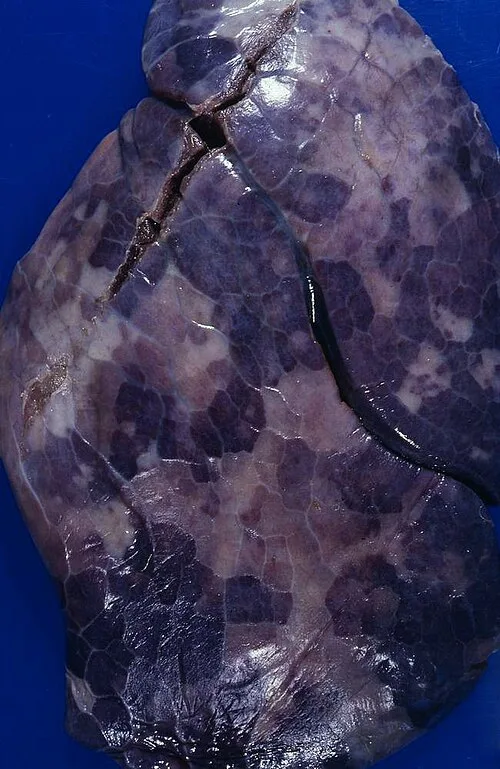
Diffuse alveolar haemorrhage (DAH) is bleeding into the alveolar spaces from the pulmonary microcirculation (alveolar capillaries, arterioles and venules). It is a clinical syndrome rather than a disease, and can progress to respiratory failure within hours. The classic triad is haemoptysis, a falling haemoglobin and diffuse alveolar infiltrates, but haemoptysis is absent in up to a third of patients. Three histological patterns point to the cause: pulmonary capillaritis (ANCA-associated vasculitis, anti-GBM disease, lupus, antiphospholipid syndrome, drugs), bland haemorrhage (coagulopathy, anticoagulants, mitral stenosis, idiopathic pulmonary haemosiderosis) and diffuse alveolar damage (infection, drugs, cocaine, stem cell transplantation). Bronchoalveolar lavage with progressively bloodier aliquots and haemosiderin-laden macrophages confirms the diagnosis and excludes infection. Management combines airway and ventilatory support, correction of bleeding tendency and urgent treatment of the cause, usually high-dose glucocorticoids with rituximab or cyclophosphamide for immune DAH.
Patient case, mechanism, investigations, management, flashcards and exam-style questions.Open the lesson →
Key facts
- DAH = bleeding from the alveolar microcirculation into the alveoli; it is a syndrome with many causes
- Triad: haemoptysis, falling haemoglobin and new diffuse infiltrates; haemoptysis is absent in up to a third
- BAL with sequential aliquots that become more bloody is diagnostic; haemosiderin-laden macrophages appear after 48–72 hours
- Histology: capillaritis (immune), bland haemorrhage (coagulopathy, raised venous pressure) or diffuse alveolar damage
- ANCA-associated vasculitis is the commonest cause of capillaritis; always check urine for glomerulonephritis
- A rise in DLCO (often above 30%) suggests fresh intra-alveolar blood
- Immune DAH: pulse methylprednisolone plus rituximab or cyclophosphamide; plasma exchange for anti-GBM disease and considered in hypoxaemic AAV-DAH
- Supportive care: oxygen, lung-protective ventilation with adequate PEEP, transfusion, stop anticoagulants and correct coagulopathy
Differential diagnosis
| Condition | Clues | Key test |
|---|---|---|
| Acute cardiogenic pulmonary oedema | Orthopnoea, raised JVP, cardiomegaly, pink frothy sputum | Echocardiogram, BNP, response to diuretics |
| Pneumonia | Fever, purulent sputum, focal consolidation | Cultures, BAL microbiology (not progressively bloody) |
| ARDS from other causes | Clear precipitant (sepsis, trauma, aspiration) | Clinical context; BAL not haemorrhagic |
| Pulmonary embolism with infarction | Pleuritic pain, wedge-shaped opacity, risk factors | CT pulmonary angiography |
| Bronchial bleeding (bronchiectasis, tumour, TB) | Localised source, large-volume haemoptysis, focal disease | CT angiography and bronchoscopy showing a focal source |
| Pneumocystis or viral pneumonitis in immunosuppression | Subacute onset, ground-glass, high LDH | BAL PCR and staining |
| Acute eosinophilic pneumonia | Recent onset of smoking or vaping, fever | BAL eosinophils above 25% |
Exam pearls
Guideline
No dedicated DAH guideline; management follows KDIGO 2024 (ANCA vasculitis), EULAR 2022 AAV and EULAR 2023 SLE recommendations, KDIGO 2021 (anti-GBM disease) and expert reviews
References
- Lara AR, Schwarz MI.. Diffuse alveolar hemorrhage. Chest 2010.
- Kidney Disease: Improving Global Outcomes (KDIGO) ANCA Vasculitis Work Group. KDIGO 2024 Clinical Practice Guideline for the Management of Antineutrophil Cytoplasmic Antibody (ANCA)-Associated Vasculitis. Kidney Int 2024.
- Hellmich B, Sanchez-Alamo B, Schirmer JH, et al.. EULAR recommendations for the management of ANCA-associated vasculitis: 2022 update. Ann Rheum Dis 2024.
- Fanouriakis A, Kostopoulou M, Andersen J, et al.. EULAR recommendations for the management of systemic lupus erythematosus: 2023 update. Ann Rheum Dis 2024.
- Kidney Disease: Improving Global Outcomes (KDIGO) Glomerular Diseases Work Group. KDIGO 2021 Clinical Practice Guideline for the Management of Glomerular Diseases. Kidney Int 2021.
- Walsh M, Merkel PA, Peh CA, et al.. Plasma Exchange and Glucocorticoids in Severe ANCA-Associated Vasculitis. N Engl J Med 2020.
Related topics
By Dr Khalid Seidi (B.Sc., M.D.) · MedEd World Clinical Knowledge library. Original teaching content checked against current guidelines (November 2026); confirm the latest local guidance before clinical use. Not a substitute for clinical judgement.