Clinical Knowledge › Internal medicine › Pulmonology › Pulmonary vascular diseases
Fat embolism syndrome
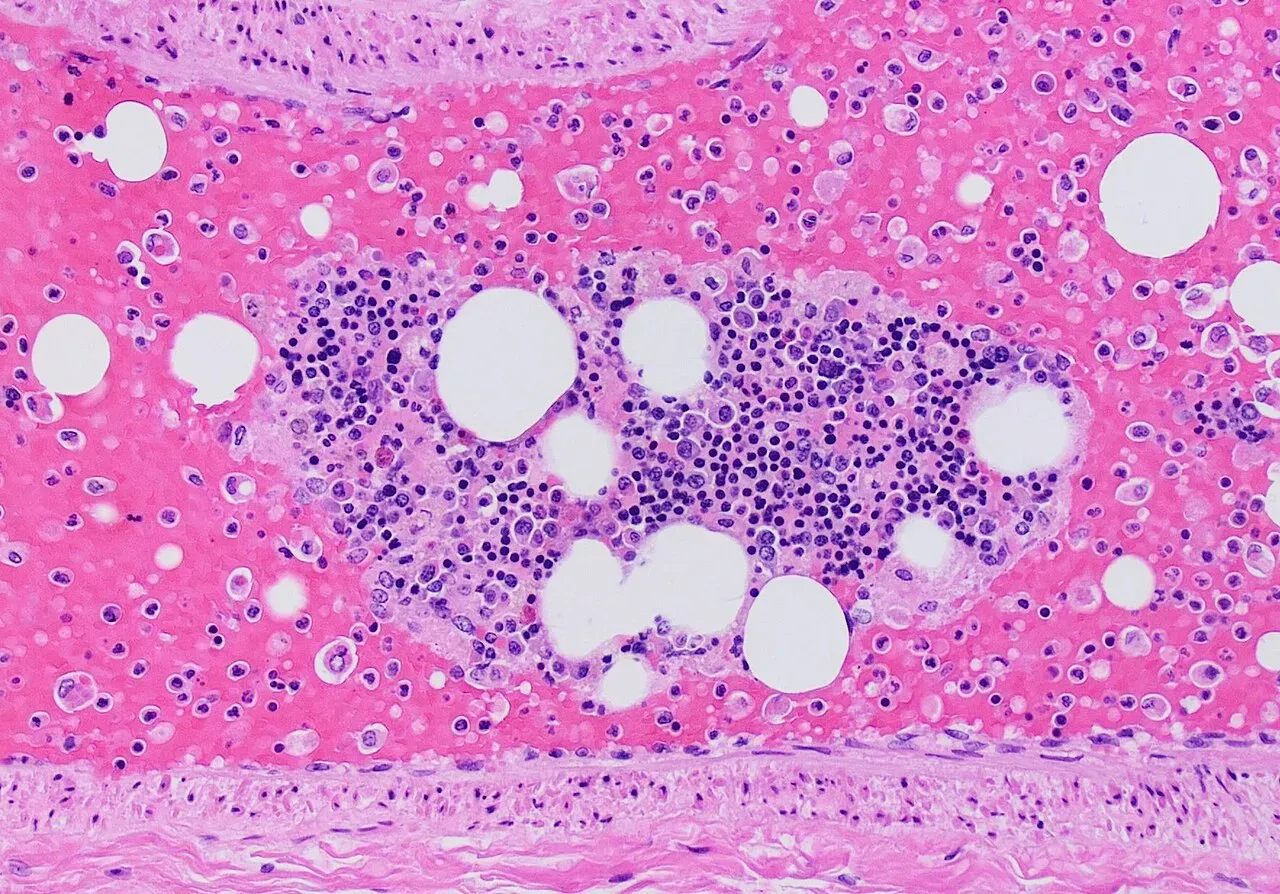
Fat embolism syndrome (FES) is a multisystem disorder caused by fat globules entering the circulation, usually after long-bone or pelvic fractures or orthopaedic surgery such as intramedullary nailing. Fat embolisation happens in most long-bone fractures, but the clinical syndrome develops in only a few per cent, typically 24–72 hours after injury. The classic triad is respiratory distress with hypoxaemia, neurological dysfunction (confusion, drowsiness, focal signs or coma) and a petechial rash over the upper chest, axillae, conjunctivae and mouth. It results from mechanical obstruction of capillaries combined with toxic free fatty acids that injure endothelium, producing an ARDS-like lung injury and cerebral microinfarcts. There is no specific test: diagnosis is clinical, supported by criteria (Gurd and Wilson, Schonfeld), chest CT and brain MRI with a 'starfield' pattern. Treatment is supportive: oxygen, lung-protective ventilation, careful fluids and ICU care, with ECMO in refractory cases. Early fracture fixation within 24 hours is the main preventive measure.
Patient case, mechanism, investigations, management, flashcards and exam-style questions.Open the lesson →
Key facts
- FES follows long-bone (especially femoral shaft) and pelvic fractures, intramedullary nailing, arthroplasty and, rarely, non-traumatic causes
- Symptoms appear 24–72 hours after injury (a 'lucid interval')
- Classic triad: hypoxaemic respiratory failure, neurological dysfunction and petechial rash
- Petechiae appear on the upper body, axillae, conjunctivae and oral mucosa in up to half of patients and fade within a week
- No single diagnostic test; Gurd and Wilson or Schonfeld criteria support the clinical diagnosis
- Brain MRI shows multiple small diffusion-restricting lesions ('starfield pattern'); chest CT shows ground-glass and nodular opacities
- Treatment is supportive: oxygen, lung-protective ventilation, haemodynamic support; corticosteroids are not routinely recommended for treatment
- Early fracture stabilisation (within 24 hours) reduces FES and pulmonary complications
Differential diagnosis
| Condition | Clues | Key test |
|---|---|---|
| Pulmonary thromboembolism | Later onset (days to weeks), no rash, DVT signs | CT pulmonary angiography |
| Traumatic brain injury | Neurology from the time of injury without lucid interval | CT head |
| Pulmonary contusion | Hypoxaemia within hours of chest trauma, localised opacities | CT chest, mechanism of injury |
| Aspiration pneumonitis | Vomiting or reduced consciousness, dependent opacities | History, chest imaging |
| Transfusion-related acute lung injury or fluid overload | Within 6 hours of transfusion, or positive fluid balance | Timing, echo, BNP |
| Sepsis with DIC | Fever, hypotension, purpura in dependent areas, positive cultures | Blood cultures, coagulation screen |
| Fat-free air embolism | During line insertion or surgery; sudden collapse | Echo, history of procedure |
Exam pearls
Guideline
No dedicated international FES guideline; supportive care follows the ESICM ARDS guideline (2023) and trauma practice on early fracture stabilisation; diagnosis uses Gurd and Wilson (1974) and Schonfeld (1983) criteria
References
- Gurd AR, Wilson RI.. The fat embolism syndrome. J Bone Joint Surg Br 1974.
- Schonfeld SA, Ploysongsang Y, DiLisio R, et al.. Fat embolism prophylaxis with corticosteroids. A prospective study in high-risk patients. Ann Intern Med 1983.
- Grasselli G, Calfee CS, Camporota L, et al.. ESICM guidelines on acute respiratory distress syndrome: definition, phenotyping and respiratory support strategies. Intensive Care Med 2023.
- Kosova E, Bergmark B, Piazza G.. Fat embolism syndrome. Circulation 2015.
- Bone LB, Johnson KD, Weigelt J, Scheinberg R.. Early versus delayed stabilization of femoral fractures. A prospective randomized study. J Bone Joint Surg Am 1989.
- Miyake T, Okada H, Kanda N.. Advances and uncertainties in fat embolism syndrome: a review. Trauma Surg Acute Care Open 2026.
Related topics
By Dr Khalid Seidi (B.Sc., M.D.) · MedEd World Clinical Knowledge library. Original teaching content checked against current guidelines (November 2026); confirm the latest local guidance before clinical use. Not a substitute for clinical judgement.