Clinical Knowledge › Internal medicine › Infectious diseases › Respiratory infections
Diphtheria
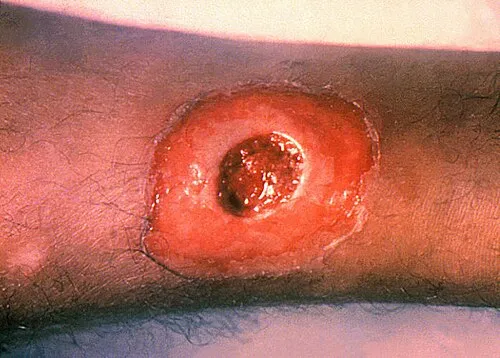
Diphtheria is a toxin-mediated infection caused by toxigenic strains of Corynebacterium diphtheriae, Gram-positive club-shaped rods that carry the tox gene on a bacteriophage. The exotoxin inactivates elongation factor-2 and stops protein synthesis, causing local necrosis and a tough grey pseudomembrane, then systemic damage to the heart, nerves and kidneys. Respiratory diphtheria presents after 2–5 days with sore throat, low-grade fever and an adherent membrane on the tonsils or pharynx that bleeds when lifted; extensive disease causes 'bull neck' swelling and airway obstruction. Myocarditis with heart block (weeks 1–2) and demyelinating neuropathy beginning with palatal paralysis (weeks 1–8) cause late deaths. Cutaneous diphtheria produces chronic punched-out ulcers and sustains transmission. Treatment must start on clinical suspicion: equine diphtheria antitoxin, a macrolide (preferred by WHO 2024) or penicillin, airway support, cardiac monitoring, isolation and notification. Contacts are swabbed, given prophylaxis and vaccinated.
Patient case, mechanism, investigations, management, flashcards and exam-style questions.Open the lesson →
Key facts
- Toxigenic C. diphtheriae: Gram-positive club-shaped rods in 'Chinese letter' arrangement with metachromatic (volutin) granules
- Diphtheria toxin (encoded by a corynephage tox gene) ADP-ribosylates elongation factor-2, stopping protein synthesis
- Grey adherent pseudomembrane that bleeds when removed, with bull neck in severe disease
- Myocarditis (arrhythmia, heart block, heart failure) in the first 2 weeks is the main cause of death; neuropathy starts with palatal paralysis
- Give diphtheria antitoxin on clinical suspicion, before culture results; it neutralises only unbound toxin
- WHO 2024: dose antitoxin by severity and duration, do not perform routine sensitivity testing first, and prefer a macrolide over penicillin
- Confirm toxigenicity with tox gene PCR and the Elek immunoprecipitation test
- Infection does not reliably give immunity: vaccinate on recovery; contacts receive swabs, prophylaxis and a vaccine dose
Differential diagnosis
| Condition | Clues | Key test |
|---|---|---|
| Streptococcal tonsillitis | Exudate easily wiped off, high fever, tender nodes | Throat culture or rapid antigen test |
| Infectious mononucleosis | Thick white tonsillar exudate, splenomegaly, posterior nodes | Monospot, EBV serology, atypical lymphocytes |
| Vincent angina (necrotising ulcerative gingivitis/pharyngitis) | Foul breath, ulcerated tonsil, poor oral hygiene | Clinical; fusiform bacteria and spirochaetes on smear |
| Oral candidiasis | White plaques that scrape off, immunosuppression or inhaled steroids | KOH microscopy |
| Peritonsillar abscess (quinsy) | Trismus, uvular deviation, unilateral swelling | Clinical; ultrasound or aspiration |
| Epiglottitis | Drooling, stridor, sitting forward, no membrane on the tonsils | Lateral neck X-ray or laryngoscopy in a safe setting |
| Agranulocytosis with necrotic pharyngitis | Drug history (carbimazole, clozapine), neutropenia | Full blood count |
Exam pearls
Guideline
WHO Clinical management of diphtheria: guideline (February 2024), UKHSA public health control and management of diphtheria in England (with subsequent updates), WHO diphtheria vaccine position paper (2017) and UKHSA Green Book chapter 15
References
- World Health Organization. Clinical management of diphtheria: guideline, 2 February 2024. WHO, Geneva 2024.
- Public Health England / UK Health Security Agency. Public health control and management of diphtheria (in England and Wales): guidelines (later updated by UKHSA). PHE / UKHSA 2015.
- World Health Organization. Diphtheria vaccine: WHO position paper – August 2017. Wkly Epidemiol Rec 2017.
- UK Health Security Agency. Immunisation against infectious disease (the Green Book), chapter 15: Diphtheria (online chapter, updated periodically). 2006.
- Sharma NC, Efstratiou A, Mokrousov I, Mutreja A, Das B, Ramamurthy T. Diphtheria. Nat Rev Dis Primers 2019.
- Truelove SA, Keegan LT, Moss WJ, et al.. Clinical and epidemiological aspects of diphtheria: a systematic review and pooled analysis. Clin Infect Dis 2020.
Related topics
By Dr Khalid Seidi (B.Sc., M.D.) · MedEd World Clinical Knowledge library. Original teaching content checked against current guidelines (November 2026); confirm the latest local guidance before clinical use. Not a substitute for clinical judgement.