Clinical Knowledge › Internal medicine › Cardiology and angiology › Hypertension
Essential hypertension
Essential (primary) hypertension is persistently raised blood pressure without a single identifiable cause and accounts for about 90% of adult hypertension. It affects over a billion people and is the leading modifiable risk factor for death worldwide, driving stroke, coronary disease, heart failure, chronic kidney disease, atrial fibrillation and dementia. It arises from polygenic susceptibility interacting with salt, excess weight, alcohol, inactivity and arterial ageing. Most patients have no symptoms, so diagnosis depends on correct measurement and confirmation with home or ambulatory monitoring. Assessment covers cardiovascular risk, organ damage and secondary causes. The 2024 ESC guideline defines hypertension as office BP of 140/90 mmHg or more and introduces an 'elevated BP' category, while the 2025 AHA/ACC guideline keeps 130/80 mmHg and uses the PREVENT risk calculator. Both favour lifestyle change, early single-pill combinations of an ACE inhibitor or ARB with a calcium-channel blocker or thiazide-like diuretic, and a systolic target of 120–129 mmHg when tolerated.
Patient case, mechanism, investigations, management, flashcards and exam-style questions.Open the lesson →
Key facts
- Essential hypertension causes about 90% of adult hypertension and is the leading modifiable risk factor for global mortality
- ESC 2024: non-elevated below 120/70, elevated 120–139/70–89, hypertension 140/90 mmHg or more (office)
- AHA/ACC 2025: normal below 120/80, elevated 120–129/<80, stage 1 130–139/80–89, stage 2 140/90 mmHg or more
- Confirm with out-of-office readings: home or daytime ambulatory 135/85 mmHg or more, 24-hour ambulatory 130/80 mmHg or more
- First-line drugs: ACE inhibitor or ARB, dihydropyridine CCB, thiazide or thiazide-like diuretic; start most patients on a low-dose two-drug single pill
- Target systolic 120–129 mmHg if tolerated (ESC) or below 130/80 mmHg (AHA/ACC); relax targets in frailty, orthostatic hypotension or limited life expectancy
- Lifestyle: salt below 5 g/day, potassium-enriched salt substitutes, weight loss, 150 minutes of activity weekly, limit alcohol, stop smoking
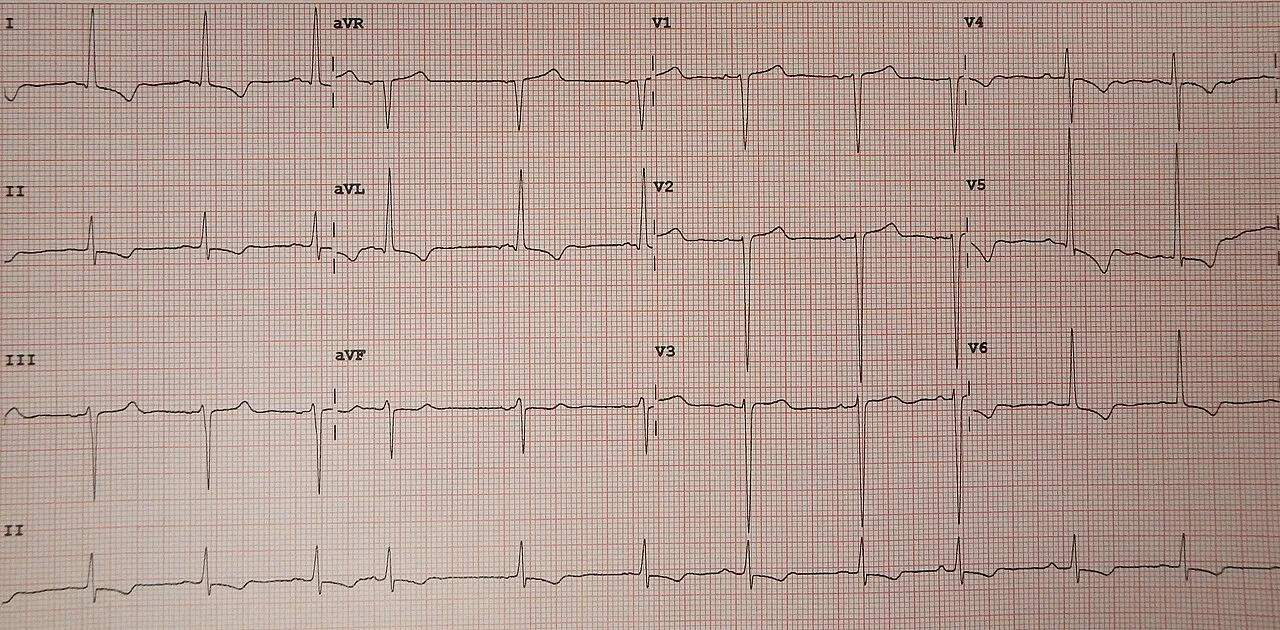
- Assess for organ damage (ECG for LVH, urine albumin:creatinine ratio, eGFR, fundi) and calculate overall cardiovascular risk
Differential diagnosis
| Condition | Clues | Key test |
|---|---|---|
| White-coat hypertension | High office readings but normal home or ambulatory BP | Home BP monitoring or 24-hour ABPM |
| Primary aldosteronism | Resistant hypertension, hypokalaemia, adrenal nodule | Aldosterone-to-renin ratio |
| Renovascular hypertension | Onset under 30 (FMD) or older smoker with atherosclerosis; creatinine rise on ACE inhibitor | Renal Doppler ultrasound or CT/MR angiography |
| Obstructive sleep apnoea | Snoring, daytime sleepiness, obesity, nocturnal hypertension | Sleep study |
| Chronic kidney disease | Raised creatinine, proteinuria, haematuria | eGFR, urine ACR, renal ultrasound |
| Drug-induced hypertension | NSAIDs, combined oral contraceptives, steroids, decongestants, liquorice, VEGF inhibitors | Medication history; recheck after withdrawal |
| Phaeochromocytoma | Paroxysmal headache, sweating, palpitations | Plasma free metanephrines |
Exam pearls
Guideline
2024 ESC Guidelines for the management of elevated blood pressure and hypertension; 2025 AHA/ACC multisociety high blood pressure guideline; 2023 ESH and 2020 ISH guidelines
References
- McEvoy JW, McCarthy CP, Bruno RM, et al.. 2024 ESC Guidelines for the management of elevated blood pressure and hypertension. Eur Heart J 2024.
- Jones DW, Ferdinand KC, Taler SJ, et al.. 2025 AHA/ACC/AANP/AAPA/ABC/ACCP/ACPM/AGS/AMA/ASPC/NMA/PCNA/SGIM Guideline for the Prevention, Detection, Evaluation and Management of High Blood Pressure in Adults. Circulation 2025.
- Mancia G, Kreutz R, Brunström M, et al.. 2023 ESH Guidelines for the management of arterial hypertension. J Hypertens 2023.
- Unger T, Borghi C, Charchar F, et al.. 2020 International Society of Hypertension Global Hypertension Practice Guidelines. Hypertension 2020.
- SPRINT Research Group; Wright JT Jr, Williamson JD, Whelton PK, et al.. A Randomized Trial of Intensive versus Standard Blood-Pressure Control. N Engl J Med 2015.
- Liu J, Li Y, Ge J, et al.. Lowering systolic blood pressure to less than 120 mm Hg versus less than 140 mm Hg in patients with high cardiovascular risk with and without diabetes or previous stroke: an open-label, blinded-outcome, randomised trial. Lancet 2024.
Related topics
By Dr Khalid Seidi (B.Sc., M.D.) · MedEd World Clinical Knowledge library. Original teaching content checked against current guidelines (November 2026); confirm the latest local guidance before clinical use. Not a substitute for clinical judgement.