Clinical Knowledge › Internal medicine › Cardiology and angiology › Hypertension
Secondary hypertension
Secondary hypertension is raised blood pressure with an identifiable and often treatable cause. It accounts for about 10% of adult hypertension overall but up to a third of resistant hypertension and most hypertension in children. The commonest causes are primary aldosteronism, chronic kidney disease, obstructive sleep apnoea, renovascular disease (atherosclerotic renal artery stenosis in older adults, fibromuscular dysplasia in young women) and drugs such as NSAIDs, oral contraceptives, corticosteroids and stimulants. Rarer causes include phaeochromocytoma, Cushing syndrome, thyroid disease and coarctation. Screening is targeted to patients with onset before 40 years, resistant or severe hypertension, sudden worsening, spontaneous or diuretic-induced hypokalaemia, disproportionate organ damage or specific clinical clues. The 2025 Endocrine Society guideline now suggests screening all people with hypertension for primary aldosteronism using the aldosterone-to-renin ratio. Treating the cause, such as adrenalectomy for a unilateral adenoma, can cure hypertension.
Patient case, mechanism, investigations, management, flashcards and exam-style questions.Open the lesson →
Key facts
- Secondary causes underlie about 10% of adult hypertension and much more of resistant and early-onset hypertension
- Primary aldosteronism is the commonest endocrine cause (5–10% of all hypertension, about 20% of resistant hypertension); most patients have normal potassium
- Screen for primary aldosteronism with the aldosterone-to-renin ratio; the 2025 Endocrine Society guideline suggests screening everyone with hypertension
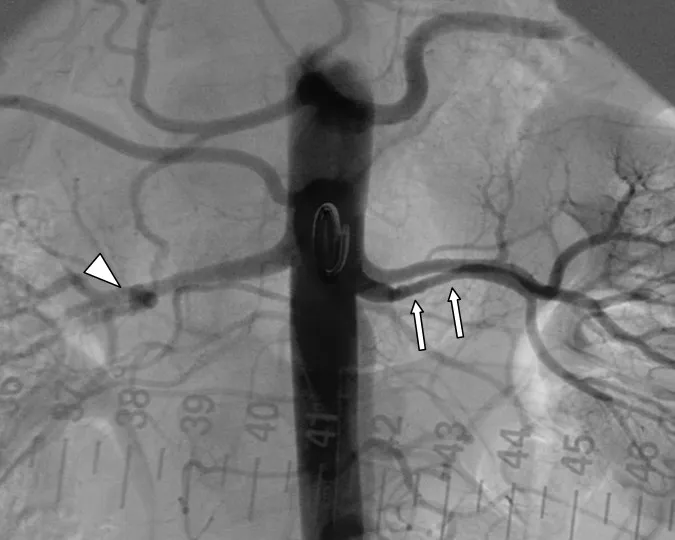
- Fibromuscular dysplasia causes renovascular hypertension in young women and responds to balloon angioplasty without stenting
- Atherosclerotic renal artery stenosis is usually managed medically; stenting did not improve outcomes in CORAL
- Phaeochromocytoma: plasma free metanephrines first; alpha-blockade before beta-blockade and surgery
- Obstructive sleep apnoea is common in resistant hypertension and causes nocturnal non-dipping
- Always take a drug history: NSAIDs, combined oral contraceptives, steroids, decongestants, calcineurin and VEGF inhibitors, liquorice, cocaine and amphetamines
Differential diagnosis
| Condition | Clues | Key test |
|---|---|---|
| Essential hypertension | Gradual onset in middle age, family history, normal potassium | Exclusion of secondary causes when indicated |
| White-coat hypertension | High clinic but normal home readings | Home BP or ABPM |
| Pseudo-resistance from non-adherence | Uncontrolled BP on many drugs, irregular refills | Pill counts, drug-level testing, observed dosing |
| Pain, anxiety or acute illness | Transient BP rise that settles | Repeat measurement when well |
| Pre-eclampsia | New hypertension after 20 weeks of pregnancy with proteinuria or organ dysfunction | Urine protein:creatinine ratio, platelets, liver tests, sFlt-1:PlGF |
| Hyperthyroidism | Isolated systolic hypertension, tachycardia, weight loss, tremor | TSH and free T4 |
Exam pearls
Guideline
2024 ESC Guidelines for elevated blood pressure and hypertension; 2025 AHA/ACC high blood pressure guideline; 2025 Endocrine Society primary aldosteronism guideline; 2014 Endocrine Society phaeochromocytoma and paraganglioma guideline
References
- McEvoy JW, McCarthy CP, Bruno RM, et al.. 2024 ESC Guidelines for the management of elevated blood pressure and hypertension. Eur Heart J 2024.
- Jones DW, Ferdinand KC, Taler SJ, et al.. 2025 AHA/ACC/AANP/AAPA/ABC/ACCP/ACPM/AGS/AMA/ASPC/NMA/PCNA/SGIM Guideline for the Prevention, Detection, Evaluation and Management of High Blood Pressure in Adults. Circulation 2025.
- Adler GK, Stowasser M, Correa RR, et al.. Primary Aldosteronism: An Endocrine Society Clinical Practice Guideline. J Clin Endocrinol Metab 2025.
- Lenders JW, Duh QY, Eisenhofer G, et al.. Pheochromocytoma and paraganglioma: an endocrine society clinical practice guideline. J Clin Endocrinol Metab 2014.
- Cooper CJ, Murphy TP, Cutlip DE, et al.. Stenting and medical therapy for atherosclerotic renal-artery stenosis. N Engl J Med 2014.
- Mancia G, Kreutz R, Brunström M, et al.. 2023 ESH Guidelines for the management of arterial hypertension. J Hypertens 2023.
Related topics
By Dr Khalid Seidi (B.Sc., M.D.) · MedEd World Clinical Knowledge library. Original teaching content checked against current guidelines (November 2026); confirm the latest local guidance before clinical use. Not a substitute for clinical judgement.