Clinical Knowledge › Paediatrics › Genetic and chromosomal disorders
Fetal alcohol spectrum disorder
Fetal alcohol spectrum disorder (FASD) is the range of lifelong brain-based and physical effects of prenatal alcohol exposure. It is a leading preventable cause of neurodevelopmental disability, affecting about 8 per 1000 children worldwide, yet most cases are never diagnosed. There is no known safe dose or time for alcohol in pregnancy: exposure around the third week after conception produces the sentinel facial features (short palpebral fissures, smooth philtrum, thin upper lip), while the brain is vulnerable throughout gestation. Most affected children lack the facial features and present with learning, memory, attention, executive-function and behavioural problems, often labelled ADHD or conduct disorder. Diagnosis is multidisciplinary (Canadian 2016 / SIGN 156): severe impairment in at least three neurodevelopmental domains plus either all three facial features or confirmed exposure, after excluding genetic mimics. Early diagnosis enables tailored education, family support and prevention of secondary disabilities.
Patient case, mechanism, investigations, management, flashcards and exam-style questions.Open the lesson →
Key facts
- Global prevalence about 7.7 per 1000 children (2017 meta-analysis); much higher in some communities and among looked-after and adopted children
- No safe amount, type or time of alcohol in pregnancy: UK Chief Medical Officers and WHO advise avoiding alcohol completely
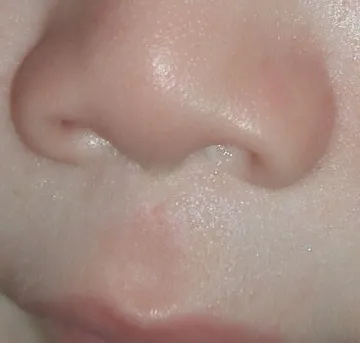
- Sentinel facial features: palpebral fissure length at or below the 3rd centile, smooth philtrum and thin upper lip (rank 4 or 5 on a lip–philtrum guide)
- Canadian 2016 / SIGN 156 diagnosis: severe impairment in 3 or more of 10 neurodevelopmental domains, plus all 3 sentinel facial features OR confirmed prenatal alcohol exposure
- Only about 1 in 10 affected children has the full facial phenotype; the brain injury is the core disability
- Microcephaly (head circumference at or below the 3rd centile) can count as evidence of brain impairment
- Exclude mimics such as fragile X, 22q11.2 deletion and other genetic syndromes (chromosomal microarray and fragile X testing as indicated)
- Management: multidisciplinary, strengths-based, lifelong support; treat ADHD, sleep and mental health comorbidity; protect against secondary disabilities
Differential diagnosis
| Condition | Clues | Key test |
|---|---|---|
| Fragile X syndrome | Boy with long face, large ears, macro-orchidism after puberty, family history of learning disability | FMR1 CGG repeat testing |
| 22q11.2 deletion syndrome | Cardiac defect, palatal problems, hypocalcaemia, recurrent infections | Chromosomal microarray |
| Williams syndrome | Overfriendly personality, supravalvular aortic stenosis, hypercalcaemia, long philtrum (not smooth/short fissures) | Chromosomal microarray (7q11.23 deletion) |
| Fetal anticonvulsant (valproate) syndrome | Maternal valproate in pregnancy, smooth philtrum, neural tube or limb defects | Medication history; clinical |
| Maternal phenylketonuria embryopathy | Microcephaly, smooth philtrum, cardiac defects; mother with poorly controlled PKU | Maternal phenylalanine level |
| Cornelia de Lange syndrome | Synophrys, long philtrum, limb reduction defects, severe growth restriction | Genetic testing (NIPBL) |
| ADHD or trauma-related disorders without alcohol exposure | Similar behaviour, normal growth and face, no confirmed exposure | Full history; social and developmental assessment |
Exam pearls
Guideline
SIGN 156 Children and young people exposed prenatally to alcohol (2019), NICE QS204 Fetal alcohol spectrum disorder (2022) and the Canadian FASD diagnostic guideline (2016)
References
- Scottish Intercollegiate Guidelines Network. Children and young people exposed prenatally to alcohol (SIGN 156). SIGN guideline 2019.
- National Institute for Health and Care Excellence. Fetal alcohol spectrum disorder (QS204). NICE quality standard 2022.
- Cook JL, Green CR, Lilley CM, et al.. Fetal alcohol spectrum disorder: a guideline for diagnosis across the lifespan. CMAJ 2016.
- Hoyme HE, Kalberg WO, Elliott AJ, et al.. Updated clinical guidelines for diagnosing fetal alcohol spectrum disorders. Pediatrics 2016.
- Lange S, Probst C, Gmel G, et al.. Global prevalence of fetal alcohol spectrum disorder among children and youth: a systematic review and meta-analysis. JAMA Pediatr 2017.
- Popova S, Charness ME, Burd L, et al.. Fetal alcohol spectrum disorders. Nat Rev Dis Primers 2023.
Related topics
By Dr Khalid Seidi (B.Sc., M.D.) · MedEd World Clinical Knowledge library. Original teaching content checked against current guidelines (November 2026); confirm the latest local guidance before clinical use. Not a substitute for clinical judgement.