Clinical Knowledge › Paediatrics › Genetic and chromosomal disorders
Noonan syndrome
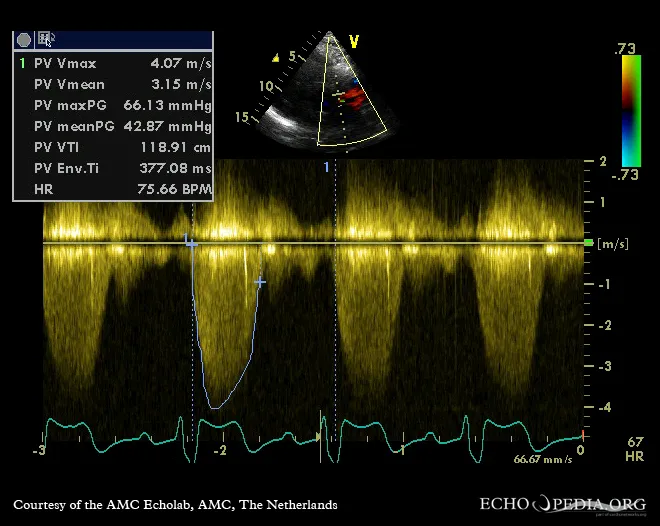
Noonan syndrome is a common autosomal dominant RASopathy, affecting about 1 in 1000–2500 children of both sexes, caused by gain-of-function variants in the RAS–MAPK pathway (PTPN11 in about half, then SOS1, RAF1, RIT1 and others). It may present antenatally with increased nuchal translucency or cystic hygroma, and after birth with feeding difficulty and a typical face: hypertelorism, down-slanting palpebral fissures, ptosis and low-set, posteriorly rotated ears, with a short webbed neck, chest deformity and widely spaced nipples. Congenital heart disease occurs in about 80%, most often a dysplastic pulmonary valve stenosis, with hypertrophic cardiomyopathy in about 20%. Other problems include short stature, cryptorchidism, bleeding tendency, lymphatic dysplasia, learning difficulties and a raised risk of juvenile myelomonocytic leukaemia. The karyotype is normal, which separates it from Turner syndrome. Diagnosis is clinical and confirmed by a RASopathy gene panel. Care includes cardiology follow-up, coagulation screening before surgery, orchidopexy, growth hormone and genetic counselling.
Patient case, mechanism, investigations, management, flashcards and exam-style questions.Open the lesson →
Key facts
- Autosomal dominant; about half inherited (often from a mildly affected parent) and half de novo; prevalence about 1 in 1000–2500
- Genes: PTPN11 about 50%, SOS1 10–15%, RAF1 and RIT1 5–10% each (both linked to hypertrophic cardiomyopathy), KRAS, LZTR1, SHOC2, CBL and others
- Face: hypertelorism, down-slanting palpebral fissures, ptosis, low-set posteriorly rotated ears with thick helices; features soften with age
- Heart disease in about 80%: dysplastic pulmonary valve stenosis (about 50–60%), hypertrophic cardiomyopathy (about 20%), ASD, branch pulmonary artery stenosis
- ECG clue: superior (left) QRS axis with a negative pattern in the left precordial leads
- Short stature, webbed neck, pectus carinatum above and excavatum below, widely spaced nipples, cryptorchidism in most boys
- Bleeding tendency in up to half (factor XI deficiency, other factor deficiencies, platelet dysfunction): screen before surgery
- Normal karyotype, both sexes affected; Turner syndrome has left-sided heart lesions and a 45,X karyotype
Differential diagnosis
| Condition | Clues | Key test |
|---|---|---|
| Turner syndrome | Girls only; webbed neck and short stature but coarctation or bicuspid aortic valve, ovarian failure | Karyotype 45,X or mosaic |
| Cardiofaciocutaneous syndrome | Noonan-like face with sparse curly hair, ichthyosis, keratosis pilaris, more severe intellectual disability | BRAF, MAP2K1/2 testing |
| Costello syndrome | Coarse face, loose skin, deep palmar creases, papillomas, high tumour risk (rhabdomyosarcoma) | HRAS testing |
| Noonan syndrome with multiple lentigines (formerly LEOPARD) | Multiple lentigines, deafness, ECG changes, HCM | PTPN11 (specific loss-of-function variants), RAF1 |
| Neurofibromatosis type 1 (Noonan–NF1 overlap) | Café-au-lait macules, axillary freckling, neurofibromas | NF1 testing |
| Fetal alcohol spectrum disorder | Short palpebral fissures, smooth philtrum, growth deficiency, prenatal alcohol exposure | Clinical criteria; no heart valve dysplasia pattern |
| Isolated pulmonary valve stenosis | Murmur without dysmorphism or short stature | Echocardiogram; gene panel if features emerge |
Exam pearls
Guideline
Noonan syndrome clinical management guidelines (Romano et al., Pediatrics 2010; DYSCERNE 2010), Italian multidisciplinary Delphi consensus (JAMA Network Open 2025) and ESC cardiomyopathy guidelines (2023)
References
- Romano AA, Allanson JE, Dahlgren J, et al.. Noonan syndrome: clinical features, diagnosis, and management guidelines. Pediatrics 2010.
- Roberts AE, Allanson JE, Tartaglia M, Gelb BD.. Noonan syndrome. Lancet 2013.
- Zenker M, Edouard T, Blair JC, Cappa M.. Noonan syndrome: improving recognition and diagnosis. Arch Dis Child 2022.
- Stagi S, Cappa M, Gagliardi MG, Tartaglia M, Maghnie M, et al.. Multidisciplinary treatment of patients with Noonan syndrome: a consensus statement. JAMA Netw Open 2025.
- Andelfinger G, Marquis C, Raboisson MJ, et al.. Hypertrophic cardiomyopathy in Noonan syndrome treated by MEK-inhibition. J Am Coll Cardiol 2019.
- DYSCERNE – European Network of Centres of Expertise for Dysmorphology. Noonan syndrome: clinical management guidelines. DYSCERNE 2010.
Related topics
By Dr Khalid Seidi (B.Sc., M.D.) · MedEd World Clinical Knowledge library. Original teaching content checked against current guidelines (November 2026); confirm the latest local guidance before clinical use. Not a substitute for clinical judgement.