Clinical Knowledge › Internal medicine › Infectious diseases › Clinical problems
Fever in the immunocompromised patient: approach to the patient
Fever in an immunocompromised patient is a medical emergency until proven otherwise, because infection progresses fast, typical signs are muted and opportunistic organisms are possible. The approach starts with rapid recognition of sepsis and, in anyone who may be neutropenic or asplenic, empirical intravenous antibiotics within 1 hour, before results return. Next, define the host (type, depth and duration of immune defect, prophylaxis, time since transplant or chemotherapy, devices and exposures), which predicts likely pathogens and directs a focused but broad work-up: paired blood cultures from every line lumen and a peripheral vein, cultures and PCR from relevant sites, chest imaging (CT if neutropenic and fever persists), CMV PCR in transplant recipients and cryptococcal antigen in advanced HIV. Empirical therapy follows host and local resistance: an antipseudomonal beta-lactam for neutropenia, additions for specific risks, and early antifungal work-up when fever persists. Non-infectious causes are common. Review daily and de-escalate when the patient is stable.
Patient case, mechanism, investigations, management, flashcards and exam-style questions.Open the lesson →
Key facts
- Neutropenic fever: temperature ≥38.3 °C once or ≥38.0 °C sustained over 1 hour (IDSA) with neutrophils <0.5 ×10⁹/L or expected to fall below it; NICE uses >38 °C or any sepsis signs with neutrophils ≤0.5 ×10⁹/L
- Give empirical IV antibiotics within 1 hour of arrival without waiting for the neutrophil count when chemotherapy-related neutropenia is possible
- First line in febrile neutropenia: antipseudomonal beta-lactam monotherapy (e.g. piperacillin–tazobactam); add vancomycin only for specific indications
- MASCC score ≥21 identifies low-risk patients suitable for oral or outpatient therapy; CISNE helps in apparently stable solid tumour patients
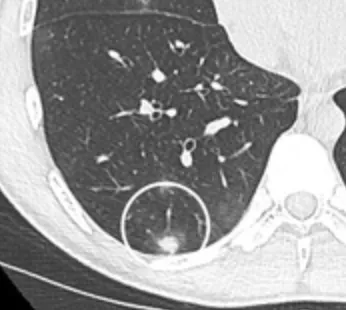
- Fever persisting beyond 72–96 hours of broad-spectrum antibiotics in prolonged neutropenia: CT chest, serum galactomannan and consider antifungal therapy
- After solid organ transplant: month 1 nosocomial infections, months 1–6 CMV and opportunists, later community infections
- HIV: CD4 <200 cells/µL Pneumocystis; <100 toxoplasma and Cryptococcus; <50 CMV and disseminated MAC
- Asplenic patient with fever: immediate parenteral ceftriaxone (or equivalent) for overwhelming post-splenectomy infection
Differential diagnosis
| Condition | Clues | Key test |
|---|---|---|
| Bacteraemia (Gram-negative bacilli, staphylococci, viridans streptococci) | Rigors, line in situ, mucositis, hypotension | Paired blood cultures (each lumen plus peripheral) |
| Invasive mould infection (Aspergillus, Mucorales) | Persistent fever in prolonged neutropenia, pleuritic pain, haemoptysis, sinus pain | CT chest (halo sign), serum/BAL galactomannan, BAL culture/PCR |
| Invasive candidiasis | Fever with central line, TPN, broad-spectrum antibiotics; hepatosplenic lesions on neutrophil recovery | Blood cultures, β-D-glucan, ophthalmology, imaging |
| CMV disease | Fever, leucopenia, hepatitis, colitis or pneumonitis 1–6 months after transplant | Quantitative CMV PCR; tissue biopsy |
| Pneumocystis pneumonia | Dry cough, exertional desaturation, bilateral ground glass, no prophylaxis | Induced sputum or BAL PCR/immunofluorescence; β-D-glucan |
| Cryptococcal meningitis | Headache, fever, CD4 <100 cells/µL | Serum CrAg, lumbar puncture with opening pressure and CSF CrAg |
| Clostridioides difficile or neutropenic enterocolitis | Diarrhoea, abdominal pain, right iliac fossa tenderness | C. difficile testing, CT abdomen (bowel wall thickening) |
| Non-infectious fever | Drug or transfusion reaction, GVHD, engraftment syndrome, tumour fever, VTE, IRIS, CRS after CAR-T | Timeline, drug chart, negative cultures, specific tests |
Exam pearls
Guideline
NICE CG151 Neutropenic sepsis (2012, current); ASCO/IDSA Outpatient management of fever and neutropenia (2018 update); IDSA neutropenic fever guideline (2010 update); ECIL-4 empirical antibacterial therapy (2013); ESMO febrile neutropenia (2016)
References
- National Institute for Health and Care Excellence. Neutropenic sepsis: prevention and management in people with cancer (CG151). NICE 2012.
- Taplitz RA, Kennedy EB, Bow EJ, et al.. Outpatient management of fever and neutropenia in adults treated for malignancy: American Society of Clinical Oncology and Infectious Diseases Society of America clinical practice guideline update. J Clin Oncol 2018.
- Freifeld AG, Bow EJ, Sepkowitz KA, et al.. Clinical practice guideline for the use of antimicrobial agents in neutropenic patients with cancer: 2010 update by the Infectious Diseases Society of America. Clin Infect Dis 2011.
- Averbuch D, Orasch C, Cordonnier C, et al.. European guidelines for empirical antibacterial therapy for febrile neutropenic patients in the era of growing resistance: summary of the 2011 4th European Conference on Infections in Leukemia. Haematologica 2013.
- Klastersky J, Paesmans M, Rubenstein EB, et al.. The Multinational Association for Supportive Care in Cancer risk index: a multinational scoring system for identifying low-risk febrile neutropenic cancer patients. J Clin Oncol 2000.
- Klastersky J, de Naurois J, Rolston K, et al.. Management of febrile neutropaenia: ESMO Clinical Practice Guidelines. Ann Oncol 2016.
Related topics
By Dr Khalid Seidi (B.Sc., M.D.) · MedEd World Clinical Knowledge library. Original teaching content checked against current guidelines (November 2026); confirm the latest local guidance before clinical use. Not a substitute for clinical judgement.