Clinical Knowledge › Surgery › Upper gastrointestinal surgery
Gastro-oesophageal reflux disease: surgical management
Antireflux surgery restores a competent barrier at the oesophagogastric junction for people with proven gastro-oesophageal reflux disease (GORD) whose symptoms are not controlled by, who do not tolerate, or who do not wish to take long-term acid suppression, and for those with a large hiatus hernia or troublesome regurgitation. Before operating, the diagnosis must be objective: endoscopy showing Los Angeles grade B–D oesophagitis or long-segment Barrett oesophagus, or ambulatory pH-impedance monitoring off PPI with an acid exposure time above 6% (Lyon 2.0). High-resolution manometry excludes achalasia and absent contractility,. The standard operation is laparoscopic hiatal repair with a total (Nissen, 360°) or partial (Toupet 270° posterior, Dor anterior) fundoplication; magnetic sphincter augmentation is an option in selected patients, and Roux-en-Y gastric bypass is preferred in severe obesity. Side effects include early dysphagia, gas-bloat, inability to belch or vomit, and recurrence or wrap failure needing revision in a minority.
Patient case, mechanism, investigations, management, flashcards and exam-style questions.Open the lesson →
Key facts
- Surgery is for objectively proven GORD: LA grade B, C or D oesophagitis, long-segment Barrett, peptic stricture, or acid exposure time above 6% on pH-impedance monitoring off PPI
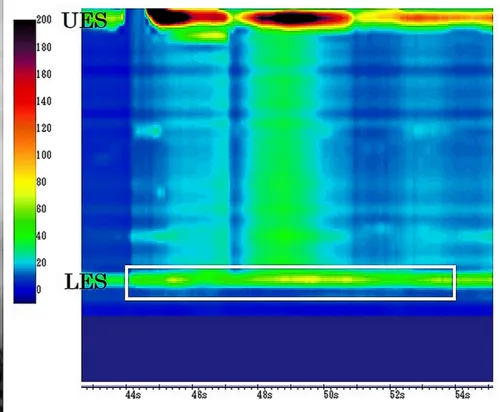
- High-resolution manometry is mandatory before fundoplication to exclude achalasia and absent contractility, which would cause severe post-operative dysphagia
- The best predictors of a good surgical result are typical heartburn or regurgitation, a good symptomatic response to PPI and an abnormal pH study
- Laparoscopic Nissen (360°) and partial (Toupet 270°) fundoplication control reflux similarly; partial wraps cause less dysphagia and gas-bloat
- In the LOTUS trial, laparoscopic fundoplication and optimised esomeprazole gave similar remission rates at 5 years
- In refractory heartburn, most patients have non-reflux causes; in a 2019 VA trial, surgery helped only the small subgroup with proven reflux after careful work-up
- In people with BMI 35 or more and GORD, Roux-en-Y gastric bypass is the antireflux operation of choice; sleeve gastrectomy often worsens reflux
- Antireflux surgery does not remove the need for Barrett surveillance
Differential diagnosis
| Condition | Clues | Key test |
|---|---|---|
| Functional heartburn | Heartburn with normal endoscopy and normal acid exposure, poor PPI response | pH-impedance off PPI: normal, negative symptom association |
| Reflux hypersensitivity | Normal acid exposure but symptoms correlate with reflux events | pH-impedance with positive symptom association |
| Achalasia | Dysphagia to solids and liquids, regurgitation of undigested food, weight loss | High-resolution manometry; barium swallow |
| Eosinophilic oesophagitis | Young man, food bolus obstruction, atopy | OGD with biopsies (15 or more eosinophils per HPF) |
| Rumination syndrome | Effortless regurgitation within minutes of meals | Post-prandial manometry-impedance |
| Gastroparesis | Early satiety, vomiting of food hours old, diabetes | Gastric emptying study |
| Cardiac chest pain | Exertional pain, risk factors | ECG, troponin, ischaemia testing |
| Oesophageal or gastric cancer | Progressive dysphagia, weight loss, anaemia over 55 | Urgent OGD and biopsy |
Exam pearls
Guideline
SAGES guidelines for the surgical treatment of GERD (2021), Lyon Consensus 2.0 (2023/2024), ACG clinical guideline for diagnosis and management of GERD (2022) and NICE CG184 Gastro-oesophageal reflux disease and dyspepsia in adults (2014, updated 2019)
References
- Slater BJ, Dirks RC, McKinley SK, et al.. SAGES guidelines for the surgical treatment of gastroesophageal reflux (GERD). Surg Endosc 2021.
- Gyawali CP, Yadlapati R, Fass R, et al.. Updates to the modern diagnosis of GERD: Lyon consensus 2.0. Gut 2024.
- Katz PO, Dunbar KB, Schnoll-Sussman FH, et al.. ACG clinical guideline for the diagnosis and management of gastroesophageal reflux disease. Am J Gastroenterol 2022.
- National Institute for Health and Care Excellence. Gastro-oesophageal reflux disease and dyspepsia in adults: investigation and management (CG184). NICE 2019.
- Galmiche JP, Hatlebakk J, Attwood S, et al.. Laparoscopic antireflux surgery vs esomeprazole treatment for chronic GERD: the LOTUS randomized clinical trial. JAMA 2011.
- Spechler SJ, Hunter JG, Jones KM, et al.. Randomized trial of medical versus surgical treatment for refractory heartburn. N Engl J Med 2019.
Related topics
By Dr Khalid Seidi (B.Sc., M.D.) · MedEd World Clinical Knowledge library. Original teaching content checked against current guidelines (November 2026); confirm the latest local guidance before clinical use. Not a substitute for clinical judgement.