Clinical Knowledge › Obstetrics and gynaecology › Menstrual disorders and reproductive endocrinology
Heavy menstrual bleeding
Heavy menstrual bleeding (HMB) is excessive menstrual blood loss that interferes with a woman's physical, social, emotional or material quality of life (NICE); the research definition is over 80 mL per cycle. It affects about 1 in 4 women of reproductive age and is a leading cause of iron deficiency anaemia. FIGO classifies causes with PALM-COEIN: structural (polyp, adenomyosis, leiomyoma, malignancy and hyperplasia) and non-structural (coagulopathy, ovulatory dysfunction, endometrial, iatrogenic, not yet classified). Assessment covers bleeding since menarche (von Willebrand disease), examination, full blood count, and targeted hysteroscopy or imaging, with biopsy if hyperplasia or cancer is a risk. The levonorgestrel-releasing intrauterine system (LNG-IUS) is first-line when there is no major structural pathology. Alternatives are tranexamic acid, NSAIDs, combined hormonal contraception and progestogens, then GnRH-based therapy, endometrial ablation, uterine artery embolisation, myomectomy or hysterectomy, chosen according to pathology, fertility wishes and preference.
Patient case, mechanism, investigations, management, flashcards and exam-style questions.Open the lesson →
Key facts
- NICE definition is patient-centred (impact on quality of life); objective HMB is over 80 mL per cycle; FIGO normal limits: cycle 24–38 days, bleeding up to 8 days
- PALM-COEIN (FIGO 2011, revised 2018): Polyp, Adenomyosis, Leiomyoma, Malignancy/hyperplasia; Coagulopathy, Ovulatory dysfunction, Endometrial, Iatrogenic, Not otherwise classified
- Check FBC in all; test for coagulopathy (von Willebrand disease) if HMB since menarche or personal or family bleeding history; ferritin not routinely; TSH only if thyroid features
- Outpatient hysteroscopy first if submucosal fibroids, polyps or endometrial pathology suspected; pelvic ultrasound if large fibroids or adenomyosis suspected
- Endometrial biopsy if persistent intermenstrual bleeding, age 45 or over with treatment failure, or risk factors (obesity, PCOS, tamoxifen, unopposed oestrogen, Lynch syndrome)
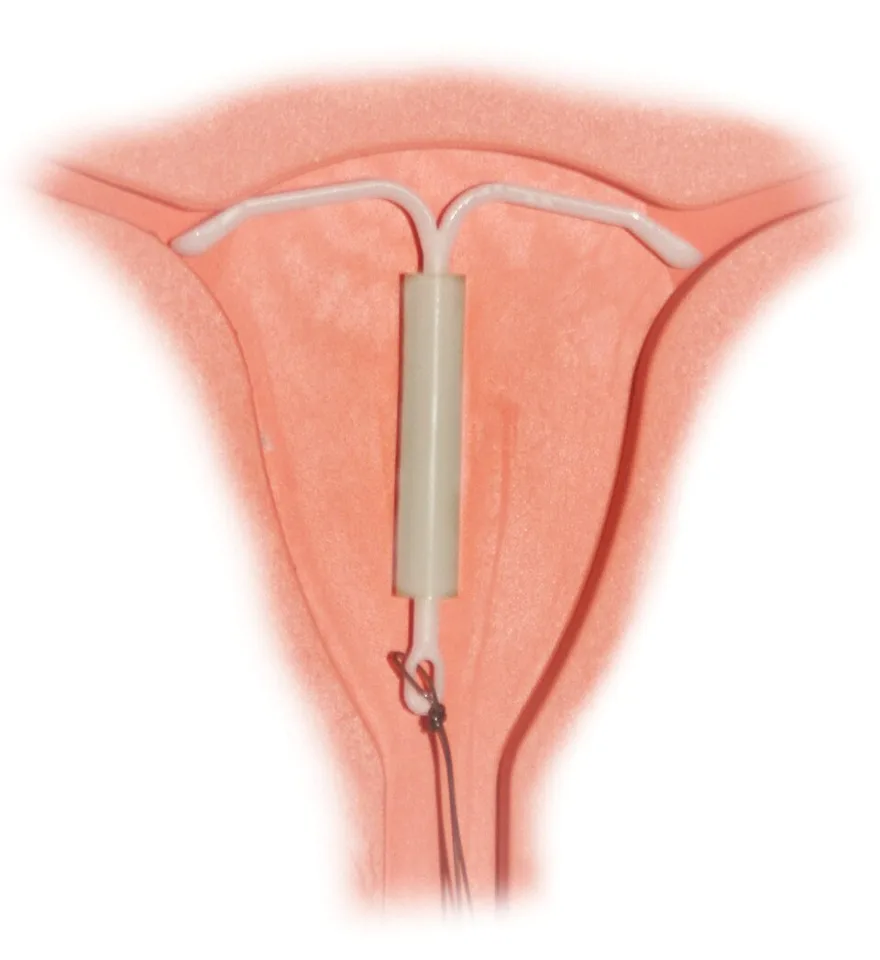
- LNG-IUS 52 mg is first-line with no or small pathology; reduces loss by up to 90% and beats usual medical treatment for quality of life (ECLIPSE)
- Non-hormonal: tranexamic acid 1 g three times daily for up to 4 days (reduces loss about 40–50%) and mefenamic acid 500 mg three times daily (teaching doses)
- Fibroids 3 cm or more: medical options, relugolix combination therapy, uterine artery embolisation, myomectomy (fertility) or hysterectomy; endometrial ablation only if family complete
Differential diagnosis
| Condition | Clues | Key test |
|---|---|---|
| Uterine fibroids (leiomyoma) | Enlarged irregular uterus, pressure symptoms; submucosal fibroids bleed most | Pelvic ultrasound; hysteroscopy |
| Adenomyosis | Painful heavy periods, bulky tender boggy uterus in parous women | Transvaginal ultrasound or MRI |
| Endometrial polyp | Intermenstrual bleeding, normal-sized uterus | Outpatient hysteroscopy |
| Endometrial hyperplasia or cancer | Age 45 or over, obesity, PCOS, tamoxifen, intermenstrual bleeding | Endometrial biopsy; hysteroscopy |
| Von Willebrand disease or other coagulopathy | HMB since menarche, PPH, bruising, epistaxis, family history | FBC, VWF antigen and activity, factor VIII |
| Ovulatory dysfunction (PCOS, perimenopause, thyroid) | Irregular, unpredictable heavy bleeds | Cycle history, TSH, androgen profile |
| Iatrogenic (anticoagulants, copper IUD) | Onset after starting DOAC/warfarin or copper device | Drug and device history |
| Pregnancy complication | Missed period, pain | Pregnancy test |
Exam pearls
Guideline
NICE NG88 Heavy menstrual bleeding: assessment and management (2018, updated 2021); FIGO AUB Systems 1 and 2 (PALM-COEIN, revised 2018); NICE TA832 relugolix combination therapy for fibroids (2022)
References
- National Institute for Health and Care Excellence. Heavy menstrual bleeding: assessment and management (NG88). NICE guideline NG88 2018.
- Munro MG, Critchley HOD, Fraser IS.. The two FIGO systems for normal and abnormal uterine bleeding symptoms and classification of causes of abnormal uterine bleeding in the reproductive years: 2018 revisions. Int J Gynaecol Obstet 2018.
- Gupta J, Kai J, Middleton L, et al.. Levonorgestrel intrauterine system versus medical therapy for menorrhagia. N Engl J Med 2013.
- American College of Obstetricians and Gynecologists. Screening and management of bleeding disorders in adolescents with heavy menstrual bleeding (Committee Opinion No. 785). Obstet Gynecol 2019.
- Bofill Rodriguez M, Lethaby A, Jordan V.. Progestogen-releasing intrauterine systems for heavy menstrual bleeding. Cochrane Database Syst Rev 2020.
- National Institute for Health and Care Excellence. Relugolix–estradiol–norethisterone acetate for treating moderate to severe symptoms of uterine fibroids (TA832). NICE technology appraisal guidance TA832 2022.
Related topics
By Dr Khalid Seidi (B.Sc., M.D.) · MedEd World Clinical Knowledge library. Original teaching content checked against current guidelines (November 2026); confirm the latest local guidance before clinical use. Not a substitute for clinical judgement.