Clinical Knowledge › Internal medicine › Infectious diseases › Basics of infectious diseases
Infection prevention and control
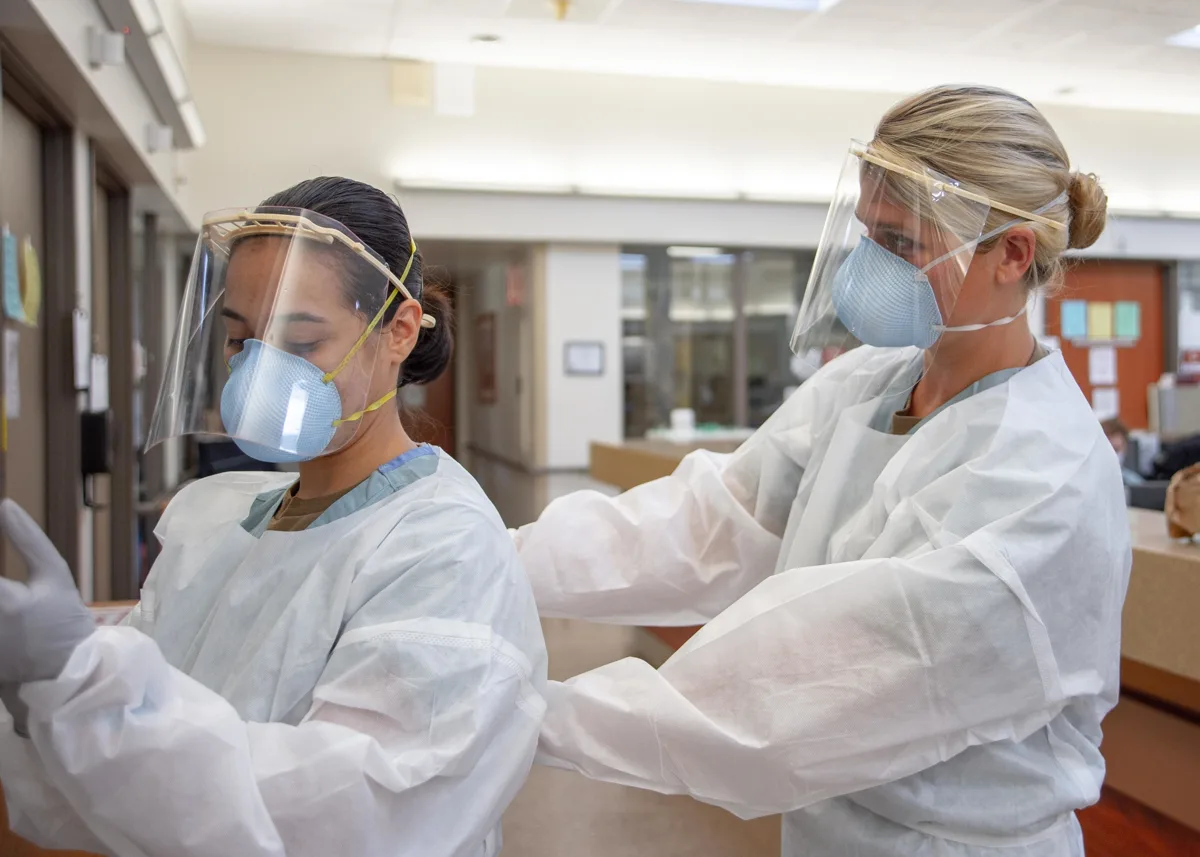
Infection prevention and control (IPC) is the set of practices that stops patients and staff acquiring infections in health care. Healthcare-associated infections affect a substantial minority of hospital inpatients worldwide, more in intensive care and in low-resource settings, and many are preventable. IPC breaks the chain of infection – organism, reservoir, portal of exit, mode of transmission, portal of entry and susceptible host. Standard precautions apply to every patient every time: hand hygiene at the WHO five moments, personal protective equipment chosen by risk, respiratory hygiene, safe sharps and injection practice, clean environment and equipment, and safe handling of linen and waste. Transmission-based precautions are added for known or suspected organisms: contact (MRSA, CPE, C. difficile, norovirus), droplet (influenza, meningococcus, pertussis) and airborne (pulmonary TB, measles, varicella) with a fit-tested FFP3 or N95 respirator and a negative-pressure room. Soap and water, not alcohol rub, are needed for spores and norovirus. Care bundles for lines, catheters, ventilators and surgery, screening and decolonisation, decontamination according to Spaulding categories, staff vaccination, surveillance and antimicrobial stewardship complete an effective programme.
Patient case, mechanism, investigations, management, flashcards and exam-style questions.Open the lesson →
Key facts
- Hand hygiene is the single most important IPC measure; WHO five moments: before touching a patient, before a clean or aseptic procedure, after body fluid exposure risk, after touching a patient, after touching patient surroundings
- Alcohol hand rub (20–30 seconds) is preferred unless hands are visibly soiled or in C. difficile or norovirus, when soap and water (40–60 seconds) are needed because alcohol does not kill spores or reliably inactivate norovirus
- Standard precautions apply to all patients regardless of diagnosis; transmission-based precautions are added according to the organism
- Contact precautions: MRSA, VRE, ESBL/CPE, C. difficile, norovirus, scabies, Candida auris – gloves, apron or gown, single room
- Droplet precautions: influenza, meningococcal disease (until 24 hours of effective therapy), pertussis, mumps, rubella, invasive group A streptococcus – surgical mask
- Airborne precautions: pulmonary or laryngeal TB, measles, chickenpox and disseminated zoster – fit-tested FFP3/N95 respirator and negative-pressure room
- Spaulding classification: critical items (enter sterile tissue) need sterilisation; semi-critical (mucous membranes) high-level disinfection; non-critical (intact skin) cleaning or low-level disinfection
- Central line bundle (hand hygiene, maximal barrier precautions, chlorhexidine skin preparation, avoid the femoral site, remove unnecessary lines) markedly reduced line infections in landmark ICU studies
Differential diagnosis
| Condition | Clues | Key test |
|---|---|---|
| Contact transmission | Spread via hands, equipment and surfaces: MRSA, CPE, C. difficile, norovirus | Screening swabs, stool toxin or PCR, environmental audit |
| Droplet transmission | Large respiratory particles over short distances: influenza, meningococcus, pertussis | Respiratory PCR, cultures |
| Airborne transmission | Small aerosols travelling further and lingering: TB, measles, varicella | Sputum NAAT and smear, measles PCR or IgM, VZV PCR |
| Common-source outbreak | Many cases linked to one item (contaminated endoscope, water system, food) | Epidemic curve showing point source; environmental sampling; typing |
| Endogenous infection | Patient's own flora entering through a device or surgical wound | Culture from site; review device care and bundles |
| Pseudo-outbreak | Cluster of positive cultures without clinical disease (laboratory or collection contamination) | Review clinical correlation, laboratory process, typing |
Exam pearls
Guideline
WHO Guidelines on Hand Hygiene in Health Care (2009), WHO Core Components of IPC Programmes (2016), CDC/HICPAC Isolation Precautions (2007, with updates) and the NHS England National Infection Prevention and Control Manual (2022, continuously updated)
References
- World Health Organization. WHO guidelines on hand hygiene in health care: first global patient safety challenge – clean care is safer care. WHO, Geneva 2009.
- Siegel JD, Rhinehart E, Jackson M, Chiarello L.. 2007 Guideline for isolation precautions: preventing transmission of infectious agents in healthcare settings. CDC, Atlanta 2007.
- World Health Organization. Guidelines on core components of infection prevention and control programmes at the national and acute health care facility level. WHO, Geneva 2016.
- NHS England. National infection prevention and control manual (NIPCM) for England. NHS England 2022.
- Loveday HP, Wilson JA, Pratt RJ, et al.. epic3: national evidence-based guidelines for preventing healthcare-associated infections in NHS hospitals in England. J Hosp Infect 2014.
- Pittet D, Hugonnet S, Harbarth S, et al.. Effectiveness of a hospital-wide programme to improve compliance with hand hygiene. Lancet 2000.
Related topics
By Dr Khalid Seidi (B.Sc., M.D.) · MedEd World Clinical Knowledge library. Original teaching content checked against current guidelines (November 2026); confirm the latest local guidance before clinical use. Not a substitute for clinical judgement.