Clinical Knowledge › Internal medicine › Infectious diseases › Basics of infectious diseases
Serology and molecular diagnostics (PCR)
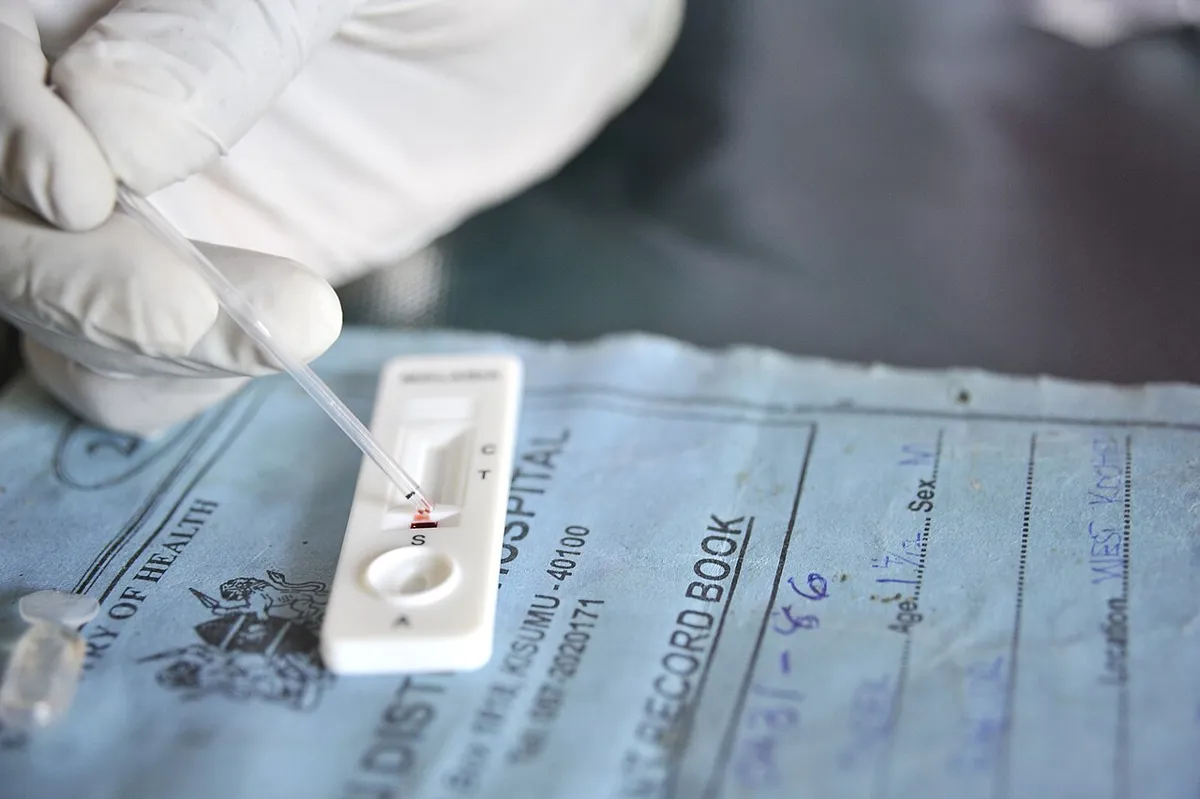
Serology detects the host's antibody response (or a microbial antigen) in blood, whereas molecular diagnostics such as the polymerase chain reaction (PCR) detect the pathogen's own nucleic acid. The two answer different questions. Serology tells you whether a person has met an organism, when (IgM, rising IgG titres, IgG avidity) and whether they are immune, but it lags behind infection by days to weeks and can be blunted by immunosuppression or confounded by passive antibody. PCR detects small amounts of DNA or RNA within hours, is ideal for sterile sites (CSF herpes simplex PCR), viral loads (HIV, hepatitis B and C, cytomegalovirus) and organisms that are hard to culture, and can reveal resistance genes, but it cannot distinguish live from dead organisms, latent from active virus, or colonisation from disease. Interpreting either test needs the timing of the sample, the pre-test probability and the clinical question. This article covers antibody kinetics, assay types, classic serological patterns, PCR and cycle thresholds, syndromic panels, antigen tests and diagnostic stewardship.
Patient case, mechanism, investigations, management, flashcards and exam-style questions.Open the lesson →
Key facts
- IgM appears first (about 5–10 days) and IgG follows; a fourfold rise in IgG titre between acute and convalescent sera taken 2–4 weeks apart confirms recent infection
- Low IgG avidity suggests infection within the last few months (used for toxoplasma and CMV in pregnancy)
- Fourth-generation HIV tests detect p24 antigen and antibody; a negative result 45 days after exposure excludes infection (BHIVA/BASHH/BIA 2020)
- PCR amplifies target DNA exponentially; RT-PCR first converts RNA to cDNA; a lower cycle threshold (Ct) means more target (about 3.3 cycles per tenfold change)
- CSF HSV PCR is the test of choice for HSV encephalitis but can be negative in the first 72 hours; repeat it and continue aciclovir if suspicion persists
- PCR detects nucleic acid from dead organisms and latent virus, so a positive result is not proof of active disease or treatment failure
- Antibodies persist after recovery: anti-HCV and treponemal antibodies stay positive after cure; use HCV RNA and RPR titre to judge activity
- Positive predictive value falls when prevalence is low: test people with a reasonable pre-test probability (diagnostic stewardship)
Differential diagnosis
| Condition | Clues | Key test |
|---|---|---|
| Recent (acute) infection | Specific IgM, low-avidity IgG or fourfold rise in paired sera | Paired sera 2–4 weeks apart; avidity testing |
| Past infection or immunity | IgG positive, IgM negative, stable titre; vaccination history | Quantitative IgG (e.g. anti-HBs ≥10 mIU/mL) |
| False-positive IgM | Polyclonal B-cell activation (EBV), rheumatoid factor, pregnancy, cross-reactive flaviviruses | Confirmatory test, PCR or reference laboratory |
| False-negative serology | Window period, hypogammaglobulinaemia, rituximab, early HIV, prozone | PCR or antigen test; repeat later; dilute sample |
| Passive antibody | Recent IVIG, blood products or maternal IgG in an infant | PCR (e.g. HIV DNA/RNA PCR in infants under 18 months) |
| PCR-positive colonisation or latency | Positive PCR without a compatible syndrome (C. difficile carriage, low-level EBV or HHV-6) | Toxin assay, quantitative load, clinical correlation |
| PCR contamination or residual DNA | Unexpected positive, very high Ct, recent treatment | Repeat on a new sample; wait before test of cure |
Exam pearls
Guideline
IDSA/ASM Guide to Utilization of the Microbiology Laboratory (2024 update), BHIVA/BASHH/BIA Adult HIV testing guidelines (2020) and MIQE 2.0 (2025)
References
- Miller JM, Binnicker MJ, Campbell S, et al.. Guide to utilization of the microbiology laboratory for diagnosis of infectious diseases: 2024 update by the Infectious Diseases Society of America (IDSA) and the American Society for Microbiology (ASM). Clin Infect Dis 2024.
- British HIV Association / British Association for Sexual Health and HIV / British Infection Association. Adult HIV testing guidelines 2020. BHIVA 2020.
- Bustin SA, Ruijter JM, van den Hoff MJB, et al.. MIQE 2.0: revision of the minimum information for publication of quantitative real-time PCR experiments guidelines. Clin Chem 2025.
- Bustin SA, Benes V, Garson JA, et al.. The MIQE guidelines: minimum information for publication of quantitative real-time PCR experiments. Clin Chem 2009.
- Ramanan P, Bryson AL, Binnicker MJ, Pritt BS, Patel R.. Syndromic panel-based testing in clinical microbiology. Clin Microbiol Rev 2018.
- Bennett JE, Dolin R, Blaser MJ (eds). Mandell, Douglas, and Bennett's Principles and Practice of Infectious Diseases, 9th edition. Elsevier, Philadelphia 2020.
Related topics
By Dr Khalid Seidi (B.Sc., M.D.) · MedEd World Clinical Knowledge library. Original teaching content checked against current guidelines (November 2026); confirm the latest local guidance before clinical use. Not a substitute for clinical judgement.