Clinical Knowledge › Internal medicine › Haematology and oncology › Anaemias
Iron deficiency anaemia
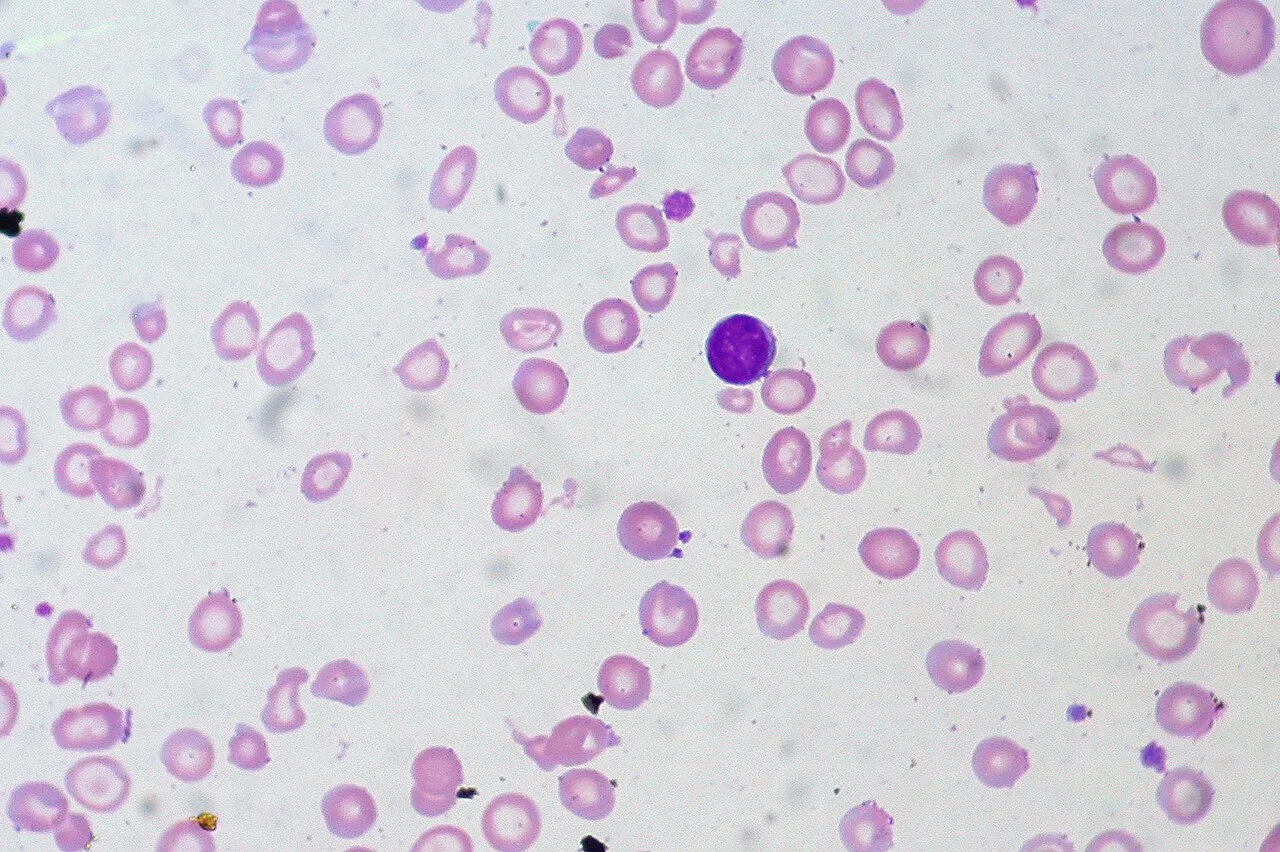
Iron deficiency anaemia (IDA) is the commonest cause of anaemia in the world, affecting mainly young children, menstruating and pregnant women, and people with chronic blood loss. Body iron is tightly regulated at the point of absorption by hepcidin, so negative balance develops slowly: stores fall first (low ferritin), then iron supply to the marrow falls (low transferrin saturation), and finally a microcytic, hypochromic anaemia appears. Features include fatigue, breathlessness, pica, restless legs, angular cheilitis and koilonychia. A low serum ferritin confirms the diagnosis; in inflammation ferritin may be falsely normal, so transferrin saturation and context matter. In men and postmenopausal women, IDA is a sign of gastrointestinal blood loss or malabsorption until proven otherwise and needs coeliac serology and usually bidirectional endoscopy. Treatment is to correct the cause and replace iron: one oral iron tablet daily or on alternate days, continued for about three months after haemoglobin normalises, or intravenous iron when oral iron fails, cannot be absorbed or time is short.
Patient case, mechanism, investigations, management, flashcards and exam-style questions.Open the lesson →
Key facts
- WHO 2024 anaemia thresholds for adults: haemoglobin below 130 g/L (13 g/dL) in men and below 120 g/L (12 g/dL) in non-pregnant women
- Serum ferritin below 15 µg/L confirms absent iron stores; below 30 µg/L (and below about 45 µg/L in anaemic adults) makes iron deficiency very likely
- Ferritin is an acute-phase reactant: in inflammation iron deficiency may coexist with ferritin up to about 100 µg/L; use transferrin saturation below 20%
- Sequence of iron depletion: falling ferritin → falling transferrin saturation and rising TIBC → microcytosis, hypochromia and raised RDW → anaemia
- Mentzer index (MCV ÷ red cell count) above 13 favours iron deficiency; below 13 favours thalassaemia trait
- Men and postmenopausal women with IDA need coeliac serology and gastrointestinal evaluation (usually gastroscopy with duodenal biopsy plus colonoscopy)
- Oral iron: one tablet (for example ferrous sulfate 200 mg, about 65 mg elemental iron) once daily or on alternate days; expect a haemoglobin rise of about 20 g/L in 3–4 weeks
- Intravenous iron is used for intolerance or failure of oral iron, malabsorption (IBD, coeliac, bariatric surgery), CKD, heart failure, ongoing losses or late pregnancy
Differential diagnosis
| Condition | Clues | Key test |
|---|---|---|
| Anaemia of chronic disease (anaemia of inflammation) | Chronic inflammatory illness; normocytic or mildly microcytic; ferritin normal or high | Ferritin, CRP, transferrin saturation, soluble transferrin receptor |
| β-thalassaemia trait | Marked microcytosis with mild or no anaemia, high red cell count, Mediterranean, Middle Eastern or Asian origin | Normal ferritin; HbA2 above 3.5% on HPLC |
| α-thalassaemia trait | Microcytosis with normal ferritin and normal HbA2 | DNA analysis for α-globin deletions |
| Sideroblastic anaemia | Dimorphic film; alcohol, isoniazid, lead, copper deficiency, MDS | Bone marrow iron stain showing ring sideroblasts |
| Lead poisoning | Basophilic stippling, abdominal pain, neuropathy, occupational or traditional-remedy exposure | Blood lead level |
| Anaemia of CKD | Normocytic anaemia with reduced eGFR; often combined iron deficiency | eGFR, ferritin, transferrin saturation |
| Iron-refractory iron deficiency anaemia (IRIDA) | Lifelong microcytosis that fails oral iron; inappropriately high hepcidin | TMPRSS6 genetic testing |
Exam pearls
Guideline
BSG guidelines for iron deficiency anaemia in adults (2021), AGA Clinical Practice Update on management of iron deficiency anaemia (2024), AGA guideline on GI evaluation of iron deficiency anaemia (2020), WHO guideline on haemoglobin cutoffs (2024) and WHO guideline on ferritin to assess iron status (2020)
References
- Snook J, Bhala N, Beales ILP, et al.. British Society of Gastroenterology guidelines for the management of iron deficiency anaemia in adults. Gut 2021.
- DeLoughery TG, Jackson CS, Ko CW, Rockey DC.. AGA Clinical Practice Update on Management of Iron Deficiency Anemia: Expert Review. Clin Gastroenterol Hepatol 2024.
- Ko CW, Siddique SM, Patel A, et al.. AGA Clinical Practice Guidelines on the Gastrointestinal Evaluation of Iron Deficiency Anemia. Gastroenterology 2020.
- World Health Organization. Guideline on haemoglobin cutoffs to define anaemia in individuals and populations. Geneva: WHO 2024.
- World Health Organization. WHO guideline on use of ferritin concentrations to assess iron status in individuals and populations. Geneva: WHO 2020.
- Pasricha SR, Tye-Din J, Muckenthaler MU, Swinkels DW.. Iron deficiency. Lancet 2021.
Related topics
By Dr Khalid Seidi (B.Sc., M.D.) · MedEd World Clinical Knowledge library. Original teaching content checked against current guidelines (November 2026); confirm the latest local guidance before clinical use. Not a substitute for clinical judgement.