Clinical Knowledge › Internal medicine › Gastroenterology and hepatology › Basics of gastroenterology
Liver function tests: interpretation and approach
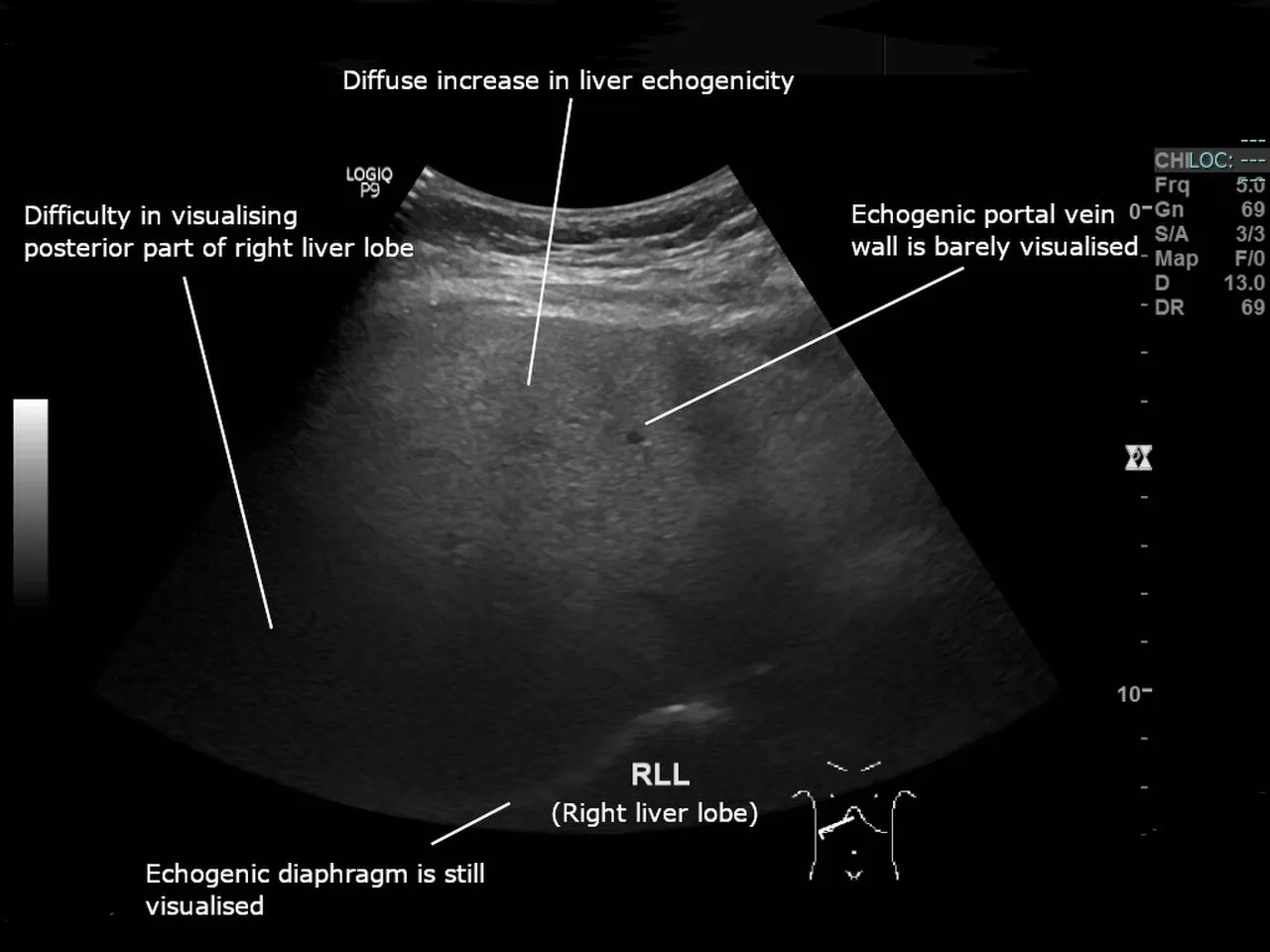
'Liver function tests' (LFTs) is the everyday name for a panel of blood tests – bilirubin, alanine and aspartate aminotransferases (ALT, AST), alkaline phosphatase (ALP), gamma-glutamyl transferase (GGT) and albumin – plus the prothrombin time or INR. Only bilirubin, albumin and INR truly measure liver function; the enzymes are markers of injury. Abnormal results are found in up to one in five adults having routine blood tests, most often because of steatotic liver disease or alcohol. Interpretation rests on the pattern: hepatocellular (ALT or AST predominant), cholestatic (ALP and GGT predominant), mixed, or isolated hyperbilirubinaemia, together with the magnitude of the rise and the clinical context. Current British and American guidance advises a full liver aetiology screen with ultrasound rather than simply repeating abnormal tests, and a non-invasive fibrosis assessment (FIB-4 then elastography or ELF) in people with metabolic risk factors or harmful alcohol use, because fibrosis stage, not enzyme level, predicts outcome.
Patient case, mechanism, investigations, management, flashcards and exam-style questions.Open the lesson →
Key facts
- ALT, AST, ALP and GGT reflect injury; bilirubin, albumin and INR reflect function
- R ratio = (ALT/ULN) ÷ (ALP/ULN): ≥5 hepatocellular, ≤2 cholestatic, between 2 and 5 mixed
- ALT above 1000 U/L: ischaemic hepatitis, paracetamol toxicity, acute viral hepatitis, early bile duct stone or autoimmune hepatitis
- AST:ALT above 2 suggests alcohol-related liver disease; ALT above AST is typical of MASLD and viral hepatitis
- A raised ALP with a normal GGT suggests bone or placenta rather than liver
- Gilbert syndrome: mild unconjugated hyperbilirubinaemia with otherwise normal tests and no haemolysis
- BSG liver aetiology screen: ultrasound, HBsAg, HCV antibody, autoantibodies, immunoglobulins, ferritin and transferrin saturation
- FIB-4 below 1.3 makes advanced fibrosis unlikely; above 2.67 (or indeterminate) needs elastography or ELF
Differential diagnosis
| Condition | Clues | Key test |
|---|---|---|
| Metabolic dysfunction-associated steatotic liver disease (MASLD) | Obesity, diabetes, ALT > AST, raised GGT | Ultrasound steatosis; FIB-4 then elastography |
| Alcohol-related liver disease | AUDIT positive, AST:ALT >2, raised GGT and MCV | History and AUDIT; elastography; ultrasound |
| Viral hepatitis B or C | Risk factors (migration from endemic areas, injecting drugs, transfusion) | HBsAg, HCV antibody with RNA reflex |
| Drug-induced liver injury | New drug in the preceding 3 months (amoxicillin-clavulanate, antituberculosis drugs, herbal supplements) | Drug history, R ratio, RUCAM/RECAM causality |
| Biliary obstruction | Cholestatic pattern, pain, dilated ducts | Ultrasound, then MRCP or EUS |
| Autoimmune liver disease (AIH, PBC, PSC) | Women (AIH, PBC), raised IgG or IgM, IBD (PSC) | ANA, ASMA, AMA, immunoglobulins, MRCP |
| Non-hepatic source | Raised AST with high CK (muscle) or haemolysis; ALP from bone | CK, haemolysis screen, GGT, ALP isoenzymes |
| Haemochromatosis or Wilson disease | Raised ferritin with transferrin saturation >45%; young patient with neuropsychiatric signs | HFE genotype; caeruloplasmin and 24-hour urinary copper |
Exam pearls
Guideline
BSG guidelines on abnormal liver blood tests (2018), ACG evaluation of abnormal liver chemistries (2017), EASL non-invasive tests guideline (2021) and EASL-EASD-EASO MASLD guideline (2024)
References
- Kwo PY, Cohen SM, Lim JK.. ACG Clinical Guideline: Evaluation of Abnormal Liver Chemistries. Am J Gastroenterol 2017.
- Newsome PN, Cramb R, Davison SM, et al.. Guidelines on the management of abnormal liver blood tests. Gut 2018.
- European Association for the Study of the Liver (EASL); European Association for the Study of Diabetes (EASD); European Association for the Study of Obesity (EASO).. EASL-EASD-EASO Clinical Practice Guidelines on the management of metabolic dysfunction-associated steatotic liver disease (MASLD). J Hepatol 2024.
- European Association for the Study of the Liver.. EASL Clinical Practice Guidelines on non-invasive tests for evaluation of liver disease severity and prognosis – 2021 update. J Hepatol 2021.
- European Association for the Study of the Liver.. EASL Clinical Practice Guidelines: Drug-induced liver injury. J Hepatol 2019.
- Rinella ME, Neuschwander-Tetri BA, Siddiqui MS, et al.. AASLD Practice Guidance on the clinical assessment and management of nonalcoholic fatty liver disease. Hepatology 2023.
Related topics
By Dr Khalid Seidi (B.Sc., M.D.) · MedEd World Clinical Knowledge library. Original teaching content checked against current guidelines (November 2026); confirm the latest local guidance before clinical use. Not a substitute for clinical judgement.