Clinical Knowledge › Internal medicine › Gastroenterology and hepatology › Basics of gastroenterology
Upper gastrointestinal endoscopy and colonoscopy
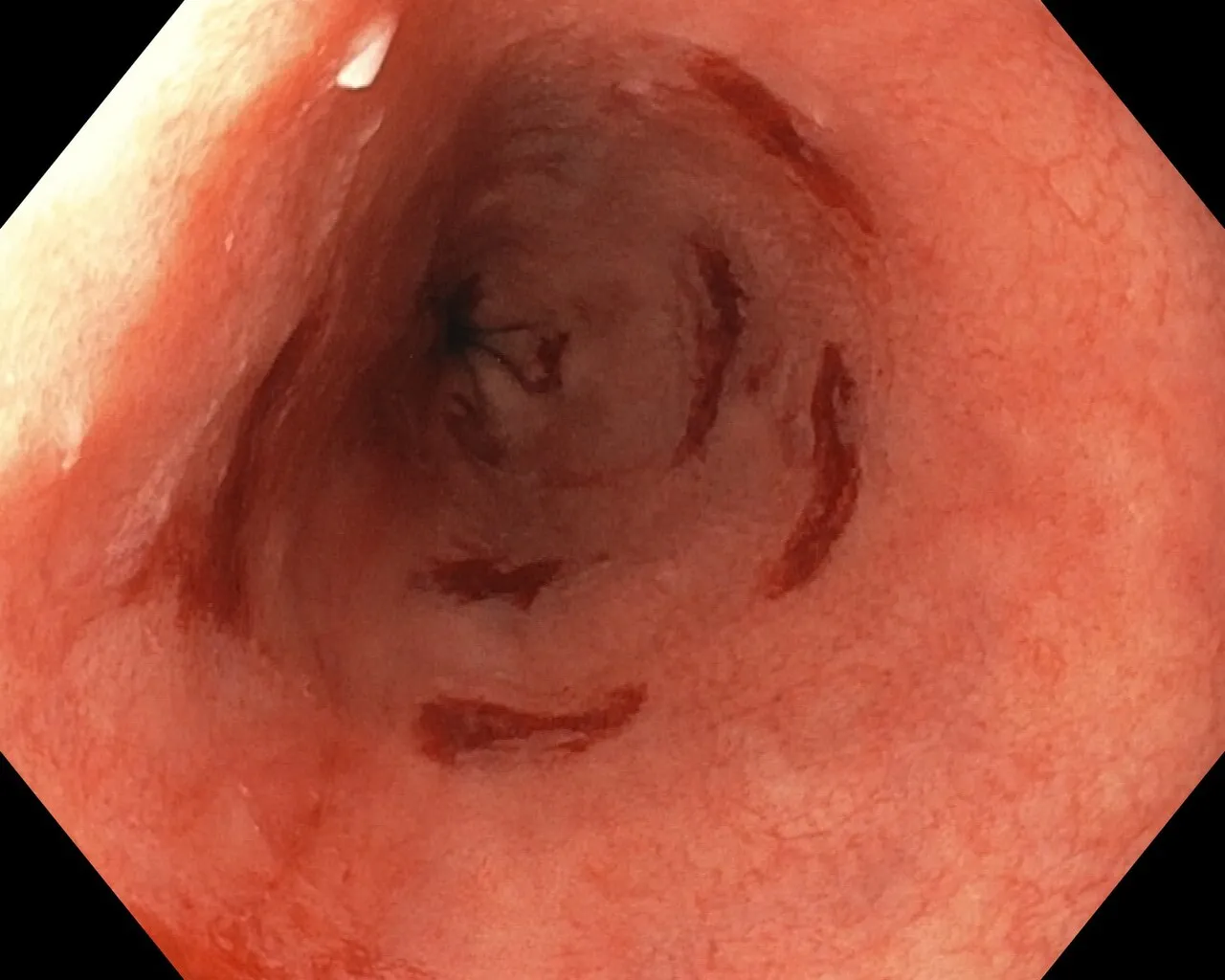
Upper gastrointestinal endoscopy (oesophagogastroduodenoscopy, OGD) and colonoscopy are the core diagnostic and therapeutic tests of gastroenterology. A flexible video endoscope lets the operator see the mucosa, take biopsies and treat disease in one session, for example stopping bleeding, banding varices and removing polyps. OGD examines the oesophagus, stomach and duodenum after a short fast; colonoscopy examines the whole colon and terminal ileum after bowel preparation. Indications include dysphagia, upper or lower gastrointestinal bleeding, iron deficiency anaemia, alarm features, a positive faecal immunochemical test (FIT), suspected inflammatory bowel disease and cancer screening or surveillance. Safe practice needs a clear indication, consent, correct handling of antithrombotic drugs (BSG/ESGE 2021), careful sedation and prompt recognition of perforation and bleeding. Quality is measured: the ACG/ASGE 2024 indicators set an adenoma detection rate of at least 35% for screening colonoscopy, and ESGE 2025 sets standards for upper endoscopy including an inspection time of at least 7 minutes.
Patient case, mechanism, investigations, management, flashcards and exam-style questions.Open the lesson →
Key facts
- OGD reaches the second part of the duodenum; colonoscopy should reach the caecum (appendiceal orifice and ileocaecal valve photographed) and often the terminal ileum
- Adenoma detection rate (ADR) is the key colonoscopy quality marker: each 1% rise in ADR lowers interval cancer risk; ACG/ASGE 2024 target is at least 35% overall in screening
- Adequate bowel preparation is needed in at least 90% of colonoscopies; split-dose preparation is the standard (ESGE 2019)
- Diagnostic endoscopy with biopsy is low risk for bleeding: continue antiplatelets and warfarin; omit the morning DOAC dose (BSG/ESGE 2021)
- For high-risk procedures (polypectomy, sphincterotomy, dilatation, PEG, EMR/ESD) stop P2Y12 inhibitors for 7 days (ticagrelor 5) if thrombotic risk is low, but continue aspirin
- Perforation is the most feared complication (around 1 in 1000 or fewer at diagnostic colonoscopy, higher after therapy); cardiorespiratory events from sedation are the commonest
- Biopsy protocols matter: coeliac 4 from D2 plus 1–2 from the bulb; Barrett Seattle quadrantic biopsies every 2 cm; gastric mapping per MAPS III
- In non-variceal upper GI bleeding, endoscopy within 24 hours of presentation after resuscitation is standard (ESGE 2021); suspected variceal bleeding within 12 hours
Differential diagnosis
| Condition | Clues | Key test |
|---|---|---|
| CT colonography | Frail patient, incomplete colonoscopy or patient choice; no biopsy possible | Positive findings still need colonoscopy for biopsy or removal |
| Capsule endoscopy (small bowel) | Obscure bleeding after normal OGD and colonoscopy; cannot take biopsies | Exclude strictures first (patency capsule or imaging) |
| Barium swallow / contrast studies | Dysphagia with suspected pouch, ring or motility disorder; no tissue | Followed by OGD if a mucosal lesion is seen |
| Faecal immunochemical test | Triage of lower GI symptoms or population screening; non-invasive | Positive FIT leads to colonoscopy |
| Flexible sigmoidoscopy | Left-sided bleeding or distal colitis; enema preparation only, often no sedation | Proceed to colonoscopy if proximal disease is suspected |
| ERCP and endoscopic ultrasound | Biliary or pancreatic disease (stones, strictures, masses) | MRCP or EUS first; ERCP reserved for therapy |
| Non-invasive H. pylori tests | Uninvestigated dyspepsia under 55–60 years without alarm features | Urea breath test or stool antigen ('test and treat') |
Exam pearls
Guideline
ACG/ASGE Quality Indicators for Colonoscopy (2024), ESGE performance measures for upper GI endoscopy (2025 update), BSG/ESGE guideline on endoscopy in patients on antiplatelet or anticoagulant therapy (2021 update), ESGE bowel preparation guideline (2019) and ESGE colorectal polypectomy and EMR guideline (2024)
References
- Rex DK, Anderson JC, Butterly LF, et al.. Quality Indicators for Colonoscopy. Am J Gastroenterol 2024.
- Areia M, Esposito G, Leclercq P, et al.. Performance measures for upper gastrointestinal endoscopy: a European Society of Gastrointestinal Endoscopy (ESGE) Quality Improvement Initiative – Update 2025. Endoscopy 2025.
- Veitch AM, Radaelli F, Alikhan R, et al.. Endoscopy in patients on antiplatelet or anticoagulant therapy: British Society of Gastroenterology (BSG) and European Society of Gastrointestinal Endoscopy (ESGE) guideline update. Gut 2021.
- Hassan C, East J, Radaelli F, et al.. Bowel preparation for colonoscopy: European Society of Gastrointestinal Endoscopy (ESGE) Guideline – Update 2019. Endoscopy 2019.
- Beg S, Ragunath K, Wyman A, et al.. Quality standards in upper gastrointestinal endoscopy: a position statement of the British Society of Gastroenterology (BSG) and Association of Upper Gastrointestinal Surgeons of Great Britain and Ireland (AUGIS). Gut 2017.
- Gralnek IM, Stanley AJ, Morris AJ, et al.. Endoscopic diagnosis and management of nonvariceal upper gastrointestinal hemorrhage (NVUGIH): European Society of Gastrointestinal Endoscopy (ESGE) Guideline – Update 2021. Endoscopy 2021.
Related topics
By Dr Khalid Seidi (B.Sc., M.D.) · MedEd World Clinical Knowledge library. Original teaching content checked against current guidelines (November 2026); confirm the latest local guidance before clinical use. Not a substitute for clinical judgement.