Clinical Knowledge › Urology › Relevant pharmacology
Medical expulsive therapy and stone prevention
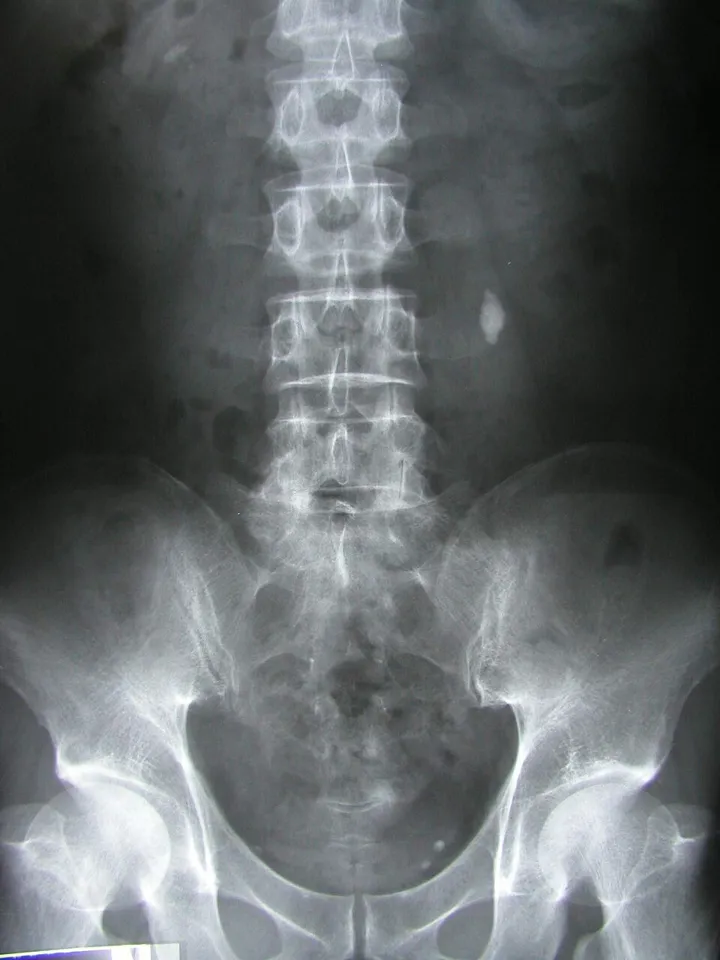
Drug therapy for urinary stones has two jobs: helping a ureteric stone pass (medical expulsive therapy, MET) and stopping new stones forming. Renal colic is treated first with an NSAID, which also lowers ureteric pressure, with paracetamol or opioids if NSAIDs are unsuitable. Alpha-1 blockers such as tamsulosin relax distal ureteric smooth muscle; after large trials (SUSPEND, STONE) gave negative overall results, MET is reserved mainly for distal ureteric stones about 5–10 mm in patients with controlled pain, no infection and adequate renal function, with intervention if the stone has not passed in 4–6 weeks. Any fever with obstruction demands urgent decompression, not MET. Prevention starts with drinking enough to pass at least 2–2.5 L of urine daily, normal dietary calcium, and less salt and animal protein. Targeted drugs follow metabolic evaluation: potassium citrate for hypocitraturia, uric acid or cystine stones; allopurinol for hyperuricosuria; tiopronin for cystinuria; and thiazides for hypercalciuria, now used more selectively since the NOSTONE trial.
Patient case, mechanism, investigations, management, flashcards and exam-style questions.Open the lesson →
Key facts
- NSAIDs (for example diclofenac 75 mg IM or 50 mg orally, or ibuprofen) are first-line analgesia for renal colic; IV paracetamol if NSAIDs contraindicated, opioids if both fail
- The vesicoureteric junction is the narrowest point of the ureter; other narrowings are the pelviureteric junction and the crossing of the iliac vessels
- Spontaneous passage falls with size and proximal position: most stones under 5 mm pass, about half of 5–10 mm stones pass
- Tamsulosin 400 micrograms daily for up to 4 weeks (off-label) is MET for distal ureteric stones, with most benefit for stones over 5 mm
- MET only if pain controlled, no infection, adequate renal function and not a solitary obstructed kidney; reimage and intervene if not passed by 4–6 weeks
- Fluid intake to produce at least 2–2.5 L of urine daily roughly halves recurrence of calcium stones
- Do not restrict dietary calcium: normal calcium (about 1000–1200 mg/day) binds oxalate in the gut; restriction increases oxalate stones and bone loss
- Uric acid stones dissolve with urinary alkalinisation (potassium citrate to pH 7.0–7.2); cystine stones need high fluid, pH above 7.5 and thiol drugs such as tiopronin
Differential diagnosis
| Condition | Clues | Key test |
|---|---|---|
| Infected obstructed kidney | Fever, rigors or sepsis with hydronephrosis and stone | CT KUB plus inflammatory markers; urgent nephrostomy or stent |
| Ruptured abdominal aortic aneurysm | Older man with 'renal colic', hypotension, pulsatile mass | Bedside ultrasound or CT angiography |
| Acute pyelonephritis without obstruction | Fever and loin pain, no hydronephrosis | Ultrasound normal; culture |
| Biliary colic or cholecystitis | Right upper quadrant pain after fatty food | Liver tests; abdominal ultrasound |
| Ectopic pregnancy | Woman of reproductive age with unilateral pain | Pregnancy test first |
| Appendicitis or diverticulitis | Localised peritonism, fever | CT abdomen |
| Musculoskeletal loin pain | Pain on movement, no haematuria | Normal CT KUB |
Exam pearls
Guideline
EAU Guidelines on Urolithiasis (2026 edition), NICE NG118 Renal and ureteric stones (2019), AUA Medical Management of Kidney Stones (2014) and AUA/Endourological Society Surgical Management of Stones (2016)
References
- European Association of Urology. EAU Guidelines on Urolithiasis. EAU Guidelines Office, Arnhem 2026.
- National Institute for Health and Care Excellence. Renal and ureteric stones: assessment and management (NG118). NICE, London 2019.
- Pearle MS, Goldfarb DS, Assimos DG, et al.. Medical management of kidney stones: AUA guideline. J Urol 2014.
- Assimos D, Krambeck A, Miller NL, et al.. Surgical management of stones: American Urological Association/Endourological Society guideline, Part I. J Urol 2016.
- Pickard R, Starr K, MacLennan G, et al.. Medical expulsive therapy in adults with ureteric colic: a multicentre, randomised, placebo-controlled trial. Lancet 2015.
- Meltzer AC, Burrows PK, Wolfson AB, et al.. Effect of tamsulosin on passage of symptomatic ureteral stones: a randomized clinical trial. JAMA Intern Med 2018.
Related topics
By Dr Khalid Seidi (B.Sc., M.D.) · MedEd World Clinical Knowledge library. Original teaching content checked against current guidelines (November 2026); confirm the latest local guidance before clinical use. Not a substitute for clinical judgement.