Clinical Knowledge › Anaesthesiology › Critical care: organ support
Nutrition in critical illness
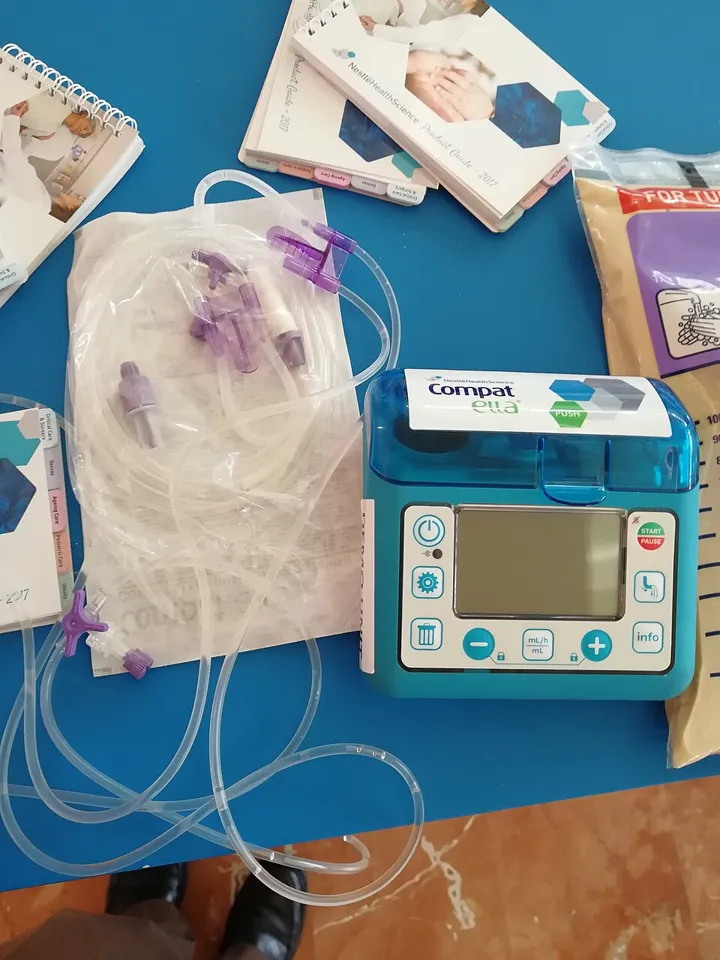
Critical illness triggers a catabolic stress response: insulin resistance, endogenous glucose production that feeding does not switch off, and rapid muscle breakdown. Nutrition therapy cannot stop this early catabolism, and trials (EPaNIC, NUTRIREA-3, EFFORT Protein) show that aggressive early calories or protein do not improve outcomes and may harm. Current guidance (ESPEN 2023, ASPEN/SCCM 2022) is to screen every ICU patient for malnutrition risk, prefer oral intake then early enteral nutrition within 48 hours once shock and hypoxaemia are controlled, and build up gradually: about 70% of energy expenditure in the first days, rising to 80–100% after day 3, with protein progressing towards about 1.3 g/kg/day. Indirect calorimetry is the best way to measure energy needs. Parenteral nutrition is added when enteral feeding is impossible or inadequate, generally after several days unless the patient is severely malnourished. Glucose is kept below about 10 mmol/L, refeeding hypophosphataemia is anticipated, and non-nutritional calories from propofol and dextrose are counted.
Patient case, mechanism, investigations, management, flashcards and exam-style questions.Open the lesson →
Key facts
- Start enteral nutrition within 48 hours in patients who cannot eat, once shock, hypoxaemia and acidosis are controlled
- Early phase: hypocaloric feeding (no more than about 70% of energy expenditure); after day 3, 80–100% of measured expenditure (ESPEN)
- ASPEN/SCCM 2022: 12–25 kcal/kg/day in the first 7–10 days; protein 1.2–2.0 g/kg/day
- ESPEN protein target: about 1.3 g/kg/day reached progressively; EFFORT Protein (2.2 g/kg/day or more) showed no benefit and possible harm in AKI and high organ failure scores
- Indirect calorimetry is the reference method; without it, VCO2 from the ventilator (× 8.19) or predictive equations (20–25 kcal/kg/day) are used
- EPaNIC: delaying supplemental parenteral nutrition until day 8 reduced infections and shortened ICU stay compared with early PN
- Gastric residual volume above 500 mL in 6 hours: pause or reduce feed, use a prokinetic (IV erythromycin first line), then consider post-pyloric feeding
- Keep blood glucose below about 10 mmol/L (180 mg/dL); tight control (4.5–6.0 mmol/L) increased mortality and hypoglycaemia (NICE-SUGAR)
Differential diagnosis
| Condition | Clues | Key test |
|---|---|---|
| Feeding intolerance from gastroparesis | High gastric residuals, vomiting, abdominal distension | Residual volumes, abdominal examination, review opioids |
| Non-occlusive mesenteric ischaemia | Rising lactate, distension and pain on high-dose vasopressors with enteral feeding | Lactate, CT angiography; stop feed |
| Refeeding syndrome | Falling phosphate, potassium and magnesium within 72 h of feeding | Daily phosphate, potassium, magnesium |
| Overfeeding | Hyperglycaemia, rising PaCO2, raised liver enzymes, fatty liver | Glucose, blood gas, LFTs; count all calorie sources |
| Diarrhoea from Clostridioides difficile | Watery stool on antibiotics | Stool toxin testing; do not stop feeding automatically |
| Aspiration pneumonia | New infiltrate, fever, hypoxaemia after vomiting | Chest X-ray; check tube position and head-up positioning |
Exam pearls
Guideline
ESPEN practical and partially revised guideline: Clinical nutrition in the ICU (2023, based on ESPEN 2019) and ASPEN/SCCM guidelines for nutrition support therapy in the adult critically ill patient (2022)
References
- Singer P, Blaser AR, Berger MM, et al.. ESPEN practical and partially revised guideline: Clinical nutrition in the intensive care unit. Clin Nutr 2023.
- Singer P, Blaser AR, Berger MM, et al.. ESPEN guideline on clinical nutrition in the intensive care unit. Clin Nutr 2019.
- Compher C, Bingham AL, McCall M, et al.. Guidelines for the provision of nutrition support therapy in the adult critically ill patient: The American Society for Parenteral and Enteral Nutrition. JPEN J Parenter Enteral Nutr 2022.
- Heyland DK, Patel J, Compher C, et al.. The effect of higher protein dosing in critically ill patients with high nutritional risk (EFFORT Protein): an international, multicentre, pragmatic, registry-based randomised trial. Lancet 2023.
- Reignier J, Plantefeve G, Mira JP, et al.. Low versus standard calorie and protein feeding in ventilated adults with shock: a randomised, controlled, multicentre, open-label, parallel-group trial (NUTRIREA-3). Lancet Respir Med 2023.
- Casaer MP, Mesotten D, Hermans G, et al.. Early versus late parenteral nutrition in critically ill adults. N Engl J Med 2011.
Related topics
By Dr Khalid Seidi (B.Sc., M.D.) · MedEd World Clinical Knowledge library. Original teaching content checked against current guidelines (November 2026); confirm the latest local guidance before clinical use. Not a substitute for clinical judgement.