Clinical Knowledge › Ear, nose and throat › Relevant pharmacology
Ototoxic drugs
Ototoxic drugs damage the cochlea, the vestibular system or both. The two most important groups are aminoglycosides and platinum chemotherapy, which cause permanent, usually bilateral, high-frequency sensorineural hearing loss that starts at the basal turn of the cochlea and may appear or progress after the drug is stopped. Gentamicin and streptomycin are mainly vestibulotoxic and can cause bilateral vestibulopathy with oscillopsia; amikacin and neomycin are mainly cochleotoxic. A mitochondrial variant, m.1555A>G in MT-RNR1, can cause profound deafness after a single normal aminoglycoside dose, so the MHRA (2021) advises testing when it will not delay treatment, and rapid neonatal genotyping is now possible. Cisplatin causes hearing loss in over half of children; sodium thiosulfate given 6 hours after cisplatin halves this risk in non-metastatic childhood cancers. Loop diuretics, high-dose salicylates, quinine and macrolides cause mostly reversible tinnitus or hearing loss. Prevention relies on avoiding unnecessary use, level monitoring, serial audiometry and early switching.
Patient case, mechanism, investigations, management, flashcards and exam-style questions.Open the lesson →
Key facts
- Aminoglycosides and cisplatin cause permanent bilateral high-frequency SNHL; loop diuretics, salicylates, quinine and macrolides usually cause reversible effects
- Gentamicin and streptomycin are predominantly vestibulotoxic; amikacin, neomycin and kanamycin predominantly cochleotoxic
- Bilateral vestibular loss from gentamicin causes oscillopsia and imbalance worse in the dark, with bilateral positive head impulse tests and often no vertigo
- m.1555A>G (MT-RNR1), maternally inherited, makes mitochondrial ribosomes bind aminoglycosides; one dose can cause profound deafness
- Aminoglycosides concentrate in inner ear fluids and hair cells and leave slowly, so loss can start or progress days to weeks after stopping
- Cisplatin risk rises with young age, cumulative dose (above about 400 mg/m²), cranial irradiation, renal impairment and other ototoxic drugs
- Sodium thiosulfate 6 hours after cisplatin reduces hearing loss in children with localised (non-metastatic) solid tumours without reducing survival
- Monitor with baseline and serial pure-tone audiometry including extended high frequencies (9–16 kHz) and otoacoustic emissions
Differential diagnosis
| Condition | Clues | Key test |
|---|---|---|
| Aminoglycoside vestibulotoxicity | Oscillopsia and imbalance during or after gentamicin; little vertigo | Bedside head impulse both sides; video head impulse, calorics |
| Aminoglycoside or cisplatin cochleotoxicity | Bilateral high-frequency SNHL, tinnitus | Pure-tone audiometry with extended high frequencies |
| Sudden sensorineural hearing loss | Unilateral loss over 72 hours, no drug link | Audiogram same day; MRI IAMs |
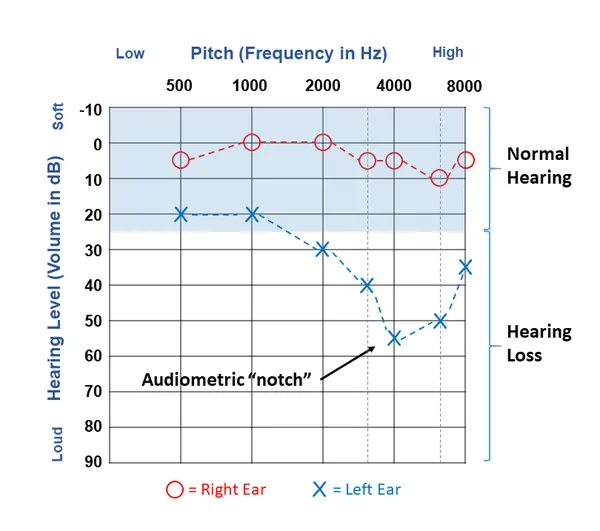
| Noise-induced hearing loss | Notch at 4 kHz, noise exposure | Audiogram |
| Presbycusis | Gradual symmetric high-frequency loss in older adults | Audiogram; age-appropriate pattern |
| Salicylate toxicity | Tinnitus with hyperventilation, vomiting, mixed acid–base disturbance | Salicylate level, blood gas |
| Vestibular schwannoma | Unilateral SNHL and tinnitus | MRI internal auditory meatus |
Exam pearls
Guideline
MHRA Drug Safety Update on aminoglycosides and mitochondrial variants (2021), NICE early value assessment HTE6 for MT-RNR1 genotyping (2023), international paediatric guideline on cisplatin ototoxicity prevention (2020), IGHG ototoxicity surveillance recommendations (2019) and WHO World report on hearing (2021)
References
- Medicines and Healthcare products Regulatory Agency. Aminoglycosides (gentamicin, amikacin, tobramycin, and neomycin): increased risk of deafness in patients with mitochondrial DNA variants (Drug Safety Update). MHRA, London 2021.
- McDermott JH, Mahaveer A, James RA, et al.. Rapid point-of-care genotyping to avoid aminoglycoside-induced ototoxicity in neonatal intensive care. JAMA Pediatr 2022.
- National Institute for Health and Care Excellence. Genedrive MT-RNR1 ID Kit for detecting a genetic variant to guide antibiotic use and prevent hearing loss in babies: early value assessment (HTE6). NICE, London 2023.
- Brock PR, Maibach R, Childs M, et al.. Sodium thiosulfate for protection from cisplatin-induced hearing loss. N Engl J Med 2018.
- Freyer DR, Chen L, Krailo MD, et al.. Effects of sodium thiosulfate versus observation on development of cisplatin-induced hearing loss in children with cancer (ACCL0431): a multicentre, randomised, controlled, open-label, phase 3 trial. Lancet Oncol 2017.
- Freyer DR, Brock PR, Chang KW, et al.. Prevention of cisplatin-induced ototoxicity in children and adolescents with cancer: a clinical practice guideline. Lancet Child Adolesc Health 2020.
Related topics
By Dr Khalid Seidi (B.Sc., M.D.) · MedEd World Clinical Knowledge library. Original teaching content checked against current guidelines (November 2026); confirm the latest local guidance before clinical use. Not a substitute for clinical judgement.