Clinical Knowledge › Internal medicine › Haematology and oncology › Plasma cell disorders
POEMS syndrome
POEMS syndrome is a rare paraneoplastic syndrome caused by a small, almost always λ-restricted plasma-cell clone. The acronym lists common features: Polyradiculoneuropathy, Organomegaly, Endocrinopathy, Monoclonal plasma-cell disorder and Skin changes, but sclerotic bone lesions, Castleman disease, papilloedema, oedema and effusions, thrombocytosis or erythrocytosis and a markedly raised vascular endothelial growth factor (VEGF) are equally important. Much of it reflects VEGF-driven vascular leak and angiogenesis. The neuropathy is a progressive, distal, demyelinating sensorimotor polyneuropathy that is often first misdiagnosed as chronic inflammatory demyelinating polyneuropathy (CIDP) and fails to respond to immunoglobulin. Diagnosis requires the neuropathy and the clone, plus one major criterion (sclerotic bone lesion, Castleman disease or raised VEGF) and one minor criterion. Treatment targets the clone: radiotherapy for one to three bone lesions, or systemic therapy and autologous transplant for widespread disease. Survival is long; nerve recovery is slow.
Patient case, mechanism, investigations, management, flashcards and exam-style questions.Open the lesson →
Key facts
- POEMS: Polyradiculoneuropathy, Organomegaly, Endocrinopathy, Monoclonal plasma-cell disorder, Skin changes – not all features are needed and some key ones are not in the acronym
- Mandatory criteria: polyneuropathy (typically demyelinating) and a monoclonal plasma-cell disorder, which is λ in over 95% of cases
- Major criteria (need one): sclerotic bone lesions (present in most patients), Castleman disease, raised VEGF
- Minor criteria (need one): organomegaly, extravascular volume overload, endocrinopathy, skin changes, papilloedema, thrombocytosis or erythrocytosis
- Diabetes and hypothyroidism alone do not count as the endocrinopathy criterion because they are common in the population
- The paraprotein is usually small (often under 10–15 g/L) and may be missed by electrophoresis: use immunofixation
- Suspect POEMS when 'CIDP' fails to respond to IVIG, especially with thrombocytosis, skin changes, oedema or a λ paraprotein
- Limited sclerotic lesions without diffuse marrow involvement are treated with radiotherapy; disseminated disease with alkylator- or lenalidomide-based therapy (including high-dose melphalan with autologous transplant)
Differential diagnosis
| Condition | Clues | Key test |
|---|---|---|
| Chronic inflammatory demyelinating polyneuropathy (CIDP) | Proximal and distal weakness, responds to IVIG or steroids, no organomegaly or skin changes | Normal VEGF, no λ clone or sclerotic lesions |
| Anti-MAG IgM neuropathy | Distal sensory ataxic neuropathy with tremor and IgM-κ paraprotein | Anti-MAG antibodies; VEGF normal |
| AL amyloidosis neuropathy | Painful small-fibre and autonomic neuropathy, nephrotic syndrome, cardiomyopathy | Congo red-positive biopsy, high NT-proBNP; VEGF normal |
| Multiple myeloma | Lytic (not sclerotic) lesions, CRAB features, larger paraprotein | Marrow plasma cells ≥10%; neuropathy unusual unless treatment-related or amyloid |
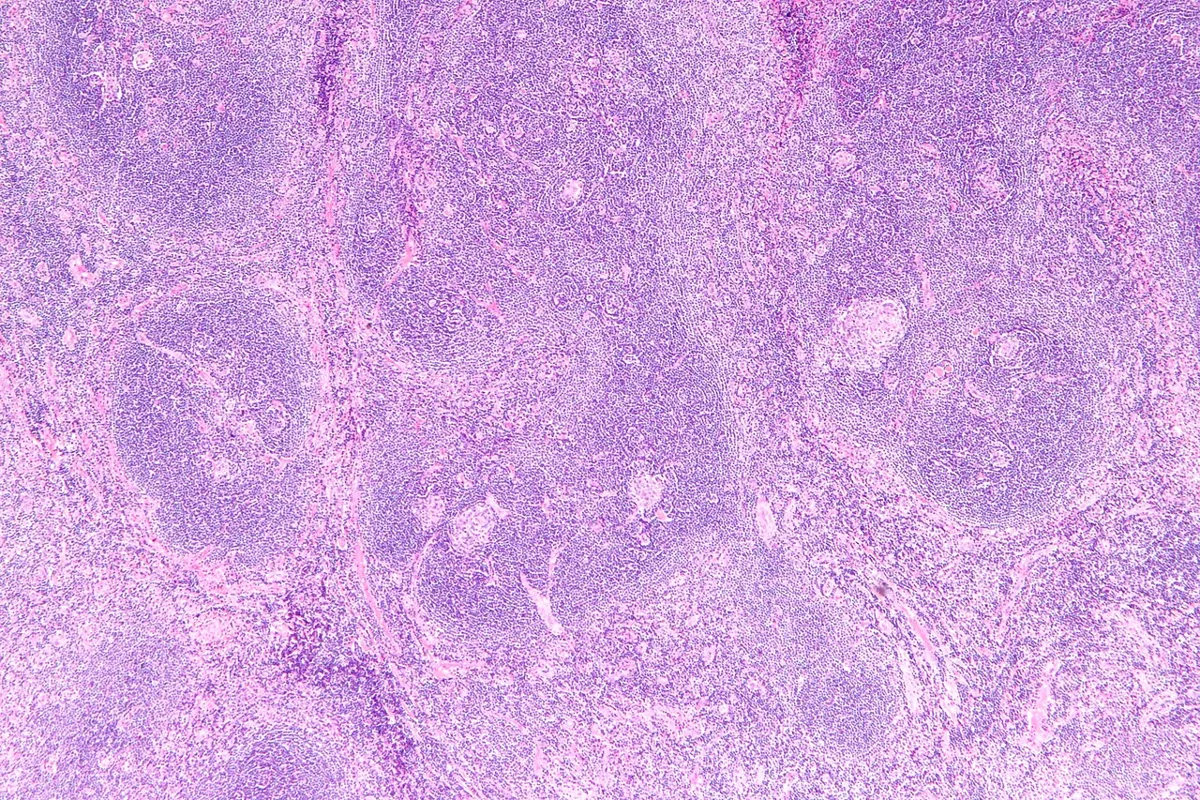
| Multicentric Castleman disease (idiopathic or HHV-8) | Lymphadenopathy, fevers, inflammation, effusions | Node histology, HHV-8 PCR, no neuropathy or clone (unless Castleman variant of POEMS) |
| Diabetic or alcohol-related neuropathy | Length-dependent sensory neuropathy | Mainly axonal; no paraprotein or VEGF rise |
| Systemic sclerosis | Skin thickening, Raynaud phenomenon | Autoantibodies (anti-Scl-70, anticentromere); no neuropathy or clone |
Exam pearls
Guideline
POEMS syndrome: 2026 update on diagnosis, risk stratification and management (Mayo Clinic, Am J Hematol 2026), IMWG criteria for plasma-cell disorders (2014) and EAN/PNS guideline on CIDP (2021) for the main differential diagnosis
References
- Dispenzieri A. POEMS syndrome: 2026 update on diagnosis, risk-stratification, and management. Am J Hematol 2026.
- Dispenzieri A, Kyle RA, Lacy MQ, et al.. POEMS syndrome: definitions and long-term outcome. Blood 2003.
- Rajkumar SV, Dimopoulos MA, Palumbo A, et al.. International Myeloma Working Group updated criteria for the diagnosis of multiple myeloma. Lancet Oncol 2014.
- Van den Bergh PYK, van Doorn PA, Hadden RDM, et al.. European Academy of Neurology/Peripheral Nerve Society guideline on diagnosis and treatment of chronic inflammatory demyelinating polyradiculoneuropathy: report of a joint Task Force – second revision. J Peripher Nerv Syst 2021.
- Stern S, Chaudhuri S, Drayson M, et al.. Investigation and management of the monoclonal gammopathy of undetermined significance: A British Society for Haematology Good Practice Paper. Br J Haematol 2023.
- Hoffbrand AV, Steensma DP. Hoffbrand's Essential Haematology. 2019.
Related topics
By Dr Khalid Seidi (B.Sc., M.D.) · MedEd World Clinical Knowledge library. Original teaching content checked against current guidelines (November 2026); confirm the latest local guidance before clinical use. Not a substitute for clinical judgement.